
Nvidia Patents a System That Automatically Polices Security Passwords Across Large Networks
Every company that runs software at scale has a sprawling collection of passwords, API keys, and certificates hiding in its systems. Nvidia is patenting a way to automatically watch all of them, swap them out on schedule, and flag the ones that break the rules.
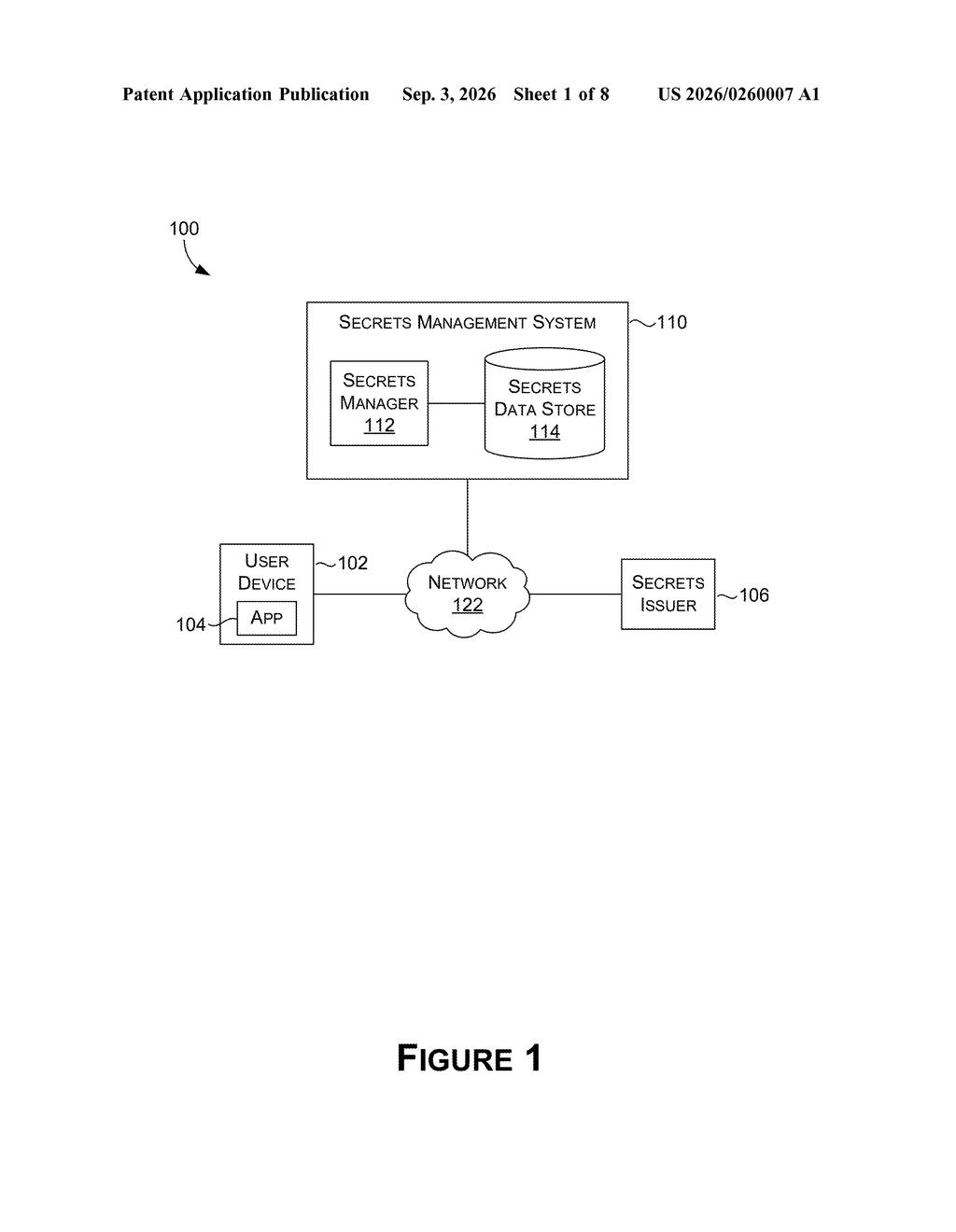
What Nvidia's automated credential-watching system actually does
Every time a server inside a data center needs to talk to another server, it uses a secret, a password or key that proves it has permission. Big companies can have thousands of these secrets scattered across their systems, and keeping track of which ones are still valid, which ones need to be changed, and which ones are violating security rules is a full-time headache.
Nvidia's patent describes a system that takes over that job automatically. It reads labels (called tags) attached to each secret, checks whether the secret is following the right rules, and flags anything that falls out of compliance. Plugins, small add-on modules, handle the actual work, so the system can be extended to cover new types of secrets without rebuilding everything from scratch.
For the average person, this is invisible infrastructure. But it's the kind of system that determines whether your data at a company stays protected or whether an expired, unrotated credential becomes a door left open.
… determine that a representation of metadata associated with the secret fails to comply with the policy; and provide an indication that the representation of metadata associated with the secret fails to comply with the policy.
Translation: The system checks if a password violates safety rules and sends an alert if it does.
How the plugin checks tags and flags policy violations
The patent centers on a secrets management system, where a "secret" means any sensitive credential: a password, an API key, a cryptographic certificate, or a database token. Large deployments can have tens of thousands of these, and manually tracking them is error-prone.
The core mechanism works in four steps:
- Tag identification: Each secret carries a tag, a piece of metadata that describes what the secret is, who owns it, or what rules apply to it.
- Policy lookup: The system finds the policy associated with that tag, for example, "this type of credential must be rotated every 30 days" or "must use a minimum key length."
- Compliance check: The system compares the secret's actual metadata against the policy's requirements and determines whether there is a mismatch.
- Violation alert: If the secret fails the check, the system surfaces an indication of non-compliance so an operator or an automated workflow can act on it.
The plugin architecture is a design choice that lets teams add support for new credential types or new policy engines without modifying the core system. The secrets manager calls out to whichever plugin is relevant for a given secret type, keeping the main system lean and adaptable.
… a secrets management system may include a monitoring or auditing system that enables various management functionalities, including management or enforcement of policies, rotations or lifecycles, access, and secret generation.
Translation: An automated watchdog tool tracks password lifecycles and enforces security rules across the network.
What this means for companies running AI infrastructure at scale
For anyone whose personal data lives inside a company's cloud infrastructure, this kind of system is a backstop against one of the most common and least dramatic causes of data breaches: a forgotten, expired, or improperly configured credential that nobody noticed. Nvidia's growing focus on enterprise infrastructure security shows up in filings like this one, where the engineering problem is not flashy AI but the operational plumbing that keeps large systems from leaking.
You would never see this system directly, but you would feel its absence if a company's internal credential expired unnoticed and attackers used that gap to get in. Automated rotation and policy enforcement are standard recommendations from every major security framework, and patenting a specific plugin-based implementation suggests Nvidia wants to own the approach, not just follow the advice.
This is the 437th Nvidia filing in our Nvidia coverage since May, adding to work like filling missing video frames and spotting hidden objects.
Credentials, the passwords and keys that AI systems use to talk to each other, get swapped out automatically before they go stale or get compromised. Most people never think about this until a breach happens, and by then the damage is already done.
Nvidia is building this so that adding a new service to their infrastructure does not require rebuilding the whole security system from scratch. The design grows with the platform, which means fewer exposed gaps during the periods when new things are being connected.
For anyone whose data or workflows run on Nvidia's AI infrastructure, this is quiet maintenance that earns trust over time. You would only notice it if it were missing.
There are more where this came from
We read every patent application Big Tech publishes and send you the ones worth knowing. Plain English, free, every week.
The drawings
8 drawing sheets from US 2026/0260007 A1 · click any drawing to enlarge


Want this weekly breakdown for a company we don't cover? Patentlyze Pro →