
Nvidia Patents an AI That Spots Open Car Doors Before Self-Driving Cars Get Too Close
A parked car swings its door open just as a self-driving vehicle rolls past, Nvidia's new patent describes an AI system designed to catch that exact moment before it becomes a crash.
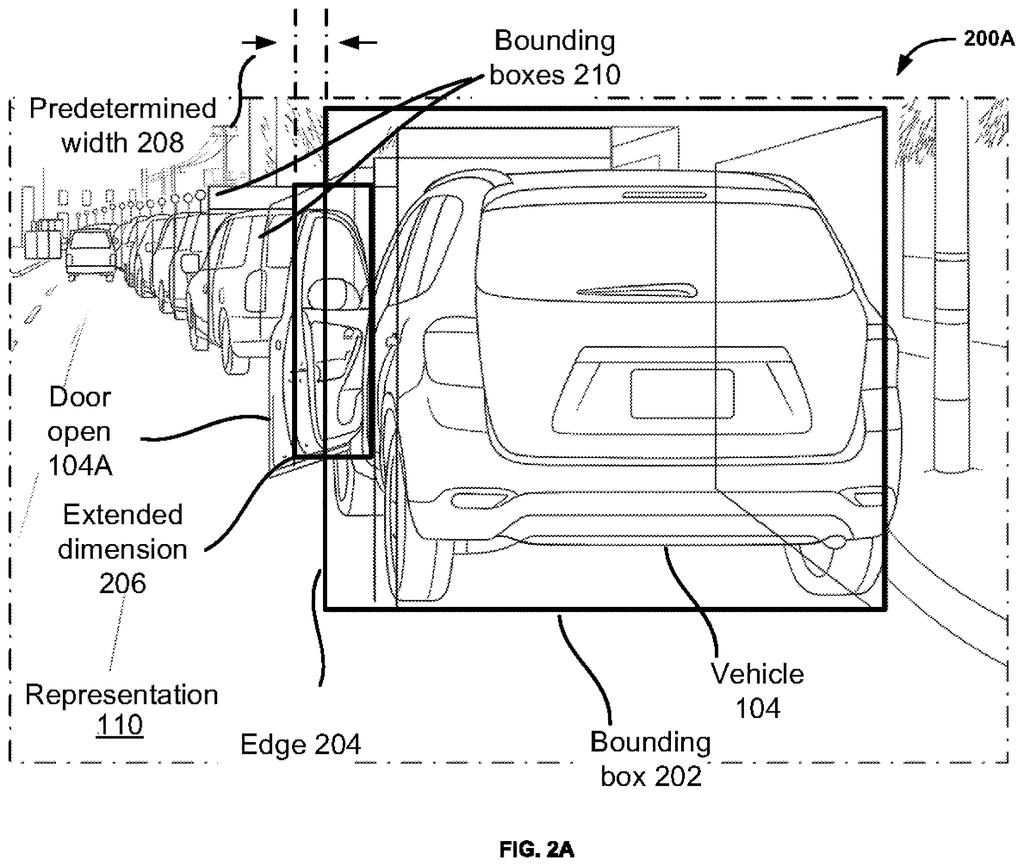
How Nvidia's AI reads open doors along the road
You're riding in a self-driving car through a busy city street. Parked cars line both sides, and at any moment a driver or passenger could push a door open right into your path. It happens fast enough to catch human drivers off guard, and it's a real problem for autonomous vehicles too.
Nvidia's patent describes a two-step AI system to handle it. First, the system watches a live video feed and draws a box around any parked or slowing vehicle nearby. One AI model looks at that boxed region and decides whether a door is open or closed. If a door is open, a second AI model takes a closer look and figures out which kind of open door it is, a driver's-side door swung wide, a rear passenger door cracked open, and so on.
Knowing the type of open door matters because it changes how much space the vehicle needs to safely pass. A fully open driver's door sticks out much farther than a slightly ajar rear door, and the car's path-planning software needs that detail to react correctly.
predict an open-door of a vehicle based in part on a bounding box applied to a representation of the vehicle used with a first machine learning (ML) model trained using bounding boxes for different vehicles having one or more of closed doors or open doors; …
Translation: The AI first spots the car and guesses whether a door might open using visual boundaries.
How two AI models split the detection job
The system relies on two separate machine learning (ML) models working in sequence, each trained on a large library of vehicle images.
Model one: detection. The system draws a bounding box (a rectangle superimposed on the camera image) around a vehicle in the scene. The first ML model, trained on thousands of bounding-box images of cars with open and closed doors, looks at the contents of that box and outputs a prediction: door open, or door closed.
Model two: classification. If the first model flags an open door, the second model zooms in on the relevant portion of the image and categorizes the door into a specific type. That type might be a front door, rear door, trunk, or a door at a particular angle. The second model was trained on labeled examples of all these categories across many different vehicle makes and shapes.
This two-stage approach keeps each model focused on a narrower task, which tends to produce better accuracy than asking a single model to do both jobs at once. The output feeds into the vehicle's broader collision-avoidance system, which adjusts the planned path, speed, or both based on how much space the open door actually occupies.
What this means for self-driving safety in city traffic
"Dooring", when a parked car's door opens into the path of a moving vehicle or cyclist, is one of the more common causes of urban collisions and bike injuries. Human drivers learn to watch for it instinctively. Self-driving systems need the same ability encoded explicitly, and that turns out to be trickier than it sounds because a half-open door can look very different depending on the camera angle, lighting, and vehicle type.
For passengers in an autonomous vehicle, a system like this could mean a smoother, safer ride through dense city streets where parked cars are everywhere. Nvidia keeps filing on autonomous-vehicle perception across many road hazard types, and this one fits squarely into the gap between basic object detection (seeing a car) and fine-grained situational awareness (knowing what that car is about to do to your lane).
Nvidia's 60th filing we've tracked since May in our self-driving sensing race watchlist builds on its earlier work merging radar and camera feeds and overlapping sensor readings.
Getting this feature onto a real vehicle requires no new cameras or sensors, just updated software running on hardware self-driving cars already carry. That makes the path to shipping unusually short compared to most driving-safety ideas.
The actual work is building a large enough collection of labeled photos showing open doors in every awkward real-world situation: doors barely cracked, sliding minivan doors mid-travel, vehicles parked at strange angles in bad light. That is a data-collection challenge, not a scientific mystery, and it is solvable with enough resources and time.
The honest gap in the document is what happens when the system is uncertain. Two models working in sequence is a sensible design, but the patent does not explain how the car behaves when the first or second model gives a low-confidence answer at speed. Closing that gap is the distance between a promising demo and something a driver can actually trust.
There are more where this came from
We read every patent application Big Tech publishes and send you the ones worth knowing. Plain English, free, every week.
The drawings
19 drawing sheets from US 2026/0279009 A1 · click any drawing to enlarge


Want this weekly breakdown for a company we don't cover? Patentlyze Pro →