Nvidia
Nvidia · Automotive · Filed Feb 26, 2025 · USPTO published Aug 27, 2026 · Aug 27 release
Nvidia Patent Teaches Self-Driving Cars to Recognize and Ignore Manhole Covers
Self-driving cars have a surprisingly common problem: their sensors treat manhole covers and sewer grates like potential hazards, causing unnecessary braking or swerving. Nvidia's latest patent filing takes direct aim at that glitch.
- Publication number
- US 2026/0251760 A1(US20260251760A1)
- Applicant
- NVIDIA CORPORATION
- Filed · Published
- Feb 26, 2025 · Aug 27, 2026
- Inventors
- Shane Michael Murray, Patrik Stefan Gebhardt
- Status when we published
- Waiting for an examiner
- Document
- 20 claims
- US classification
- 342/195
- Examiner
- LI, YONGHONG (Art Unit 3648)
How Nvidia's radar learns to ignore manhole covers
A self-driving car rolls down a city street and slams on the brakes because its sensors flagged a manhole cover as an obstacle. The car is fine, but the passenger just spilled their coffee, and the vehicle behind nearly rear-ended it. That kind of false alarm is more common than you'd think.
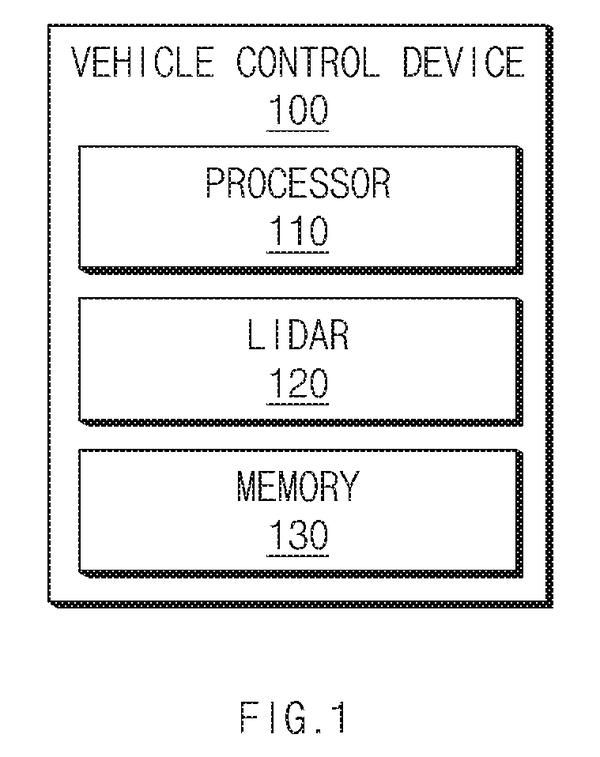
Nvidia's patent describes a system that teaches autonomous vehicles to recognize objects embedded in the road surface, such as manhole covers, railroad tracks, and sewer grates, and understand that they can simply be driven over. The system uses radar to spot these objects, then a machine learning model decides they belong to a special category: safely ignorable.
The result is a vehicle that stops flinching at things that were never a real danger. Instead of treating every metal grate as a potential collision risk, the car marks it as normal driving surface and keeps going smoothly.
… navigate the ego-machine over the one or more objects based at least on the one or more outputs classifying the one or more objects into the one or more classes of in-surface objects.
Translation: The car decides it is safe to drive directly over an object once it identifies it as something embedded in the road.
How radar signatures train the detection model
The patent describes a pipeline that starts with radar data from a moving vehicle. Radar is good at detecting physical objects embedded in or flush with the road surface, but it's not great at distinguishing between a real obstacle and a harmless grate. A traditional system might flag both equally.
Nvidia's approach uses cross-modality sensor fusion (combining data from multiple sensor types simultaneously) to build a training dataset. The key insight: if radar detects something, but LiDAR (a laser-based depth scanner) and cameras both show nothing significant there, that object is likely embedded in the surface rather than sitting on top of it. Those discrepancies are used to automatically label training data, creating a ground-truth library of in-surface objects.
A machine learning model is then trained on those labels to recognize in-surface object classes, including manhole covers, railroad tracks, and sewer grates, directly from their radar signatures alone. Once deployed in a vehicle, the model processes incoming radar data and classifies detected objects. Objects that fall into in-surface classes are:
- Marked as navigable space, meaning the car can drive over them
- Passed along to the vehicle's control stack (the software layer that decides steering, speed, and braking)
- Removed from the list of things that require avoidance maneuvers
The system is designed to work as part of the broader autonomy software pipeline, feeding clean, context-aware information downstream so the vehicle's planning layer makes better decisions.
… detected in-surface objects (e.g., manhole covers, railroad tracks, sewer grates, etc.) may be safely ignored. As such, the machine learning model may be deployed and used to detect and ignore in-surface objects, mark them as navigable space …
Translation: The system learns to recognize road features like manhole covers so the car knows it can drive over them without stopping.
What this means for self-driving comfort and safety
For anyone riding in an autonomous vehicle, the practical payoff is straightforward: fewer phantom braking events, smoother rides through city streets, and less anxiety-inducing behavior from a car that seems confused by ordinary road infrastructure. Cities are full of manhole covers, storm drains, and rail crossings, and a vehicle that treats each one as a potential crisis is not ready for real urban deployment.
This also matters at a systems level. Nvidia supplies the computing hardware and software platforms that power many autonomous vehicle programs, so a fix baked into their stack could propagate across multiple manufacturers at once. The wider pattern of radar-focused autonomy work is part of the interesting tech patents Patentlyze tracks across the self-driving and robotics space, where perception accuracy in mundane road conditions often matters more than handling dramatic edge cases.
This is the 47th Nvidia filing we've tracked since May in the self-driving sensor race, adding to one on a three-layer camera and one on AI simulation scenes.
Source: US 2026/0251760 A1 at the USPTO (PDF). Full patent text and figures are in the official publication.
Get our take in your Top Stories
Liked this breakdown? Add Patentlyze as a preferred source on Google, and our plain-English take shows up more often in your Top Stories the next time Nvidia patent news breaks.
Add Patentlyze on Google
One click.
There are more where this came from
We read the new patents from Big Tech, carmakers and more and send you the ones worth knowing. Plain English, free, every week.
The drawings · 10 sheets
10 drawing sheets from US 2026/0251760 A1 · click any drawing to enlarge


Show the other 2 sheets


More from Nvidia
All 665 Nvidia patents →
More in Automotive
All 432 Automotive patents →
Qualcomm
Qualcomm Patent Uses a 3D Graphics Trick to Improve Cars' Surroundings View
Qualcomm
Qualcomm Patents a Way to Pre-Map Roads So Cars See Farther Ahead
Waymo (Google)
Waymo Patents System That Predicts How Long Drivers Take To React
IBM