
Nvidia Patents AI That Tracks Objects After They Vanish Behind Obstacles
A camera can only see what's in front of it — but a person or vehicle doesn't stop existing just because it walks behind a wall. Nvidia is patenting an AI system that predicts where objects go even when they're completely hidden from view.
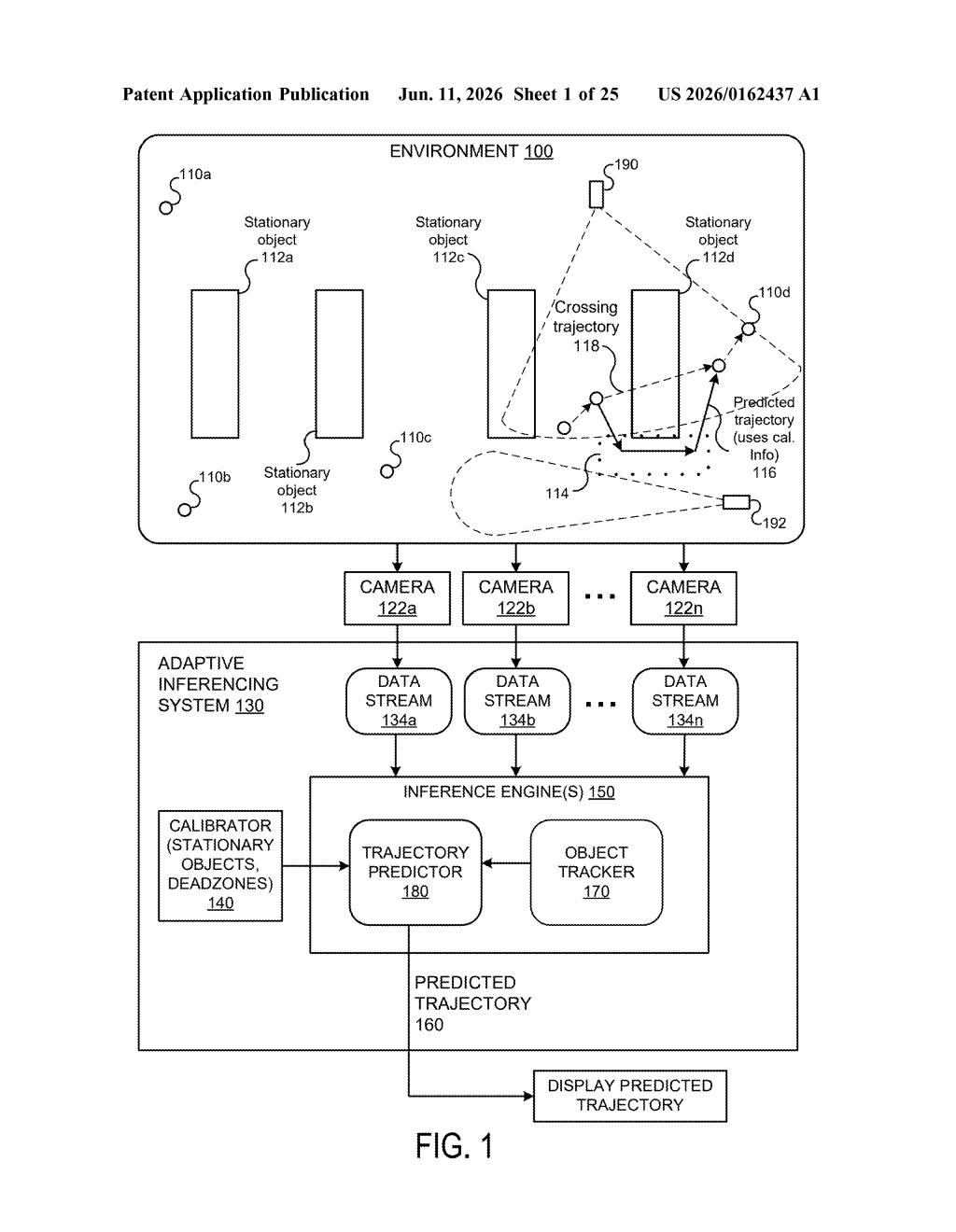
How Nvidia's AI fills in the blind spots
Imagine a security camera watching a parking lot. A person walks behind a large truck and disappears from view. Where are they now? Are they still walking straight? Did they turn? Without an answer, an autonomous vehicle or warehouse robot has to guess — and guessing wrong can be dangerous.
Nvidia's patent describes a system that uses neural networks — the same kind of AI behind image recognition and language models — to make an educated prediction about where that hidden person or object is likely to be. Instead of throwing up its hands when something disappears, it uses the object's last known position and information about the environment (like where walls and obstacles are) to map out a probable path.
The system is designed to run on a processor, which means it could live inside a self-driving car's onboard computer, a warehouse robot's brain, or a surveillance system. It's essentially giving machines a sense of spatial reasoning — the ability to think, "Even though I can't see it, I know where it probably went."
How the neural network predicts paths through occluded zones
The patent describes a processor equipped with circuits that run one or more neural networks specifically trained to handle occlusion — the technical term for when an object is blocked from a camera's line of sight by something else in the environment.
The system takes two main inputs:
- Known positions: Where the object was before it disappeared — essentially a movement history the AI can extrapolate from.
- Stationary object information: Data about fixed obstacles in the environment (walls, pillars, parked cars) that define what paths are physically possible versus blocked.
Using those inputs, the neural network generates one or more predicted trajectories — candidate paths through the hidden area. Rather than assuming the object just stopped moving, the model reasons about plausible routes based on physics, layout, and prior behavior.
The architecture is deliberately general: it says "one or more" cameras, objects, and neural networks throughout, suggesting it's designed to scale — handling single-camera setups and multi-camera environments alike. The patent doesn't lock this to a single domain, which gives Nvidia flexibility to apply it to autonomous vehicles, robotics, or smart infrastructure.
What this means for self-driving cars and robots
For self-driving vehicles, occlusion is one of the hardest unsolved problems. A pedestrian who steps behind a parked bus doesn't disappear from physical reality — but from a camera's perspective, they're gone. A system that can plausibly predict "the pedestrian is still crossing the street" rather than treating them as nonexistent could be the difference between a safe stop and a collision.
For you as a consumer, this kind of tech is the invisible infrastructure behind safer autonomous features in cars, delivery robots in warehouses, and even smart security systems. Nvidia already supplies the chips and AI frameworks that power many of these systems, so a patent like this fits directly into their DRIVE and robotics platform roadmap.
This is genuinely important work, even if it reads quietly. Occlusion handling is a well-known Achilles' heel of camera-based perception, and most current workarounds lean on LiDAR or radar to fill the gap — hardware that adds cost and complexity. A neural network approach that works from camera data alone, using environmental context, is a meaningful step. Nvidia filing this suggests they're building it into the core of their autonomous perception stack, not treating it as an afterthought.
There are more where this came from
We read every patent application Big Tech publishes and send you the ones worth knowing. Plain English, free, every week.
Want this weekly breakdown for a company we don't cover? Patentlyze Pro →