
Sony Patents Wheels Within Wheels That Let Robots Roll in Any Direction
Most wheels can only go forward or backward. Sony is patenting a wheel built from smaller wheels nested inside each other, so a robot can glide sideways, diagonally, or spin in place without turning at all.
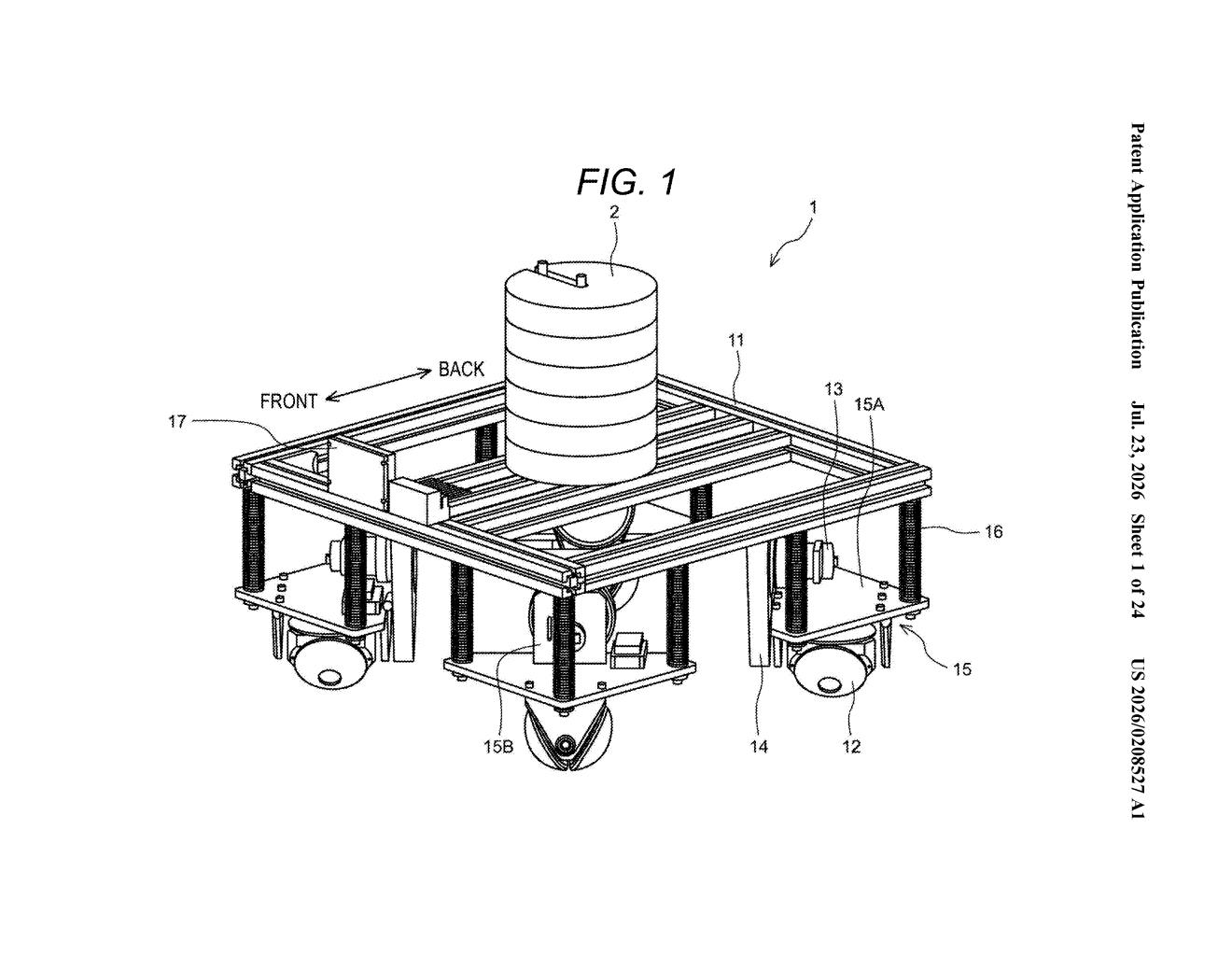
What Sony's omnidirectional robot wheel actually does
Imagine trying to parallel-park a shopping cart. Standard wheels make it awkward because they only roll one way. Omnidirectional wheels fix that by letting a vehicle move in any direction without rotating the whole body first. Sony's patent describes a new take on that idea, specifically built for robots that walk on legs but might also roll on wheels.
The design stacks two small wheels inside each other at the tip of a larger rotating frame. Each inner wheel spins on its own axis, giving the whole assembly the ability to grip and push against the ground in multiple directions at once. Think of it like a ball-and-socket joint for a wheel: whatever direction the robot needs to go, one of those spinning surfaces is always pointed the right way.
Sony says the target is legged robots, the kind you might imagine carrying packages or navigating a warehouse. Better wheels mean smoother travel on flat surfaces, which takes some of the burden off the legs themselves.
How the three-axis wheel assembly handles any direction
The patent describes a wheel unit built around three distinct rotation axes, each perpendicular to the others, working together in a single compact assembly.
- A rotation frame spins around the main (first) axis, like a conventional wheel hub.
- Mounted on the curved side surface of that frame are three or more first wheels, each shaped like a spherical zone (a curved band, like a slice of a globe). These spin on a second axis that is perpendicular to the frame's main axis.
- Inside each first wheel, at its top where an opening is cut, sits a second wheel whose axis is perpendicular to both the first and second axes. Its grounding surface pokes through that opening to make direct contact with the floor.
The result is that at any given moment, at least one of these nested surfaces is oriented to push against the ground in the exact direction needed. The robot's control system can coordinate which wheel faces are active to steer without physically turning the whole body.
The three-axis geometry is the key technical novelty. Conventional omnidirectional wheels (like the barrel-roller mecanum wheel common in warehouse robots) can slip or lose traction at certain angles. Having a second wheel embedded inside the first adds a third contact direction that should reduce dead spots.
What this means for Sony's legged robot ambitions
For Sony's robotics program, this is a building block patent. Sony has been developing humanoid and legged robots for years, and wheels that can roll in any direction without the robot having to reorient itself could make those machines far more practical in tight spaces like retail floors or home environments.
More broadly, omnidirectional mobility is a genuine engineering bottleneck for mobile robots. If Sony's nested-wheel geometry holds up in real testing, it could show up not just in legged robots but in any wheeled platform where tight maneuvering matters. That said, the patent is for the mechanical design only, and turning a clever geometry into a durable, mass-producible part is a separate challenge entirely.
This is a solid mechanical engineering patent, not a software trick or a vague AI claim. The nested three-axis wheel is a specific, testable idea with a clear application in legged robots. Whether it survives contact with real factory floors is another question, but Sony is clearly investing in the physical infrastructure of robotics, not just the software.
There are more where this came from
We read every patent application Big Tech publishes and send you the ones worth knowing. Plain English, free, every week.
The drawings
24 drawing sheets from US 2026/0208527 A1 · click any drawing to enlarge


Want this weekly breakdown for a company we don't cover? Patentlyze Pro →