
Sony Patents Real-Time Collision Avoidance for Robots With Jointed Moving Arms
Every time a robot arm moves, it needs to know not just where to go, but how to get there without hitting anything. Sony's latest patent describes a system that solves that problem fresh, on every control tick.
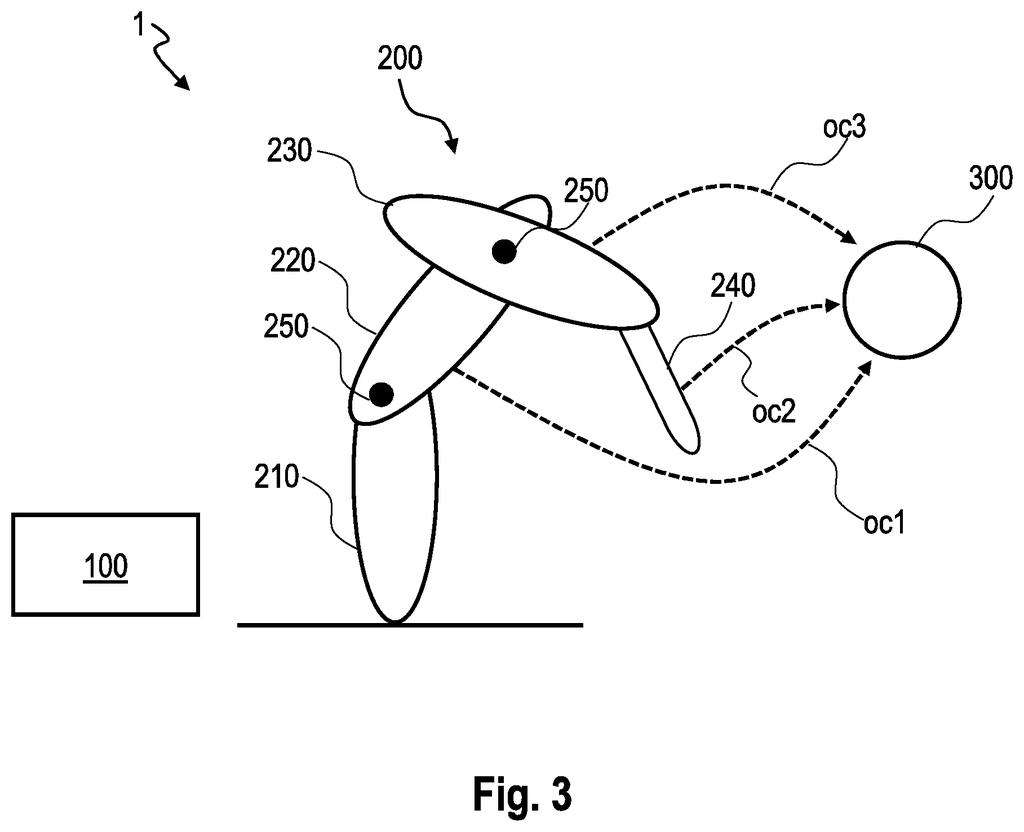
How Sony's robot arm avoids collisions every fraction of a second
Imagine a robot arm in a factory reaching across a table to pick up a part, but a human worker's hand is now in the way. The robot needs to reroute instantly, not after a pause to think. That's the problem this Sony patent is trying to solve.
The system works by continuously recalculating the safest position for each of the robot's joints, taking into account where the arm is supposed to end up and what obstacles it must avoid. It does this on a fixed schedule, so the robot's movement stays smooth and predictable rather than jerky.
The practical result is a robot that can be given a target position and then figure out, on its own and in real time, a collision-free path to get there, even as the environment around it changes. Sony is positioning this as a foundational safety layer for robotic systems.
How the constrained inverse-kinematics solver works
The patent describes a method built around two core inputs: pose data (where you want the robot to move to) and time data (how frequently the robot's controller updates, typically measured in milliseconds).
On every update cycle, the system runs a constrained optimization process on inverse kinematics. Inverse kinematics is the math of working backward from a desired hand position to figure out what angle each joint in the arm needs to be at. The "constrained" part means the solver doesn't just find any solution, it finds one that satisfies collision-avoidance rules, keeping all parts of the robot away from obstacles.
The solver produces kinematic chain parameters, essentially the set of joint angles that get the arm as close as possible to its target while staying collision-free. These become the actual commands sent to the robot's motors.
Key aspects of the approach include:
- Tying the optimization to the controller's update interval so solutions always arrive before the next command is needed
- Handling the full kinematic chain, meaning every segment of the arm, not just the end point
- Generating actionable control data directly from the optimization output
What this means for robots working alongside people
For robots that work near people, like collaborative arms on factory floors or robots in hospitals, the ability to recalculate safe paths in real time is a genuine safety requirement, not a nice-to-have. Current systems often rely on pre-planned paths or slower offline checks; a per-cycle solver running on the control loop itself is a more direct approach.
Sony has been investing in robotics through its acquisition of Boston Dynamics competitor projects and its own robotics research. A patent like this, focused on the control-level math rather than hardware, suggests the company is building foundational software infrastructure it could apply across many robot form factors, including humanoid robots where the kinematic chain is complex and the stakes of a collision are high.
This is solid engineering work on a real problem, but it's not a conceptual leap. Constrained inverse-kinematics solvers for collision avoidance are a well-studied area in robotics research. The value here is in the specific implementation details, particularly tying the solver to the control update interval, which is a practical systems engineering concern. Sony is staking out patent territory in robotic control software, which makes sense given where the industry is heading.
There are more where this came from
We read every patent application Big Tech publishes and send you the ones worth knowing. Plain English, free, every week.
The drawings
7 drawing sheets from US 2026/0208358 A1 · click any drawing to enlarge


Want this weekly breakdown for a company we don't cover? Patentlyze Pro →