
OpenAI Patents a Way for Its AI to Call Outside Tools Without Being Programmed to Do So
Most AI chatbots can only answer questions from what they already know. This OpenAI patent describes a system where the AI figures out, on its own, when it needs to reach outside itself and call a separate tool or application to get a real answer.
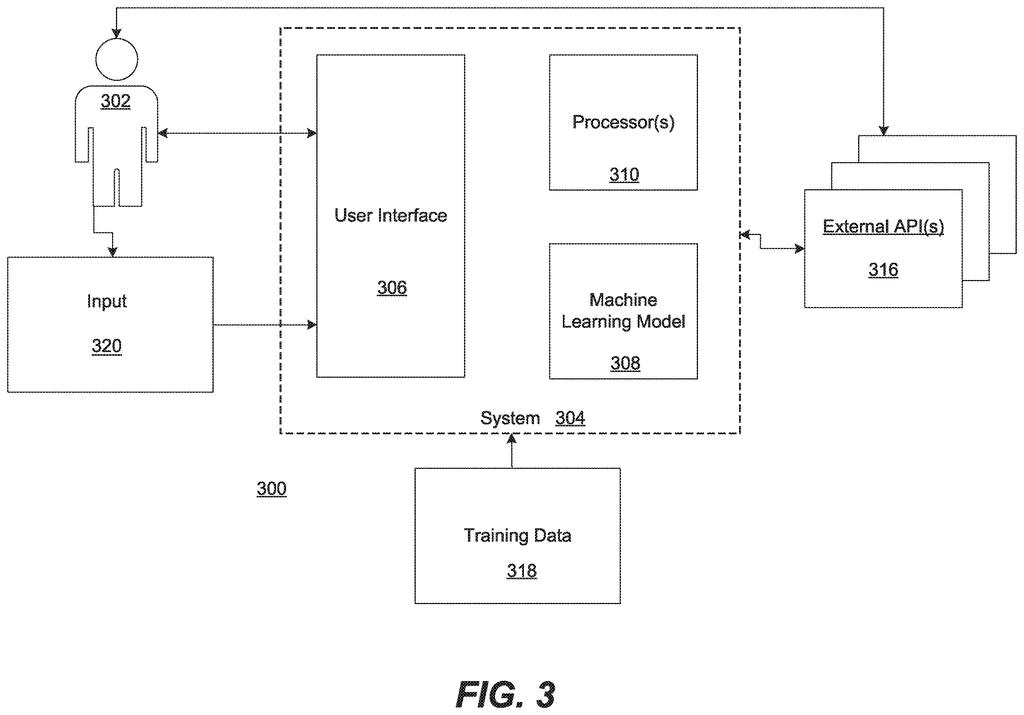
What OpenAI's automatic tool-calling AI actually does
Imagine asking an AI assistant to check your current flight status. A standard AI would just make up a plausible-sounding answer or admit it doesn't know. What OpenAI is patenting here is a system where the AI recognizes that it needs to look that up and automatically triggers the right tool to do it, without anyone having to hard-code that instruction in advance.
The key idea is that the AI model reads your request (in plain text, structured data, or even mixed formats) and decides on its own whether to answer directly or to generate a function call, which is essentially a structured request sent to another piece of software. That other software does the lookup or calculation, sends back a result, and the AI folds it into its response.
This means developers building apps on top of OpenAI's models get an AI that can connect to calendars, databases, payment systems, or weather services without needing to be individually retrained for each one. The AI figures out the plumbing itself.
… without any additional training data or instructions, determine to generate a function call based on the received input from the user and generate the function call based on the determination …
Translation: The AI figures out how to use external tools on its own without needing extra instructions.
How the model decides when to trigger an external function
At the center of this patent is what the filing calls autonomous function call generation. A language model (the AI) receives a request in any format and, without any extra training specific to that situation, decides whether to answer from its own knowledge or to generate a structured call to an external tool.
The process breaks down roughly like this:
- The model receives input, which can be plain text, structured data like JSON, or a combination of both.
- It evaluates the input and determines whether an external tool is needed to produce a good answer.
- If yes, it generates a function call, a precisely formatted instruction that an outside application can read and act on.
- The external tool processes that call and returns a result, which the model then uses to form its final response.
The patent emphasizes that no additional training data or special prompting is required for the model to make this judgment. It is built into how the model processes input. That is different from earlier approaches where developers had to explicitly list every possible function and teach the model, through examples, when to use each one.
The system also handles unstructured input (meaning ordinary human language, not formatted commands), which is significant because it means the model does not need a perfectly worded query to know it should reach out to a calculator, a database, or an API (a connection point to another service).
What this means for AI assistants that fetch real data
For anyone using an AI assistant, the practical difference here is the gap between an AI that confidently makes things up and one that actually checks. If an AI can decide for itself when to fetch real information rather than generate a plausible-sounding guess, the answers you get become meaningfully more reliable. You would notice this most when asking about anything time-sensitive or personal: your account balance, a live sports score, whether a package has shipped.
For developers, this lowers the cost of building AI-powered apps considerably. Right now, connecting an AI to outside services requires careful, manual setup of every possible action the AI might take. A model that handles that routing on its own is a significant reduction in engineering overhead. AI function-calling patents are becoming one of the busier corners of new Big Tech patents, and this filing shows OpenAI staking out foundational ground in how models interact with the software world around them.
This is the sixth OpenAI filing we've tracked since July on AI agents that act for you, following a file search tool and a time-reading scheduler.
The practical benefit for anyone who uses an AI assistant is fewer confident wrong answers. When a model can reach out to a real data source mid-conversation rather than guess, the user stops getting plausible-sounding nonsense delivered with total certainty.
The filing's most meaningful claim is that this works without developers having to teach the model step by step how to call outside tools. That means the capability can show up broadly, in products built on top of the underlying system, without each team having to reinvent it.
A user would notice this most on factual questions where the stakes are real: a medical term, a current price, a legal definition. That is exactly where AI assistants have historically been most dangerous, and a system designed to go look things up rather than improvise addresses the failure directly.
Get our take in your Top Stories
Liked this breakdown? Add Patentlyze as a preferred source on Google, and our plain-English take shows up more often in your Top Stories the next time OpenAI patent news breaks.
There are more where this came from
We read every patent application Big Tech publishes and send you the ones worth knowing. Plain English, free, every week.
The drawings
9 drawing sheets from US 2026/0252397 A1 · click any drawing to enlarge


Want this weekly breakdown for a company we don't cover? Patentlyze Pro →
Be the first to weigh in