
Intel Patents a System That Keeps AI Tasks Running in the Right Order Across Different Chips
AI models spend a huge chunk of their processing time on a single operation called 'attention' — and Intel has patented a way to split that work across different types of chips without wasting any of them waiting around.
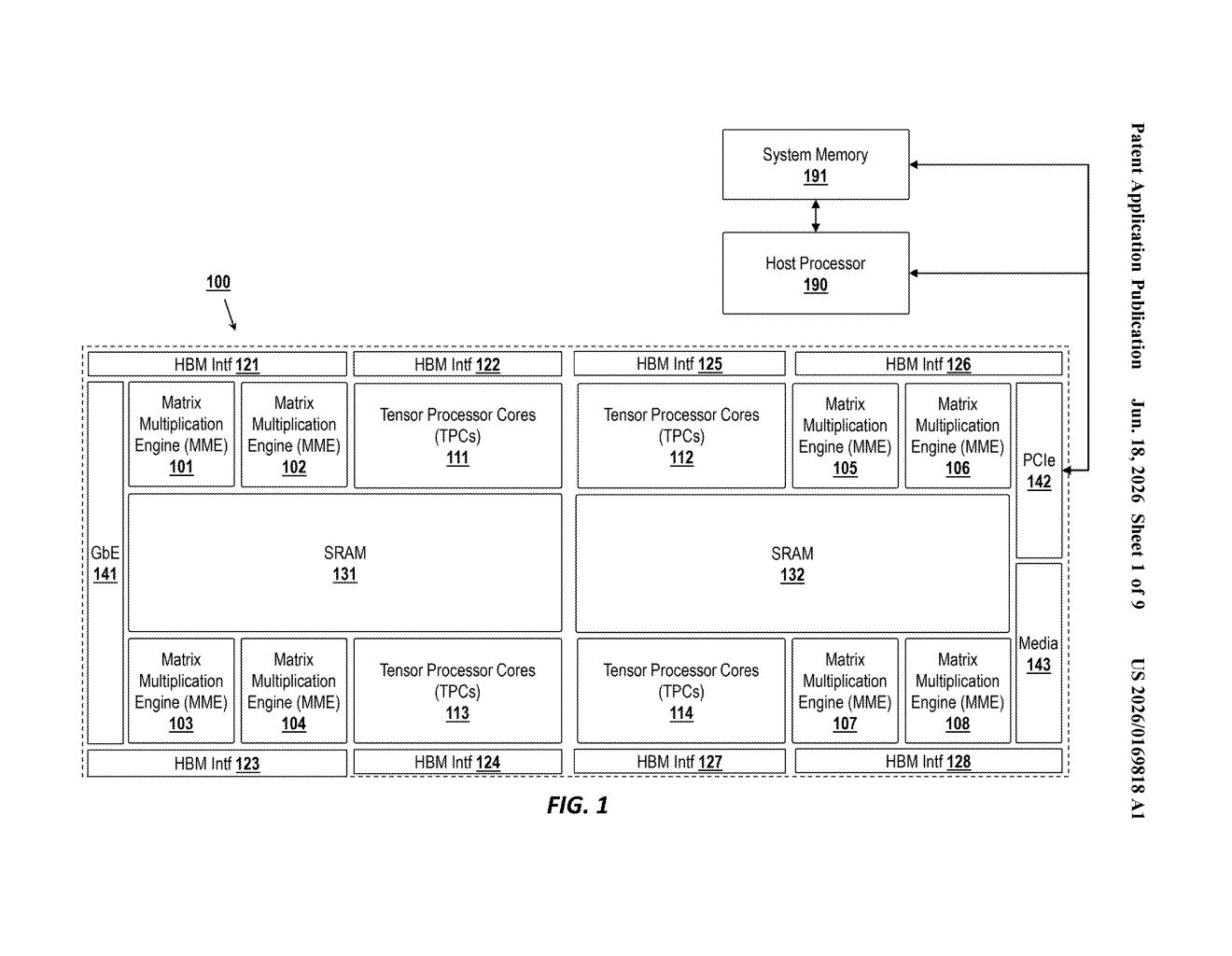
What Intel's mixed-chip AI scheduling actually does
Imagine a construction crew where some workers handle concrete and others handle electrical wiring. If you send them all to the site at once without a schedule, the electricians end up standing around waiting for the concrete to dry. Intel's patent is essentially a smarter foreman for AI chips.
Modern computers often have several different processor types — a general CPU, a graphics chip, an AI accelerator — and running a large AI model means coordinating work across all of them. The problem is that some tasks take much longer than others, and if you don't start the slow ones first, everything else piles up waiting.
This patent describes a system that maps out all the steps an AI model needs to run, figures out which ones depend on which, and then kicks off the longest-running tasks first — so faster chips never sit idle waiting for a slow one to finish. It's a scheduling trick, not a new chip, but good scheduling can make the same hardware run noticeably faster.
How the dependency graph drives Intel's dispatch order
The patent centers on running attention operations — the core computation inside large AI models like GPT-style systems — across a heterogeneous processor platform (meaning a machine with multiple different chip types, such as a CPU, GPU, and a dedicated AI accelerator all working together).
The system builds an attention graph: a map of every computational step the AI needs to perform and how each step depends on the results of previous steps. Think of it like a flowchart where some boxes can't be filled in until other boxes are done first.
- It allocates separate work queues for each processor type — one lane for the CPU, one for the GPU, one for the AI accelerator, and so on.
- It checks a dependency tracking structure to find which steps are ready to run right now (because their inputs are already available).
- Critically, it dispatches the slowest tasks first — so the chip that takes the longest starts working before the faster chips even get their assignments.
- As each task finishes, the tracker updates, unlocking the next wave of tasks that were waiting on those results.
The goal is to keep every processor busy as much as possible, eliminating the idle time that happens when a fast chip finishes early and has to wait.
What this means for AI workloads on Intel hardware
The attention mechanism is the most computationally expensive part of running modern AI models. Any efficiency gained there compounds across every query a model answers. Intel is positioning this as infrastructure for its heterogeneous chip products — designs that combine different processor types on the same package or platform.
For users, the practical payoff would be faster AI inference (the step where a trained model actually generates a response) without buying more hardware. If Intel ships this in drivers or firmware, the same chip could handle more AI requests per second — which matters whether you're running a local AI assistant on a laptop or a data center full of servers.
This is unglamorous scheduling software, not a new chip — but scheduling is exactly where a lot of AI performance gets left on the table. Intel has a real business reason to solve this: its product line already mixes CPUs, integrated GPUs, and NPUs (neural processing units) in the same package. A patent that makes those pieces cooperate efficiently is directly useful, not just theoretical.
There are more where this came from
We read every patent application Big Tech publishes and send you the ones worth knowing. Plain English, free, every week.
Want this weekly breakdown for a company we don't cover? Patentlyze Pro →