
Samsung Patents a Touch-Correction System for Under-Display Camera Screens
Under-display cameras create a messy problem for touchscreens: the same cutouts that let light through to the camera also distort touch signals. Samsung's new patent tackles that distortion head-on with a correction layer baked into the touch-sensing pipeline.
What Samsung's under-display touch fix actually does
Imagine pressing your finger on the part of a phone screen that sits directly over a hidden camera. The screen looks normal, but underneath it's full of tiny holes — gaps that let light through to the lens. Those same gaps mess with the electrical signals the phone uses to figure out where your finger is, which can make touches in that zone feel unreliable or get misread.
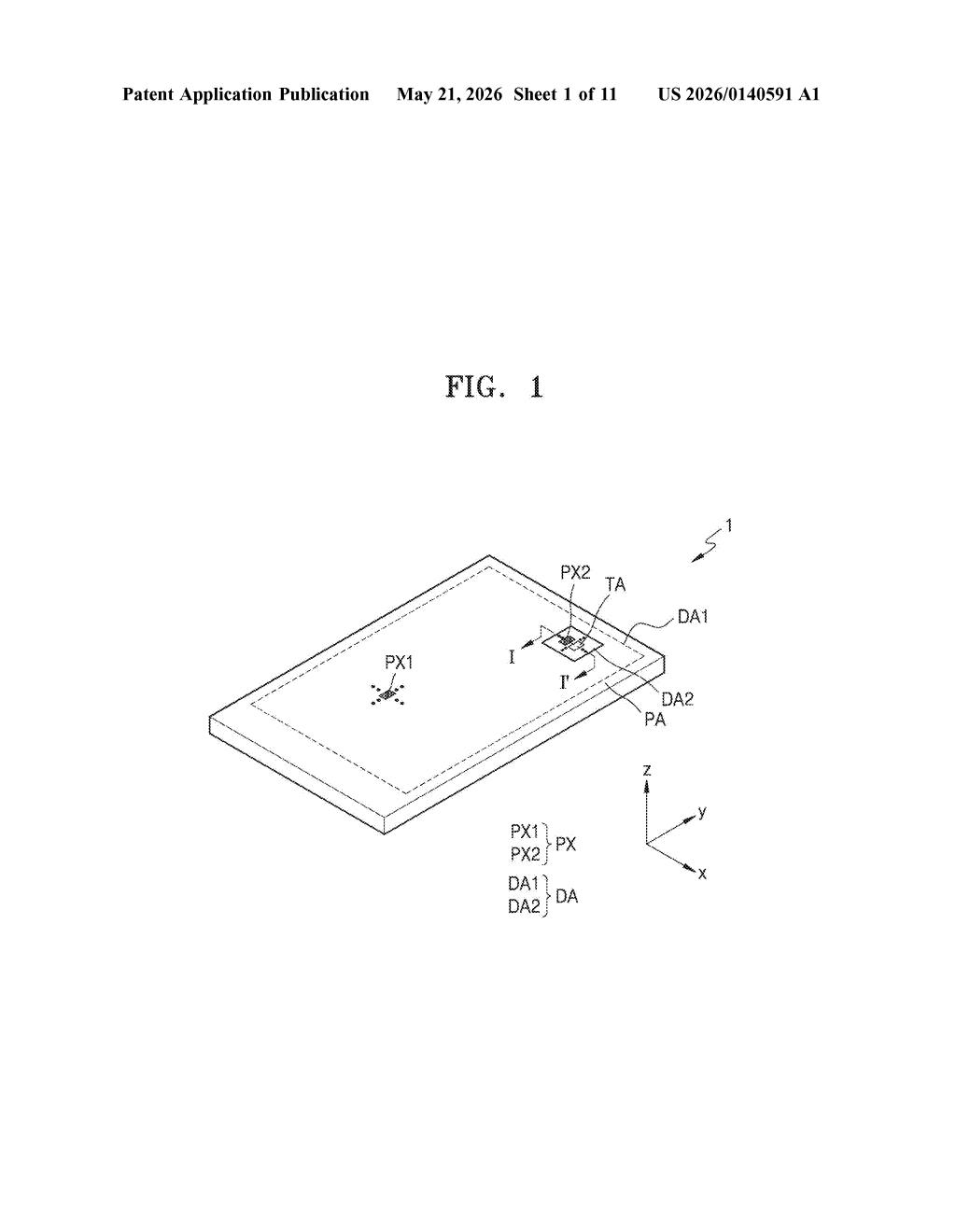
Samsung's patent describes a display that splits the screen into two zones — a normal display area and a special camera-overlay area — and uses separate touch sensors for each. The key twist is that the readings from the camera-zone sensors get mathematically corrected before the phone tries to figure out where you touched, compensating for the signal weirdness caused by all those light-transmitting holes.
The result is that your touch should register just as accurately whether your finger is over a solid part of the screen or directly above the hidden camera — no dead zones, no phantom taps.
How the electrode grid handles camera-area signal gaps
The patent describes a display substrate with two distinct regions: a standard first display area and a second display area that overlaps an optical device (the under-display camera). The second area contains a grid of tiny transmission areas — openings that allow light to pass through to the camera beneath.
To handle touch sensing across both regions, Samsung uses two sets of electrode lines arranged in a crossing grid pattern (think X and Y axes). The first sensing electrode line runs in one direction with openings aligned to one group of transmission areas; the second sensing electrode line crosses it and has openings aligned to a different group. A light-shielding layer between the substrate and the pixels also has openings matching the transmission areas, keeping camera light paths clear.
The critical engineering detail is the size difference in openings:
- Openings in the electrode lines that align with transmission areas (for the camera) are larger
- Openings that align with pixels are smaller
- The two electrode lines use distinct, non-overlapping sets of openings
The touch driving circuit collects raw signals from both sensor sets, generates touch values for each, then applies a correction step specifically to the camera-zone values before computing a final touch location. This correction compensates for the signal attenuation (signal weakening) caused by all those transmission holes in the electrode material.
What this means for under-display camera phone screens
Under-display cameras have been a persistent weak spot in full-screen phone design — manufacturers like Samsung have shipped them in the Galaxy Z Fold line, but touch accuracy and display quality over the camera zone has always been a known compromise. A patented correction algorithm embedded at the sensing-circuit level, rather than patched in software, would be a cleaner fix that could make the camera-zone area behave indistinguishably from the rest of the screen.
For you as a user, this is the kind of invisible plumbing that determines whether an under-display camera phone feels premium or slightly broken. If Samsung can ship reliable touch correction here, it removes one of the last remaining arguments for keeping a visible notch or punch-hole cutout — pushing the industry a step closer to truly hole-free displays.
This is solid incremental engineering rather than a conceptual leap — Samsung has been iterating on under-display camera tech for years, and this patent is the touch-sensing piece of that puzzle. It's worth paying attention to because touch accuracy is one of the two remaining quality gaps (the other being camera image quality) holding back under-display cameras from mainstream adoption. Don't expect a press release, but do expect this to quietly show up in a future Galaxy Z Fold or a next-gen Galaxy S.
There are more where this came from
We read every patent application Big Tech publishes and send you the ones worth knowing. Plain English, free, every week.
Want this weekly breakdown for a company we don't cover? Patentlyze Pro →