
Intel's New Patent Wants to Let You Whisper to Colleagues During Video Calls
Ever wanted to lean over and whisper something to a colleague during a video call without muting and texting? Intel is filing patents to make that feel natural — using spatial audio to simulate a private conversation happening right next to you.
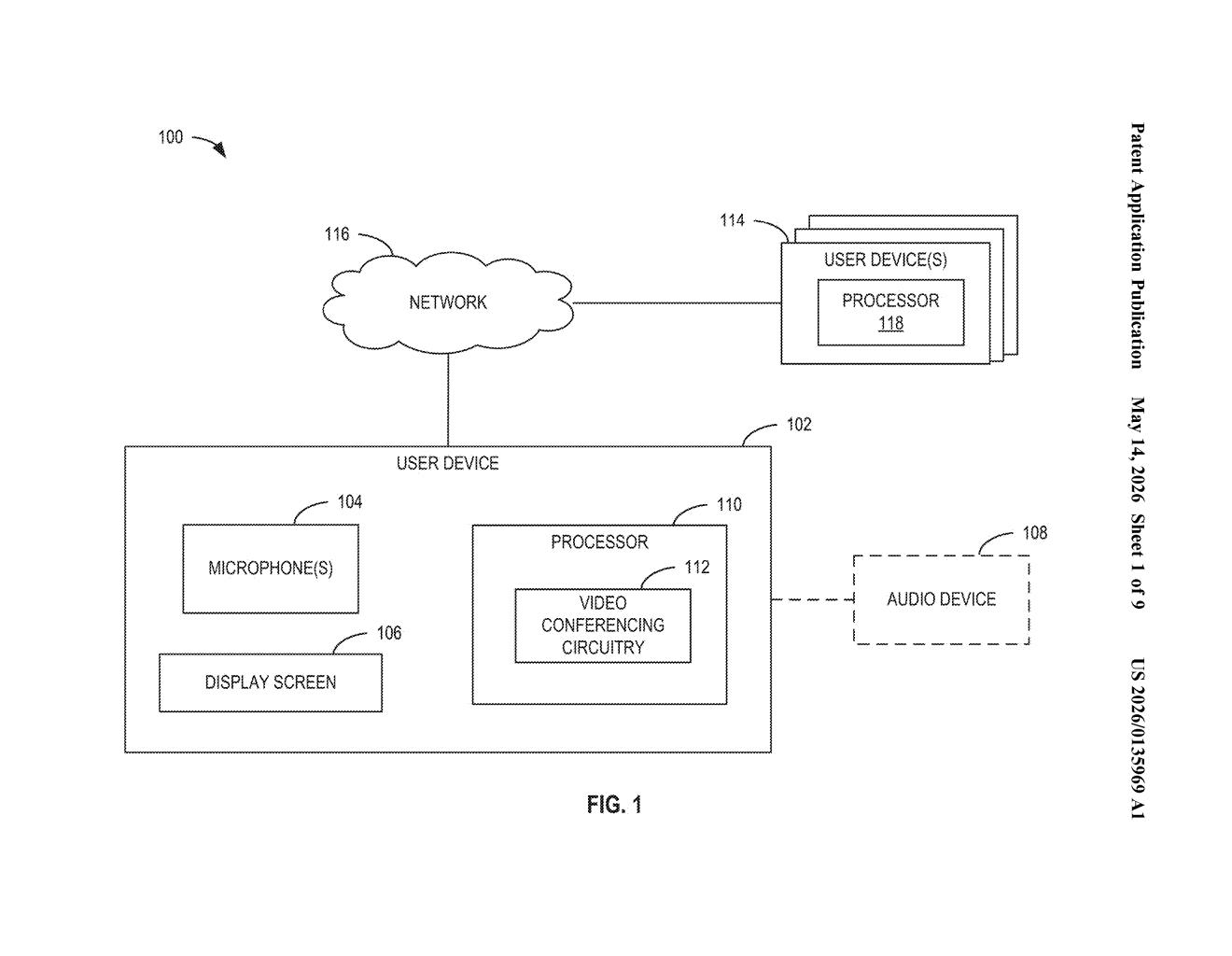
How Intel's virtual 'whisper channel' actually works
Imagine you're in a big video conference and you want to quietly ask your coworker, "Did that client just say what I think they said?" Right now your options are: type in chat (awkward), mute and call separately (disruptive), or just... don't. Intel's patent describes a smarter way.
The idea is to use binaural audio — the same technology that makes headphone sound feel like it's coming from around you — to create two separate audio "streams" during a single meeting. The main meeting audio sounds like it's coming from one direction, while a private side channel with a smaller group sounds like it's coming from a different direction.
The result: you hear both conversations at once, but they feel spatially distinct — like turning your head slightly to catch a quiet aside from someone standing next to you, even though you're all on the same call. No extra apps, no awkward muting.
How Intel separates meeting audio into spatial angles
The patent describes a processor-based system that manages two overlapping audio channels inside a single video conferencing session. When you join a second audio channel (a private side conversation within the same meeting), the system does something clever with angles.
It assigns a distinct binaural angle to each channel — think of it like positioning virtual speakers around your head. The main meeting audio is panned to one angular position, the side conversation to another. Both are then mixed into a single superimposed binaural audio output that your headphones render as spatially distinct sources.
- First audio channel: the main meeting, re-angled to sound like it's coming from, say, your left or front-left
- Second audio channel: the private side conversation, placed at a different angle — perhaps closer to center or slightly right
- Superimposed output: both streams blended so your brain can perceptually separate them, the way you can follow one conversation in a noisy room
The processor circuitry handles angle selection dynamically when a user joins or creates the second channel, so the spatial separation is automatic rather than something you have to configure manually.
What this means for the future of remote collaboration
Remote work tools have gotten pretty good at replicating the mechanics of a meeting, but they've completely failed to replicate the social texture of being in a room together — specifically, the ability to have a quiet aside without derailing the main event. Intel's approach targets that gap directly.
If this ends up in conferencing hardware or software — Intel has significant reach into laptop chipsets and video processing platforms — it could meaningfully change how distributed teams collaborate. For now it's a patent filing, but the underlying binaural audio technology is mature enough that implementation isn't far-fetched. The real question is whether platform owners like Zoom, Teams, or Google Meet adopt or license something like this, or whether Intel builds it at the hardware/driver layer.
This is a genuinely interesting human-factors patent, not just a technical incremental. The cocktail-party problem — hearing and separating overlapping conversations — is well-studied in psychoacoustics, and applying it to structured meeting software is a natural and overdue idea. Whether Intel can get traction here depends entirely on ecosystem partnerships, but the concept itself is sound and the need is real.
Get our take in your Top Stories
Liked this breakdown? Add Patentlyze as a preferred source on Google, and our plain-English take shows up more often in your Top Stories the next time Intel patent news breaks.
There are more where this came from
We read every patent application Big Tech publishes and send you the ones worth knowing. Plain English, free, every week.
Want this weekly breakdown for a company we don't cover? Patentlyze Pro →