
Qualcomm Patent Enables AI to Learn New Categories Without Restarting Training
Most AI systems have a serious memory problem: teach them something new and they forget what they already knew. Qualcomm is patenting a way around that.
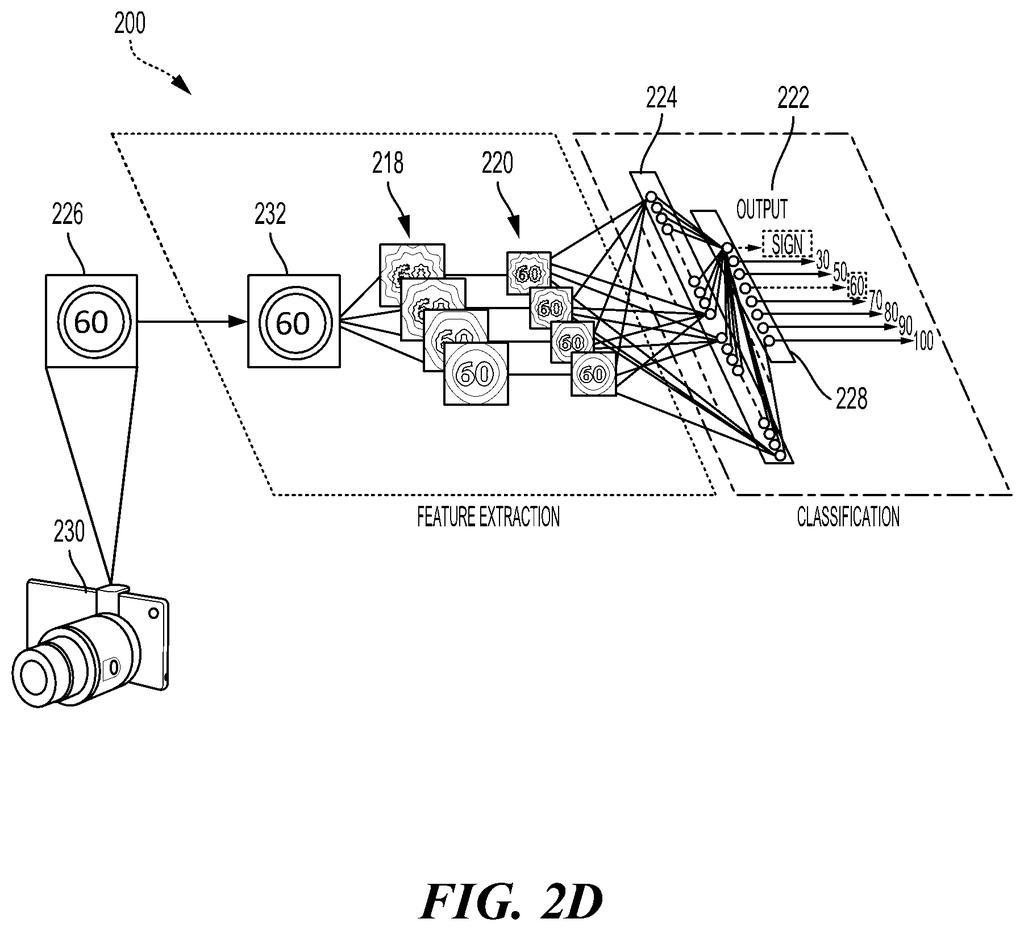
How Qualcomm's AI adds new categories on the fly
Imagine training a dog to recognize cats, then trying to teach it to also recognize rabbits. If the training process wipes out the cat knowledge every time you add rabbits, you're stuck in an endless loop. That's essentially what happens with most AI systems today when you try to add new categories after the initial training.
Qualcomm's patent describes an AI that can recognize and categorize something new without going back to school. Instead of retraining the whole system from scratch, the AI compares what it sees to a collection of things it has already learned, and if something doesn't match, it creates a new mental bucket for it on the spot.
This matters most for devices that run AI locally, like a phone or a smart camera, where you can't easily send the model back to a data center every time the world changes. The goal is an AI that keeps learning without forgetting what it already knows.
… generating, by the first ANN, a new class without retraining the first ANN, the new class being generated based on a comparison of the embedding and a set of prior embeddings.
Translation: The system adds new categories on the fly by comparing new data against past memories instead of starting over.
How the embedding comparison creates new classes
The patent describes a method called dynamic class-incremental learning, which is a way for an AI to add entirely new categories to its knowledge base without retraining.
Here's the step-by-step process the system follows:
- The neural network receives an input (an image, a sound clip, a sensor reading) and extracts its key features into a compact numeric summary called a representation.
- That representation is then turned into an embedding (think of it as a coordinate in a map where similar things cluster close together) using multiple different similarity metrics (different mathematical lenses for measuring how alike two things are).
- The new embedding is compared against a stored set of prior embeddings, things the model has already seen and classified.
- If the new input doesn't fit any existing category well enough, the system creates a new class to hold it, all without running any new training passes.
The key engineering claim is that none of this requires retraining the underlying network. The model's weights stay frozen; only the library of known embeddings grows. Using multiple similarity metrics at once is meant to make the classification more reliable than leaning on any single measure of closeness.
A processor-implemented method for dynamic class-incremental learning without forgetting includes receiving, by an artificial neural network (ANN), an input.
Translation: The AI learns continuously as it goes without wiping out what it already knows.
What this means for AI running on phones and chips
For on-device AI (the kind that runs directly on a phone, wearable, or embedded chip rather than in a cloud server) retraining is expensive and often impossible. A security camera can't phone home every time it encounters a new face, and a medical device can't wait for a firmware update every time it sees an unfamiliar reading. Qualcomm, which makes the processors inside a huge share of Android phones and IoT devices, has obvious reasons to want AI that can adapt in the field.
The forgetting problem is one of the oldest unsolved puzzles in AI research. Most neural networks, when updated to learn something new, degrade at recognizing things they learned before. A system that genuinely sidesteps that tradeoff would be a meaningful step forward for any AI that lives outside a data center.
This is real, difficult AI research targeting a problem that matters for edge computing. The approach of comparing embeddings with multiple similarity metrics to generate new classes without retraining is specific enough to be worth watching, especially given Qualcomm's hardware position. That said, the patent is light on detail about how well the system handles genuinely novel inputs versus near-duplicates, which is where these methods usually break down.
There are more where this came from
We read every patent application Big Tech publishes and send you the ones worth knowing. Plain English, free, every week.
The drawings
10 drawing sheets from US 2026/0228525 A1 · click any drawing to enlarge


Want this weekly breakdown for a company we don't cover? Patentlyze Pro →
Be the first to weigh in