
Microsoft Patent Enables AI Similarity Searches Via Standard Database Query Operators
Most databases need special-purpose plumbing to handle the AI-style 'similarity search' that powers things like recommendation engines and chatbot memory. Microsoft is patenting a way to do it without any of that extra machinery.
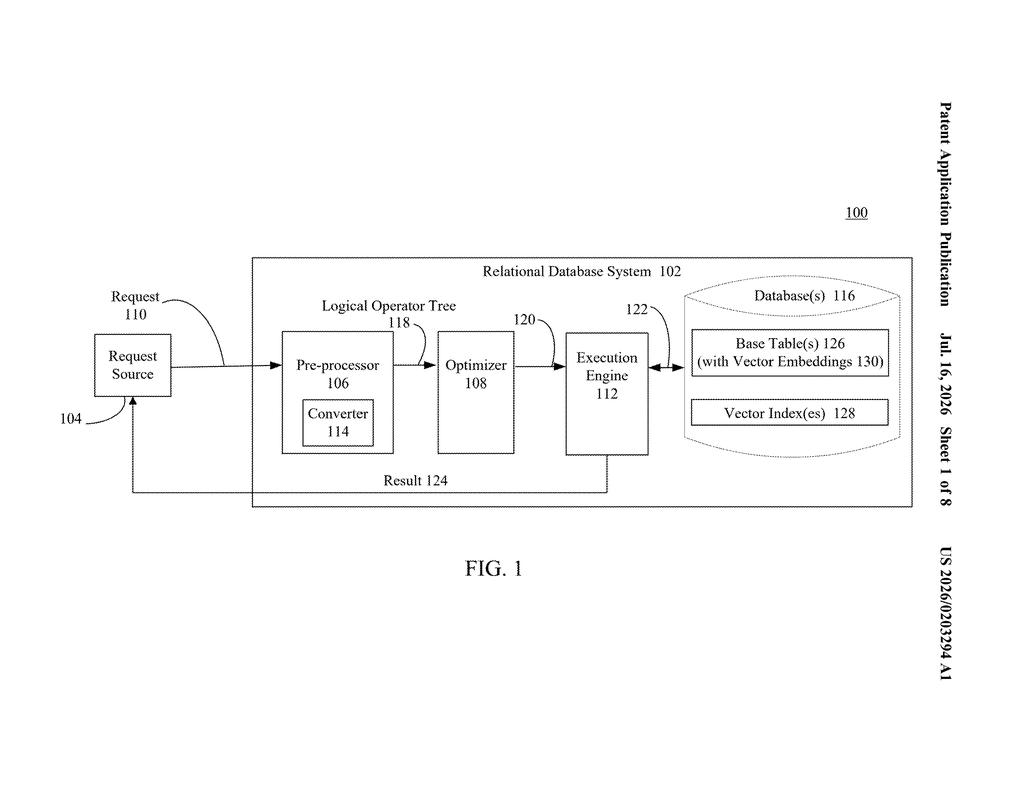
How Microsoft folds AI search into a regular database
Imagine you ask a database: 'Find me the ten items most similar to this one.' That kind of question, called a vector search, is central to how modern AI apps work. It's how a music app finds songs that 'feel like' one you just played, or how a chatbot remembers relevant things you told it earlier. The problem is that traditional databases weren't built for it, so companies usually have to bolt on a separate, specialized system.
Microsoft's patent describes a way to handle that same kind of question entirely inside a standard database, using the same basic building blocks the database already uses for everyday queries. No extra vector-specific code required.
In practice, the database translates your similarity-search request into a familiar step-by-step query plan, runs it, and gives you results. For developers and companies, that could mean one fewer system to manage and a more consistent way to build AI features on top of data they already have.
How the converter builds a logical operator tree
The patent describes a pipeline with four main parts working in sequence:
- Parser: Accepts a request that involves vector embeddings (numerical representations of text, images, or other data that let a computer measure how 'close' two things are in meaning or content).
- Converter: Translates that request into a logical operator tree, which is essentially a flowchart of standard, non-vector database operations. The key claim is that no vector-specific executable code or operators are needed at this stage.
- Optimizer: Takes that flowchart and turns it into a concrete execution plan, applying the same cost-based reasoning the database already uses for ordinary SQL queries.
- Execution engine: Runs the plan against a table that stores vector embeddings, returning results.
The approach leans on a vector index (a data structure that makes similarity lookups fast) but accesses it through the database's existing query infrastructure rather than through a parallel, purpose-built system. The practical result is that vector search becomes a first-class operation inside a relational database without requiring the database engine to be rewritten from scratch.
What this means for SQL Server and Azure databases
For developers building AI applications on top of relational databases like SQL Server or Azure SQL, this matters because it lowers the cost of entry. Right now, adding vector search often means integrating a separate specialized store (think Pinecone or pgvector on PostgreSQL) alongside your main database, which adds complexity, synchronization problems, and another bill.
If Microsoft ships this in its own database products, you could run similarity searches on the same data, in the same system, using familiar query tools. That's a quieter kind of win than a flashy new product, but for teams maintaining production databases, fewer moving parts is a real advantage.
This is infrastructure work, not a headline feature, but it's the kind of patent that tends to actually ship. Microsoft has been steadily adding AI capabilities to SQL Server and Azure SQL, and this fits that pattern exactly. If it lands in a product, developers who already live inside the Microsoft data stack get vector search for free.
There are more where this came from
We read every patent application Big Tech publishes and send you the ones worth knowing. Plain English, free, every week.
Want this weekly breakdown for a company we don't cover? Patentlyze Pro →
Be the first to weigh in