
Qualcomm Files Patent for a Phone AI Backup Plan When Cell Network Data Goes Missing
Qualcomm's patent application gives your phone's wireless AI a Plan B: if the network can't send the data a model needs, the phone swaps to a backup, or to the old non-AI method.
What Qualcomm's backup AI models do for phones
Ever started a recipe and found out halfway through that you were missing an ingredient? You can give up, or you can switch to a version of the dish that works with what's in your kitchen.
That is the problem Qualcomm is tackling for the AI inside your phone's wireless chip. Some of those AI tools need information from the cell tower to make a good call, such as which direction to aim a signal. When the tower is overloaded or the data arrives garbled, the AI can guess wrong.
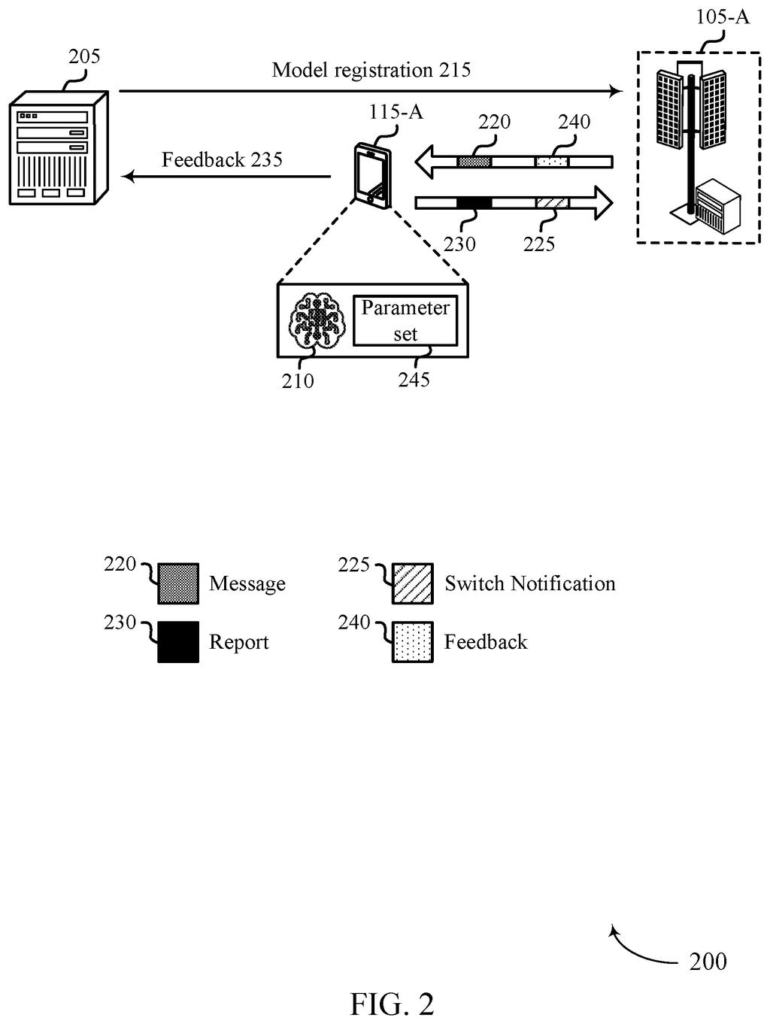
In this patent application, the network hands your phone a menu of AI options in advance, plus rules for when to use each one. If the tower's data goes missing, the phone moves to a backup that only needs what the phone can measure itself, or to an older, non-AI method. Then it tells the network what it did.
… switch, in accordance with the one or more usage conditions being unsatisfied, from the first configuration to one of the second configuration or the third configuration …
Translation: The phone switches to a backup AI setup when normal operating conditions fail.
How the phone decides when to switch models
The filing covers both sides of the conversation: the phone (called user equipment, or UE, in telecom talk) and the network equipment it connects to. The network sends the phone a message listing several configurations for one feature, along with usage conditions for the first one.
- First configuration: an AI model that produces a prediction, called an inference (running live data through a trained model to get an answer).
- Second configuration: a different AI model or a different set of parameters (the learned weights inside a neural network).
- Third configuration: an answer built from data the phone measured or the network sent, which can skip AI and follow an older, legacy procedure.
When the usage conditions for the first configuration stop being met, the phone switches to the second or third, generates its answer, and reports it. It can also tell the network which conditions failed. The listed conditions include whether input data is available, whether the phone is indoors or outdoors, a timer for how long a model stays valid, the area covered (such as a cell or a carrier's network), a performance threshold, and antenna and beam settings.
The description gives examples: beam management (choosing which signal beam to use), dropping to a lighter model in low-power mode, and a radio-fingerprint method for working out position. Models can carry priorities, and the network can change them based on performance the phone reports.
Based on a usage condition being satisfied, the UE may select a machine learning model, a parameter set, or both for generating a machine learning inference.
Translation: The device picks a suitable AI model depending on current requirements.
Why Qualcomm's fallback plan matters for signal
For you, the payoff would show up as hiccups you never notice: a more reliable connection when a crowded tower can't send your phone everything it needs, and less wasted battery when the phone drops to a lighter model in low-power mode. The filing describes these as possible benefits, not measured results.
Strategically, it shows how phone chip makers are thinking about AI inside the radio itself. Qualcomm is best known for the chips that manage your phone's wireless connection, and this filing is about what those AI features do when conditions go wrong. A shared rulebook matters because phones and networks come from different makers, and the filing spells out how the network sets the conditions and how the phone reports its switch.
Qualcomm's 19th filing we've tracked since July in our on-device AI privacy watch adds to a pattern that includes training without collecting data and training across many phones.
Every backup costs something. Here the phone has to store several models and parameter sets at once, and the network has to keep priorities and conditions up to date. That means more memory, more messaging, and more settings that someone can configure wrong.
The other price is accuracy. A fallback model that only sees what the phone measures will often give a weaker answer than the full model. The filing's answer is to train models that cope with missing data and to let the network demote any that perform poorly, based on the phone's reports.
The trade reads as worth it. A slightly weaker answer beats a confident wrong answer built on garbled input, and the option to fall back to the old non-AI method gives engineers a safe floor. It is sensible plumbing that most readers will never see.
Get our take in your Top Stories
Liked this breakdown? Add Patentlyze as a preferred source on Google, and our plain-English take shows up more often in your Top Stories the next time Qualcomm patent news breaks.
There are more where this came from
We read every patent application Big Tech publishes and send you the ones worth knowing. Plain English, free, every week.
The drawings
19 drawing sheets from US 2026/0322710 A1 · click any drawing to enlarge


Show the other 11 sheets


Want this weekly breakdown for a company we don't cover? Patentlyze Pro →
Be the first to weigh in