
Samsung Patents a Robot That Figures Out What You're Looking At
Imagine telling a robot 'bring me that' while glancing at a bottle on the counter — and it actually knows what 'that' is. Samsung's new patent describes exactly that kind of gaze-aware robot control.
What Samsung's gaze-tracking robot actually does
You know how when you're talking to someone and you glance at an object, they usually understand what you mean? This patent is Samsung trying to give robots that same social awareness.
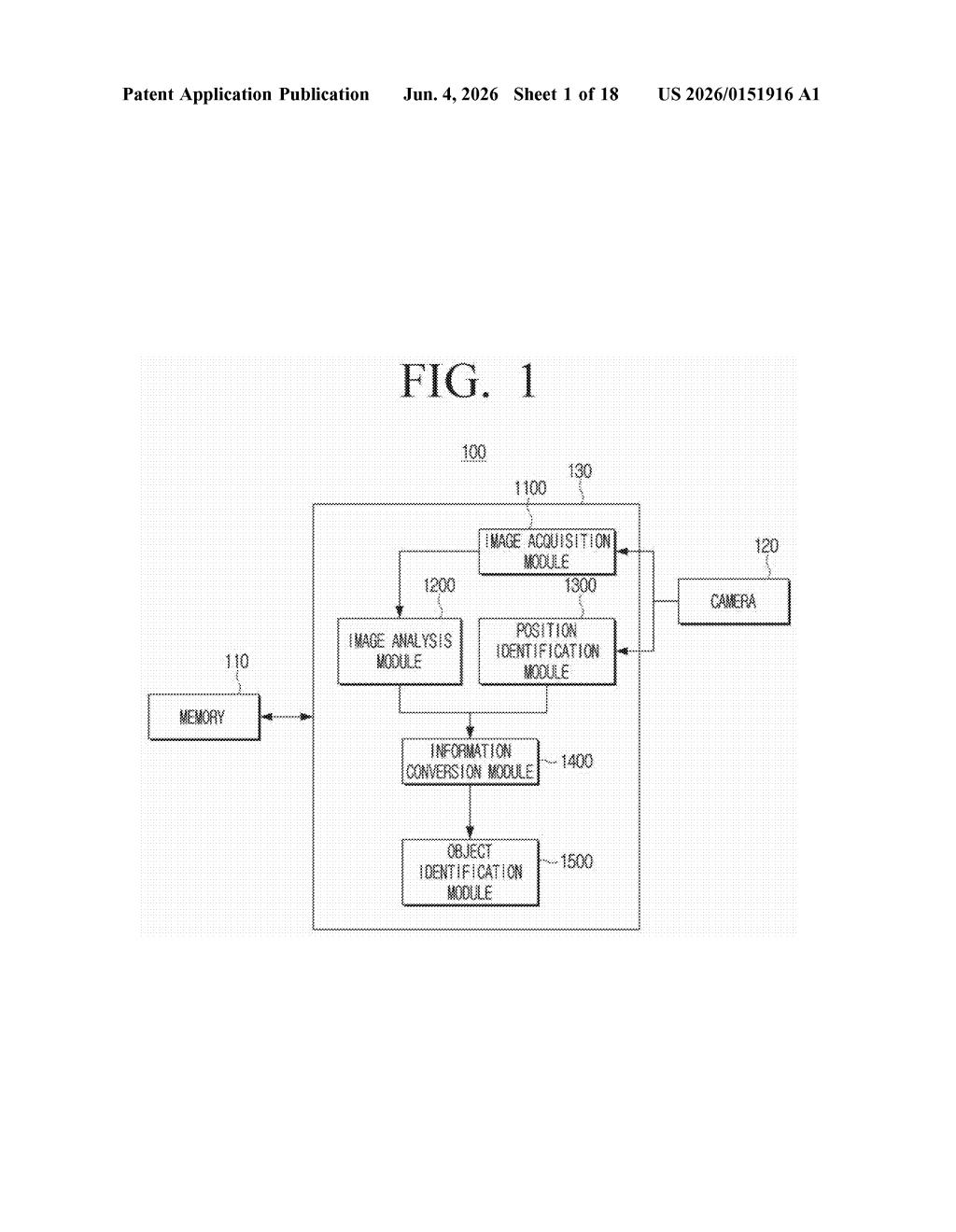
Here's how it plays out: a robot's camera watches you, figures out where you're standing and which direction your eyes are pointed, then cross-references that with a map of the room it already knows. An AI model takes all that location and gaze data and identifies the specific object you're probably looking at — the lamp, the cup, the door.
Once the robot knows what you're focused on, it can respond to a command like 'pick that up' or 'tell me about that' without you having to name the object or point with your hand. It bridges the gap between how people naturally communicate and how robots need explicit instructions to act.
How the robot maps your gaze onto its environment model
The patent describes a multi-step pipeline that converts raw camera footage into actionable intent. When you stand in front of the robot, its camera grabs an image of you and immediately extracts two things: your position relative to the robot and your gaze direction — essentially a vector pointing from your eyes outward into the room.
That relative information then gets translated into absolute coordinates on a pre-built map of the robot's operating environment. The robot knows where it is on that map at any given moment (via its own positioning data), so it can do the coordinate math to place you and your line of sight onto that same map.
Next, the gaze and position data get encoded onto a grid map — think of it like a top-down floor plan where each cell represents a small patch of floor or space. That grid becomes the input to an AI model (a trained neural network) that was specifically taught to associate gaze vectors on maps with physical objects in the environment.
The output is a confident identification of the object you're looking at. After that, when you issue a voice command or gesture, the robot already knows the target — so it can fetch, describe, or interact with that object without needing you to spell it out.
What this means for home and service robots
For home and service robots to feel genuinely useful rather than clunky, they need to understand human-native communication — and humans constantly use gaze as a pointing mechanism without even thinking about it. A robot that can't follow your eyes forces you to adapt to it, which slows everything down.
This patent positions Samsung's robot platform to handle natural, low-effort commands rather than requiring explicit verbal object names every time. If Samsung is building toward a household robot product — and its recent investments strongly suggest it is — gaze-based intent recognition is the kind of foundational capability that makes the difference between a robot that feels like a smart appliance and one that feels like a capable assistant.
This is genuinely worthwhile foundational work. Gaze-to-object mapping is one of the harder perceptual problems in robotics because it requires fusing body pose estimation, camera calibration, spatial mapping, and object recognition into a single coherent pipeline. Samsung filing this now signals they're treating natural human-robot interaction as a real engineering priority, not a demo feature.
There are more where this came from
We read every patent application Big Tech publishes and send you the ones worth knowing. Plain English, free, every week.
Want this weekly breakdown for a company we don't cover? Patentlyze Pro →