
Samsung Patents a Compass Calibration System That Adapts to Which Sensors Are On
Your phone's compass is almost always slightly wrong, and correcting it depends on knowing how the phone is moving. Samsung's latest patent describes a system that picks the best correction method based on which sensors happen to be running at the time.
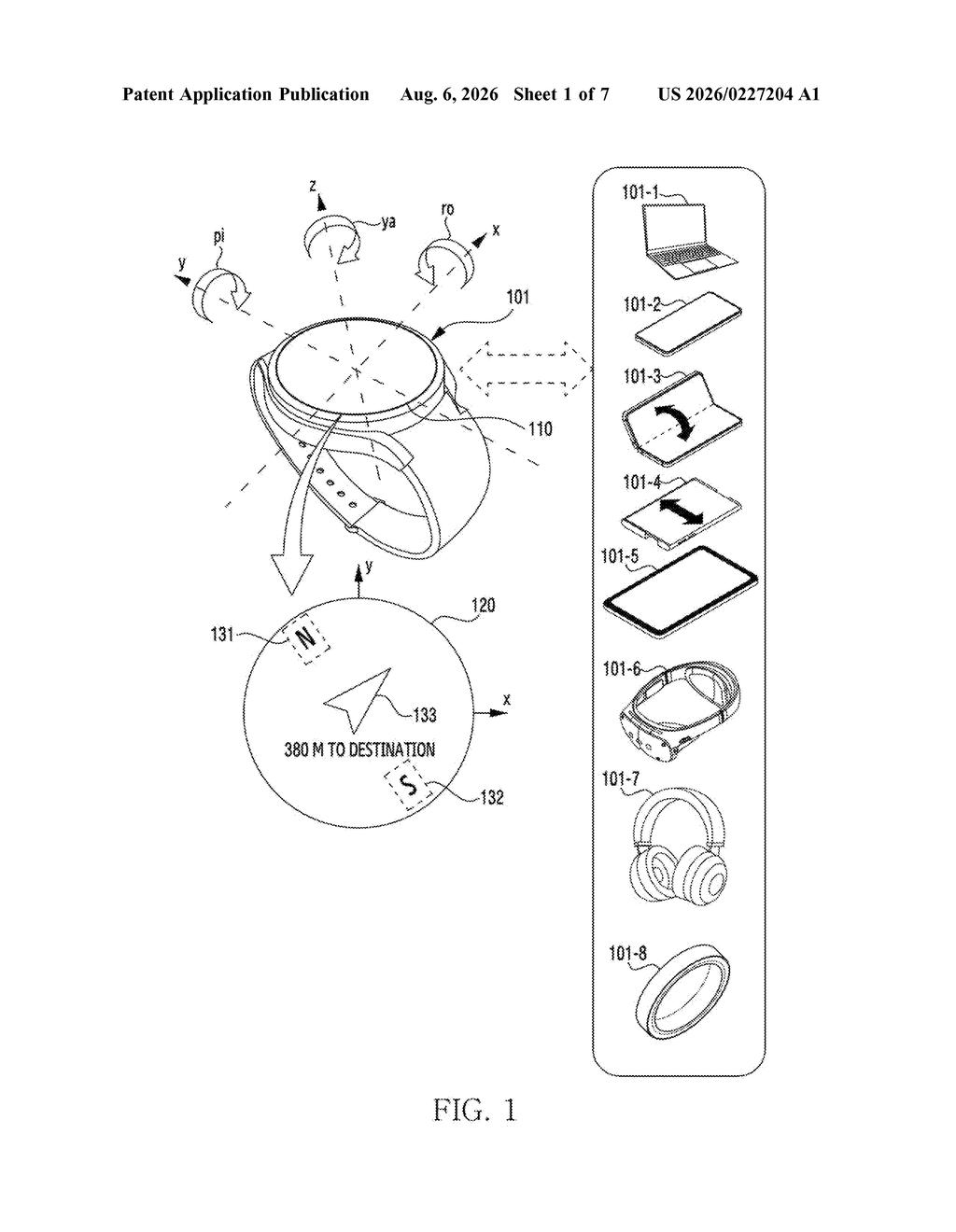
How Samsung's adaptive compass correction actually works
Imagine you're using your phone for walking directions and the map keeps spinning or pointing slightly off. That's often because the phone's built-in compass needs calibration, a small mathematical correction to account for interference from metal, magnets, or the phone's own electronics.
Samsung's patent describes a system that decides how to apply that correction based on what's available. If the gyroscope (the sensor that tracks rotation) is turned off to save battery, the system uses a history of magnetic readings from different directions to make its best guess. If the gyroscope is on, it also factors in exactly how the phone has been rotating, giving a more precise correction.
The practical goal is a compass that stays accurate across different power states without requiring you to wave your phone in a figure-eight every time it drifts.
… change the calibration information at a first time point by using distribution of directions of a magnetic field, which are measured by the geomagnetic sensor at a second time point that is prior to the first time point …
Translation: When only the compass is on, it calibrates using past magnetic field directions.
How the device switches between calibration strategies
The patent covers a device with both a geomagnetic sensor (the compass) and a gyro sensor (which measures rotational movement). The core idea is that calibration, the process of correcting raw compass readings so they reflect true magnetic north, should use different inputs depending on which sensors are currently active.
The system works in two modes:
- Gyro off: The device collects a spread of magnetic field direction measurements taken over time (a statistical distribution) and uses that historical data to update the calibration at a chosen moment.
- Gyro on: The device combines those same magnetic direction readings with the actual rotation angles the gyro recorded, producing a correction that accounts for how the phone physically moved while those readings were gathered.
The key detail is timing. The calibration update happens at a "first time point," but it draws on data gathered at an earlier "second time point." This means the system can wait for a clean data window before committing to a new correction, rather than updating in real time and potentially locking in noisy values.
This is fundamentally a resource-aware calibration strategy: use whatever sensor data is available, and squeeze the most accuracy out of it.
… changing the calibration information by using the directions of the magnetic field and by using a rotation angle of the electronic device at the second time point …
Translation: When both sensors are on, it uses both magnetic data and rotation angles to calibrate.
What this means for navigation accuracy on Galaxy devices
Compass accuracy matters most in two situations: outdoor navigation where a one- or two-degree error sends you to the wrong side of a building, and augmented reality apps where the digital overlay needs to stay fixed to the real world as you move. A compass that recalibrates poorly, or only recalibrates when all sensors are running at full power, can drift noticeably in both cases.
For Samsung, this patent points toward making compass reliability more consistent across the power modes that modern phones cycle through constantly. Battery-saving states often shut down the gyroscope first, so a calibration method that degrades gracefully when the gyro is off is practically useful rather than just theoretically tidy.
This is a focused engineering patent solving a real but unglamorous problem: compass drift when the phone is in a low-power state. It's not a flashy AI feature, but inaccurate compass readings are a genuine source of user frustration, and Samsung filing this suggests the issue shows up in their own testing data. Worth a note if you follow sensor accuracy or wearable/navigation tech.
There are more where this came from
We read every patent application Big Tech publishes and send you the ones worth knowing. Plain English, free, every week.
The drawings
7 drawing sheets from US 2026/0227204 A1 · click any drawing to enlarge


Want this weekly breakdown for a company we don't cover? Patentlyze Pro →
Be the first to weigh in