
Samsung Patent Reveals AR Glasses That Adapt Virtual Content to Your Surroundings
Samsung has filed a patent for a wearable headset that watches your posture and scans your surroundings in real time, then decides on its own how deeply to immerse you in virtual content. It's the difference between a device that dumps a full-screen app in your face and one that knows when to step back.
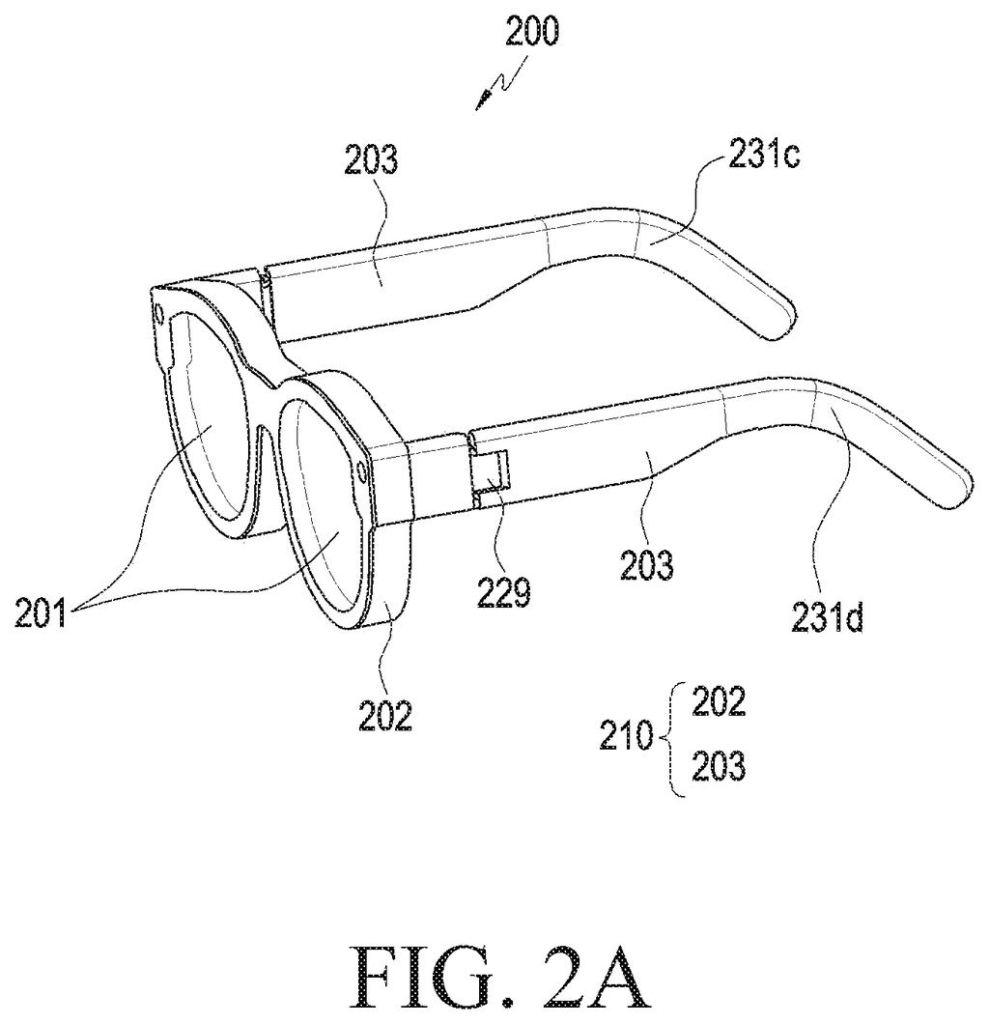
How Samsung's headset reads your body and room
Today's AR headsets treat every moment the same: they show you virtual content at a fixed size and intensity, whether you're sitting at a desk or walking through a crowded kitchen. Samsung wants to change that by giving a headset the ability to read the room, literally.
The patent describes a wearable device that uses its cameras to spot real objects around you and its sensors to track how you're holding your body. From that information, it calculates a "first immersion level" and decides how boldly to display an app's screen as a virtual object floating in your view. Then, as you start interacting with that virtual content, the device watches again and may dial the experience up or down based on what you're doing.
Think of it as a headset that notices you've sat down at your desk and expands your virtual workspace, then shrinks it back when you stand up and start moving. You wouldn't need to fiddle with settings; the device handles the transition for you.
… changing a current immersion level from the first immersion level to a second immersion level based on the first images; and displaying the execution screen based on the second immersion level.
Translation: The glasses automatically adjust how much virtual content you see based on what the camera detects in your surroundings.
How immersion levels get calculated and applied
The patent lays out a two-stage decision loop that runs continuously while the headset is in use.
Stage one happens before you interact with anything virtual. The headset's cameras capture images of the real world around you, and the system identifies specific real objects in the scene. At the same time, onboard sensors measure your body posture (how you're sitting, standing, or moving). Combining those two inputs, the device computes a "first immersion level" that governs the initial size, opacity, or placement of a virtual app screen floating in your field of view.
Stage two kicks in after a virtual object is already on display. The system monitors how you interact with it: whether you're looking at it, tapping it, or ignoring it. From that, it calculates a "second immersion level" and changes the display scheme of the virtual object accordingly, potentially making it larger, more opaque, or repositioning it.
Key inputs the system tracks:
- Camera images identifying real-world objects in the environment
- Sensor data capturing the user's current posture
- Interaction signals between the user and displayed virtual content
The claim is device-agnostic: it covers any wearable with at least one display and one camera, which keeps the scope broad for future hardware.
… identify a real object located around a user based on an image of a real world obtained through the at least one camera, identify a posture of the user wearing the wearable device based on sensing data obtained by the at least one sensor …
Translation: The device tracks both your physical surroundings and your body position to decide how to show digital information.
What this means for Samsung's AR headset ambitions
For the person actually wearing a Samsung headset, this patent addresses one of the most common complaints about mixed-reality devices: they feel socially tone-deaf. A headset that automatically pulls back its virtual overlay when your body language suggests you're on the move, or expands it when you settle in, would feel far less intrusive in daily life. You'd spend less time manually managing the device and more time just using it.
Samsung is clearly building toward a full AR product line, and context-aware immersion is one of the harder UX problems to solve in that space. The new Big Tech patents covering AR and wearable display technology signal that the industry's next battleground is not raw display quality but how gracefully a headset reads its user's situation and adapts without being asked.
The payoff here is specifically about reducing friction: a headset that automatically adjusts its overlay based on your posture and surroundings would solve a real, everyday annoyance that current devices handle poorly. Most people who tried early AR headsets found themselves constantly managing the UI rather than using it, and this system, if it works as described, addresses exactly that failure point. The two-stage feedback loop is the technically interesting part, but the reader-facing benefit is simply that the device stops getting in the way at the wrong moment.
There are more where this came from
We read every patent application Big Tech publishes and send you the ones worth knowing. Plain English, free, every week.
The drawings
34 drawing sheets from US 2026/0236097 A1 · click any drawing to enlarge


Want this weekly breakdown for a company we don't cover? Patentlyze Pro →
Be the first to weigh in