
Samsung Files Patent to Keep Mirrors From Fooling Its AR Glasses
To the cameras on a headset, a mirror looks like a doorway into a second room that doesn't exist. Samsung's new patent teaches the headset to notice the mirror and stop believing in that phantom room.
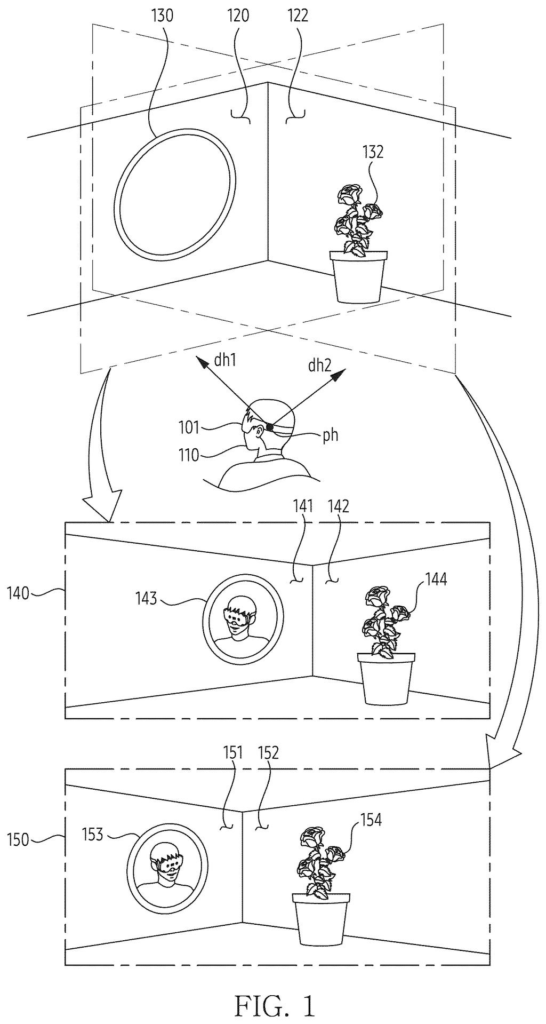
What Samsung's mirror-spotting headset patent does
Ever walked into a bathroom and, for half a second, thought someone else was standing there? It was your own reflection, but your brain briefly bought it. AR glasses can make the same mistake with a whole room.
Glasses and headsets that pin virtual objects to your surroundings keep track of where you are by watching for distinctive spots in the camera view, like a picture-frame corner or the edge of a lamp. A mirror shows copies of those spots at the wrong distance, and the glasses can lose their place. Samsung's patent has the headset find the mirror first, then mark every spot that falls inside it.
From there, the software can leave those reflected spots out when it works out where you are, or use them when they help. The goal is that your virtual furniture stays put when you walk past a mirror.
… identify a portion of the image associated with a reflector reflecting light based on object recognition with respect to the image …
Translation: The glasses detect mirrors and other reflective surfaces using object recognition.
How the headset tags and tracks reflection points
The headset's outward camera takes pictures of the room. A neural network (software trained on many example images to recognize things) looks at each picture and outlines the part that shows a mirror or another reflective surface. Separately, the headset picks out feature points, small distinctive spots like corners and edges that it can match from one frame to the next to work out where the wearer is and which way they're facing.
Each feature point then gets a tag: inside the mirror outline or outside it. The software that builds the virtual space receives that information. The filing says the mirror's size in the picture matters: if it takes up more than a preset share of the image, the points inside can be used, and if it takes up less, they can be dropped.
The description adds a few practical details:
- Spotting a mirror is slower than the camera's frame rate, so the headset outlines the mirror once, then finds it in later frames by following the ID-numbered points around its edge.
- When the headset checks whether you've walked back into a room it already mapped (called loop closing), it can leave reflection points out. Inside the mirror's own room, it can use them.
- A "reflector detection" label can highlight the mirror on screen.
A second independent claim covers the two-room version: one room has a mirror and the next does not, and each is handled differently.
… provide, by executing a software application by using information based on whether each of feature points in the image is included in the portion, a virtual space at least partially mapped to the external space …
Translation: The software builds the augmented reality environment by figuring out which visual points fall inside those reflections.
Why mirrors matter for Samsung's AR glasses
Mirrors turn up in the places you might wear a headset: bathrooms, gyms, hallways, dressing rooms, hotel rooms. If your glasses treat a mirror as a doorway to another room, virtual objects pinned to your living room can end up in the wrong place. Filtering out the misleading reference points is what keeps your virtual screen or desk where you left it.
The filing also describes some fun on top. Once the headset knows where the mirror is, a virtual object could slide along its surface with a set amount of virtual friction, or show a reflection of itself in the glass. The camera-based fix helps in another way too: motion sensors build up small errors over time, and a clean camera view gives the headset a way to correct them.
Samsung's 71st filing we've tracked since May in the AR glasses race builds on earlier work, including one on filtering interruptions and one on head-move gestures.
Claim 1 is wide. It asks for a camera, a processor, a way to find a mirror in a picture, and a virtual space built from information about which tracked spots fall inside that mirror. It does not say what the headset must do with that information, and the neural network and the size rule only show up in later claims.
In practice that covers any headset or glasses that sorts its tracking spots by whether they sit inside a mirror, whatever it does next: drop them, down-weight them, or use them. If granted, a rival's mirror fix would have to avoid that sorting step, which is hard when the mirror itself is the problem.
Claim 17 is narrower. It spells out two neighboring rooms, with the mirror room handled differently from the one beside it. If the broad claim gets trimmed along the way, that version shows the shape of what would remain.
Get our take in your Top Stories
Liked this breakdown? Add Patentlyze as a preferred source on Google, and our plain-English take shows up more often in your Top Stories the next time Samsung patent news breaks.
There are more where this came from
We read every patent application Big Tech publishes and send you the ones worth knowing. Plain English, free, every week.
The drawings
16 drawing sheets from US 2026/0330778 A1 · click any drawing to enlarge


Show the other 8 sheets


Want this weekly breakdown for a company we don't cover? Patentlyze Pro →
Be the first to weigh in