
Sony Patents a System for Adding Realistic Rolling Shutter Distortion to CG Images
When a camera sensor reads out pixels line by line instead of all at once, fast-moving objects appear skewed or wobbly — a well-known artifact called rolling shutter distortion. Sony's new patent describes a way to add that distortion to individual computer-generated objects before blending them into a final frame, making synthetic images look more like what a real camera would capture.
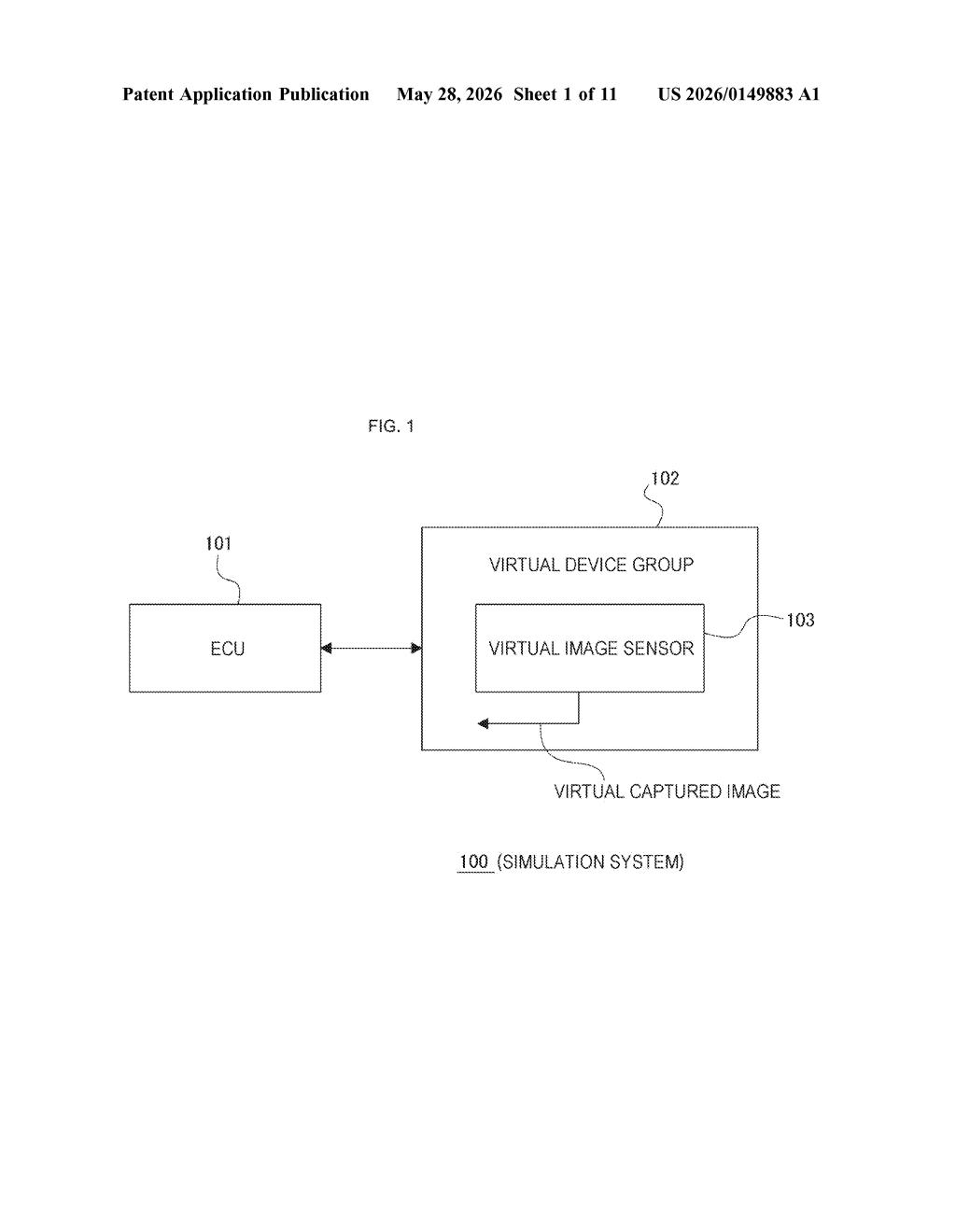
What Sony's per-object rolling shutter simulation does
Imagine you're filming a car race with your phone and a fast-moving vehicle looks weirdly slanted in the footage — that's rolling shutter distortion. It happens because your camera's sensor reads the image from top to bottom row by row, not all at once, so objects that move during the readout end up skewed in the final picture.
Now imagine you're a car company testing an autonomous vehicle's camera system. You want to simulate what the camera would see in thousands of different driving scenarios without actually driving a test car every time. For those simulations to be useful, the fake images need to include that same kind of rolling shutter warping — otherwise the AI you're training won't know how to handle it in the real world.
Sony's patent describes a system that takes individual CG objects — say, a pedestrian, a truck, and a traffic light — and applies the correct rolling shutter distortion to each one separately based on how fast it's moving and when the sensor would have read it out. Then it combines all those distorted objects into a single realistic-looking synthetic frame.
How distortion is applied per object before compositing
The patent centers on two main components working in sequence.
First, a distortion addition processing unit receives what the patent calls object unit images — individual rendered images of each CG object in a scene (a car, a pedestrian, a road sign, etc.). For each object, it calculates and applies rolling shutter distortion based on that object's specific motion data — things like velocity and acceleration — and a rolling shutter time difference (the tiny offset in time between when the top row of the sensor reads out versus the bottom row). Crucially, this distortion is applied per object, not to the whole composited frame at once.
Second, a composite image generation unit takes all those individually distorted object images and blends them together into a single frame. The patent mentions alpha-blend values, meaning objects can be merged with proper transparency handling.
- Each object carries its own position, velocity, and acceleration data
- The distortion calculation uses line accumulation start times to model how different rows of the sensor capture the scene at slightly different moments
- The final output is a composite frame that mimics what a real rolling-shutter camera sensor would produce
This is a continuation of an earlier patent (now granted as US 12,538,027), so the core IP here has already cleared the hurdle of initial examination.
What this means for camera simulation and ADAS testing
The most obvious application is camera simulation for autonomous driving and ADAS (advanced driver assistance systems). Companies testing self-driving perception systems need vast libraries of synthetic camera footage. If that footage doesn't include realistic sensor artifacts like rolling shutter distortion, the trained models may fail in real-world conditions where those artifacts are present. Sony's approach of computing distortion per object — rather than as a post-process on the whole scene — is more physically accurate because different objects move at different speeds.
Sony Semiconductor Solutions is a major supplier of image sensors to automotive and mobile markets, so a simulation tool like this fits directly into their role helping customers validate camera-based systems. This isn't a consumer product play — it's infrastructure for the sensor ecosystem Sony already dominates.
This is a niche but technically solid patent aimed squarely at the camera simulation toolchain — not a flashy consumer feature. The per-object distortion approach is genuinely more correct than whole-frame post-processing, and the automotive ADAS angle gives it clear commercial relevance. If you work on synthetic data pipelines for perception systems, this is worth a read.
There are more where this came from
We read every patent application Big Tech publishes and send you the ones worth knowing. Plain English, free, every week.
Want this weekly breakdown for a company we don't cover? Patentlyze Pro →