
Samsung Patents a Smarter Active Noise Cancellation Filter System
Samsung is patenting a more precise approach to active noise cancellation — one that uses two microphones playing different roles and strips out a specific acoustic variable when updating its noise-fighting filter, potentially making ANC more stable and accurate.
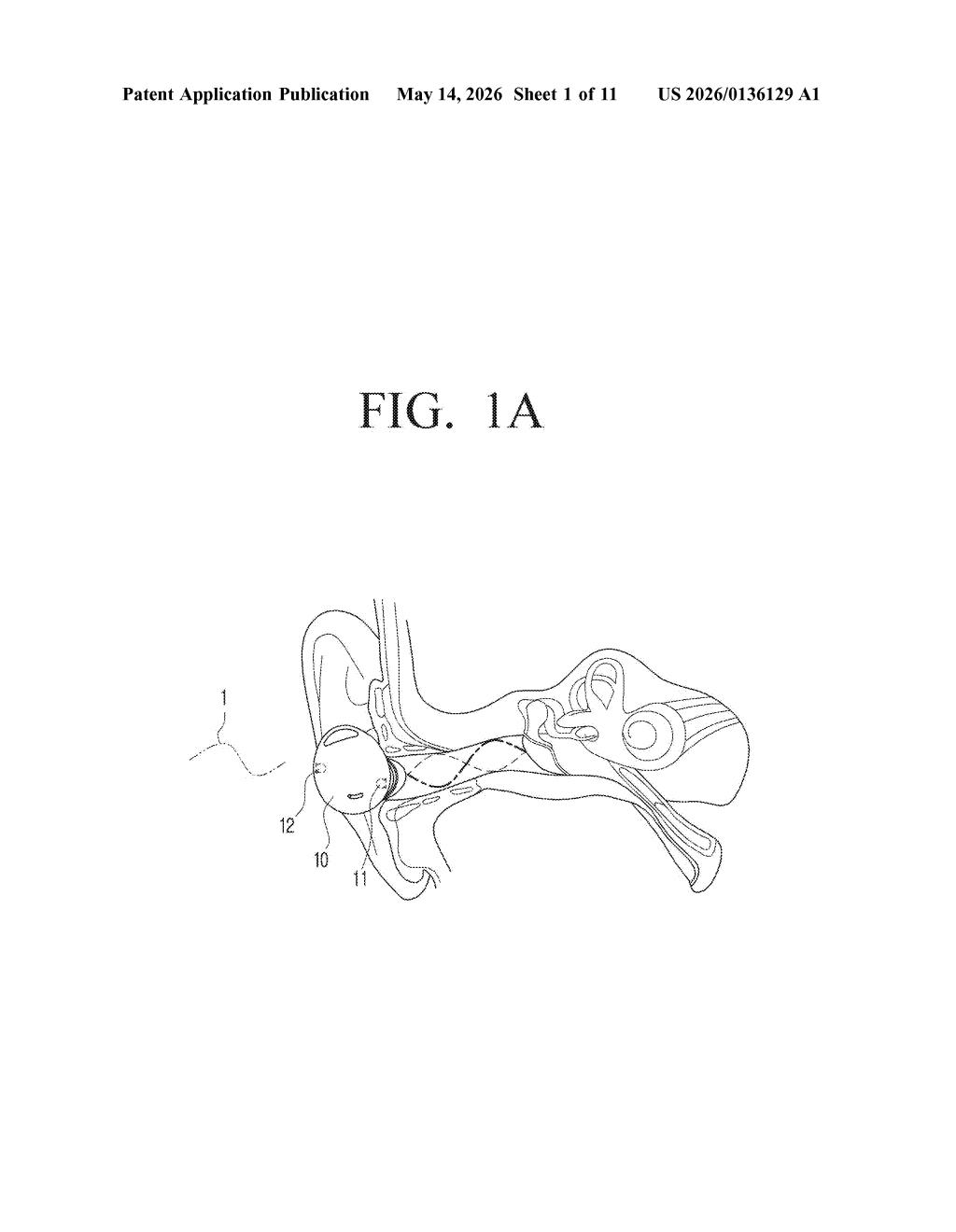
What Samsung's dual-mic noise cancellation actually does
Imagine you're on a noisy subway platform wearing wireless earbuds. Your earbuds are constantly generating a counter-sound — a sort of audio mirror image of the noise — to cancel it out before it reaches your ears. Getting that counter-sound exactly right, in real time, is genuinely hard.
Samsung's patent describes a system that splits the work between two microphones: one facing outward (picking up the noise around you) and one facing inward (checking what's actually reaching your ear canal). The outward mic feeds the noise-cancellation filter, and the inward mic monitors how well it's working.
The clever bit is in how the system updates its own filter. Instead of accounting for every acoustic variable in the ear canal when recalculating the filter, it deliberately leaves one out — a specific characteristic of the path between the speaker and your inner ear. Samsung's claim is that this makes the filter updates more reliable and less prone to chasing its own tail.
How Samsung's gain adaptation filter updates itself
The patent describes an active noise cancellation (ANC) architecture for a wearable audio device — think earbuds or a headset — built around two microphones with distinct jobs.
The outer microphone faces away from the speaker and captures ambient noise from your environment. The inner microphone faces toward the speaker and sits inside the ear canal side, monitoring what sound is actually arriving at your ear. The system uses the inner mic's signal to identify a noise signal — the unwanted sound leaking through.
A gain adaptation filter (a filter whose strength can be tuned on the fly) processes the outer mic's signal to generate a cancellation sound: a waveform with the opposite phase to the noise, so the two waves cancel each other out when the speaker plays it.
Here's the key technical wrinkle: the system identifies two acoustic response characteristics — essentially, how sound travels from the speaker to the inner microphone. It calls these the first response characteristic and second response characteristic. When it calculates an error signal (how far off the cancellation was) and uses that to update the filter's coefficient, it deliberately excludes the second response characteristic from that update step. This selective exclusion is meant to prevent a known instability problem in adaptive filter loops, where accounting for a secondary acoustic path can cause the filter to overcorrect and oscillate.
What this means for Samsung's ANC earbuds and headphones
For Samsung's Galaxy Buds lineup, better ANC filter stability could mean more consistent noise cancellation in real-world conditions — especially in variable acoustic environments like a busy street versus a quiet office, where the ear canal's acoustic properties shift as you move and talk.
More broadly, adaptive filter instability is one of the persistent engineering headaches in consumer ANC. If Samsung's approach of selectively excluding one acoustic path characteristic during filter updates proves effective in production hardware, it could be a meaningful tuning advantage — the kind of thing that shows up in real-world reviews as "this just sounds more natural" without users knowing exactly why.
This is a focused, incremental improvement to a mature technology — not a reinvention of ANC. The insight about selectively excluding the secondary acoustic path characteristic during filter coefficient updates is a real engineering idea worth attention, but it's deep in the weeds of signal processing optimization. If it ships in Galaxy Buds hardware and measurably improves ANC performance, it'll matter. If it stays a patent, it's just a carefully documented engineering decision.
There are more where this came from
We read every patent application Big Tech publishes and send you the ones worth knowing. Plain English, free, every week.
Want this weekly breakdown for a company we don't cover? Patentlyze Pro →