
Sony Patents a Reinforcement-Learning System That Trains Around Network Lag
Network lag is a fact of life in online gaming — but what if the AI controlling game agents could learn which actions actually work at your current ping, and pick accordingly? That's the core idea behind this Sony patent.
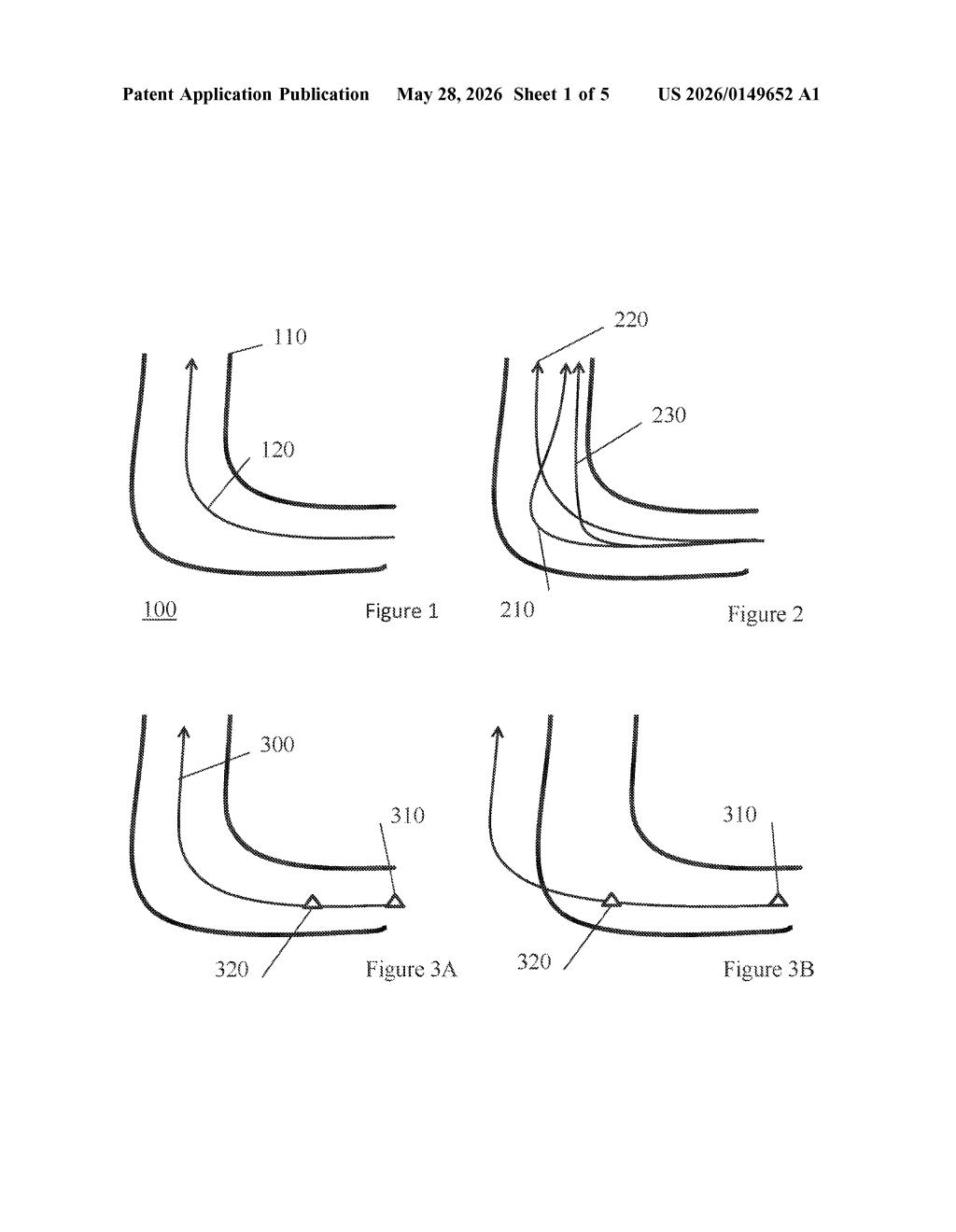
What Sony's latency-aware AI actually does in games
Imagine you're playing an online game and your connection is slow. The character you're fighting seems to teleport, your inputs feel delayed, and the whole experience falls apart. A lot of that chaos happens because the game's AI was trained assuming a perfect, zero-lag connection — so when real-world latency kicks in, its decisions stop making sense.
Sony's patent describes a training system that deliberately accounts for lag. Instead of teaching an AI agent to always pick the theoretically best action, it trains the agent across a range of latency conditions and tracks which actions actually succeed at each lag level. Over time, the model learns to match its strategy to the current network delay.
The practical upshot: an AI — whether it's an NPC, a cloud-gaming control loop, or a game server agent — could adapt its behavior based on how bad your connection is right now, rather than pretending the network is always ideal.
How the model correlates lag levels with action success
The system is built around a reinforcement learning (RL) loop — the same general approach used to train AIs to play chess or navigate simulated environments by rewarding good outcomes and penalizing bad ones. What makes this patent distinct is that latency is treated as a first-class variable in the training process, not an afterthought.
Here's how the components fit together:
- State determination unit — reads the current state of the game or environment (player positions, health, game phase, etc.).
- Latency determination unit — measures the actual network delay between the agent and the environment at a given moment.
- Action determination unit — selects candidate actions for the agent to take, generating options across multiple latency scenarios simultaneously.
- Action evaluation unit — scores how well each action actually performed given the latency present when it was taken.
- Generation unit — builds the final model by finding correlations between action success and the latency conditions under which that action was attempted.
The result is a model that has essentially learned a policy lookup table by lag bucket — it knows that at 20ms it can execute a fast aggressive move, but at 200ms it should pick something more forgiving. This kind of latency-conditioned policy is meaningfully different from simply adding lag-compensation hacks after training.
What this means for cloud gaming and online play
Cloud gaming is the clearest application. Services like PlayStation Now (or its successors) have always struggled with the perception that latency makes games feel unresponsive. If the AI systems running on Sony's servers — whether NPC controllers, matchmaking agents, or game-logic orchestrators — can adapt their decision-making to actual measured lag, the experience degrades more gracefully under poor network conditions rather than breaking entirely.
There's also a competitive multiplayer angle. Game agents trained this way could be more realistic sparring partners, since they'd exhibit the same kinds of behavioral adjustments a real human makes when their connection is bad. For Sony's first-party studios building online modes, that's a potentially useful training tool for both AI and human players.
This is a quietly practical patent that addresses a real, unsolved problem in online gaming AI. The idea of conditioning a reinforcement learning policy on measured latency — rather than bolting on lag compensation after the fact — is technically clean and the use case is obvious. Sony has more skin in the cloud-gaming game than most, so it's easy to see where this research is headed.
There are more where this came from
We read every patent application Big Tech publishes and send you the ones worth knowing. Plain English, free, every week.
Want this weekly breakdown for a company we don't cover? Patentlyze Pro →