
Sony Patents a Trick for Giving Game Characters Distinct Voices by Translating Twice
Sony's patent application has a game character's AI work out its answer in plain English, then translate that answer back into the character's own voice. One neutral reply can come out gruff, polite or cold, depending on who is speaking.
What Sony's translate-twice idea does for games
Every time you stop to chat with a shopkeeper or a passerby in a video game, you hear lines that were written in advance or that an AI makes up on the spot. Making a gruff blacksmith sound different from a polite innkeeper is hard, and doing it for hundreds of characters is harder.
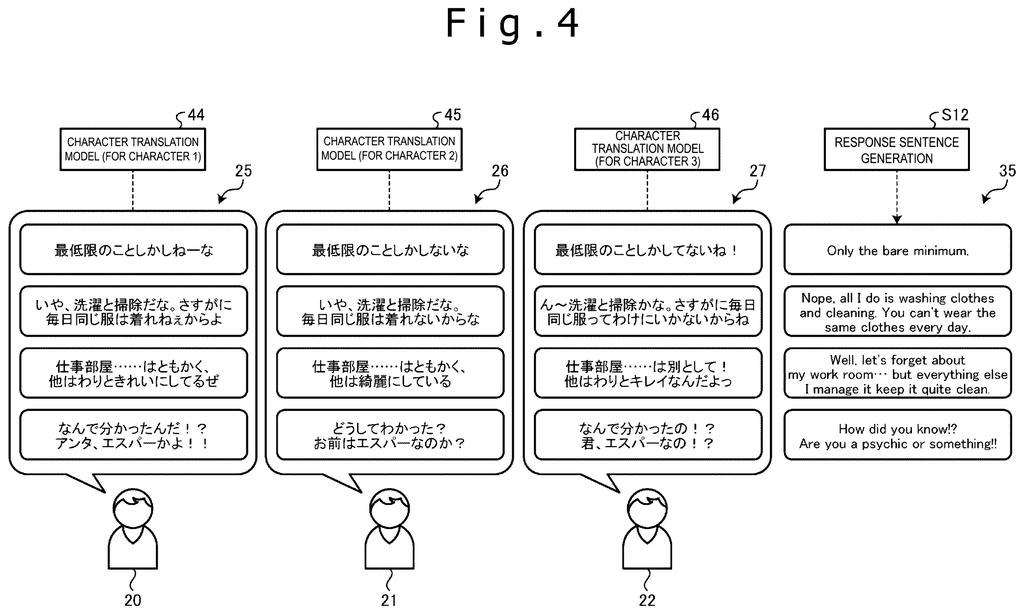
Sony's patent application splits the job in two. First, the game works out what to say. It translates your Japanese sentence into English, where the reply comes out plain and neutral. Then a second translation turns that plain English reply back into Japanese, using a model trained to sound like that character: rough, polite, cold or child-like.
So one neutral answer can become many different voices, and the developer doesn't have to build a separate dialogue AI for every personality.
… translating the speech in the first language into a second language and then generating a response sentence to the speech in the second language and translating the generated response sentence into the first language by using a translation model corresponding to the character information …
Translation: The system translates what you say into another language, creates a reply there, and translates it back using a specific personality model.
How a reply gets its personality after the fact
The system has three parts. An acquisition unit collects what the player said (typed or spoken) along with "character information," a profile of the character who will answer: its gender, its personality and its past conversations with the player.
A response unit then does the real work in three steps:
- It translates the player's line from the first language (Japanese in the main example) into a second language (English), which strips most personality out of the wording.
- It generates a reply in English with an ordinary dialogue AI, using the conversation history so the reply stays consistent.
- It translates the English reply back into Japanese with a "character translation model," one trained for a particular gender, personality or emotion, so the words come out in that character's tone.
Finally, an output control unit shows the reply as text or plays it as audio. The filing also covers emotion: the system can guess a character's mood from the conversation, such as anger, and pick a matching model, or a developer can force a mood.
When two non-player characters (NPCs, the computer-run characters) talk to each other off screen, the system can skip the final translation and keep the chatter in plain English to save work. If no matching character model exists, a general-purpose one handles the job.
Why Sony's approach could make game towns livelier
If you play games with AI-powered characters, the payoff is characters that sound like individuals instead of one chatty assistant in different costumes. A grumpy dock worker and a gentle healer could answer the same question with the same facts, delivered in very different tones, and stay in character as the conversation goes on.
For developers, the appeal is cost. The filing says training a separate dialogue AI for every personality is expensive and slow, and swapping words by hand tends to sound unnatural. Here, one shared "brain" writes the answer and smaller voice models dress it up. The filing also says the approach could apply to robots or smart speakers, not just games.
Sony's seventh filing in the voice and speech AI work we've tracked since May builds on earlier applications, including one on accent and mood controls and one matching narration to video topics.
If you've ever talked to a game character that sounds like a customer service chatbot, you know the problem Sony is going after. Every character gives the same polite, tidy answer, and the illusion of a living town falls apart fast.
You'd notice this fix the moment a gruff character and a shy one answer the same question in different ways. A well-run version could also stop a character from suddenly changing personality mid-conversation, since each voice model stays fixed.
The catch is that translating twice can lose nuance, and the filing doesn't say how well it works in practice. Jokes and slang may not survive a trip through English. Still, the idea is clever, and if it holds up you'd get a livelier game world without doing anything extra yourself.
Get our take in your Top Stories
Liked this breakdown? Add Patentlyze as a preferred source on Google, and our plain-English take shows up more often in your Top Stories the next time Sony patent news breaks.
There are more where this came from
We read every patent application Big Tech publishes and send you the ones worth knowing. Plain English, free, every week.
The drawings
11 drawing sheets from US 2026/0350326 A1 · click any drawing to enlarge


Show the other 3 sheets


Want this weekly breakdown for a company we don't cover? Patentlyze Pro →
Be the first to weigh in