
Sony Patents a Noise Cancellation System That Adjusts to Your Language
Noise cancellation that works great for English can still let annoying sounds slip through when you switch to Spanish or Japanese. Sony has filed a patent for a microphone system that detects which language you're speaking and applies a tailored filter to match.
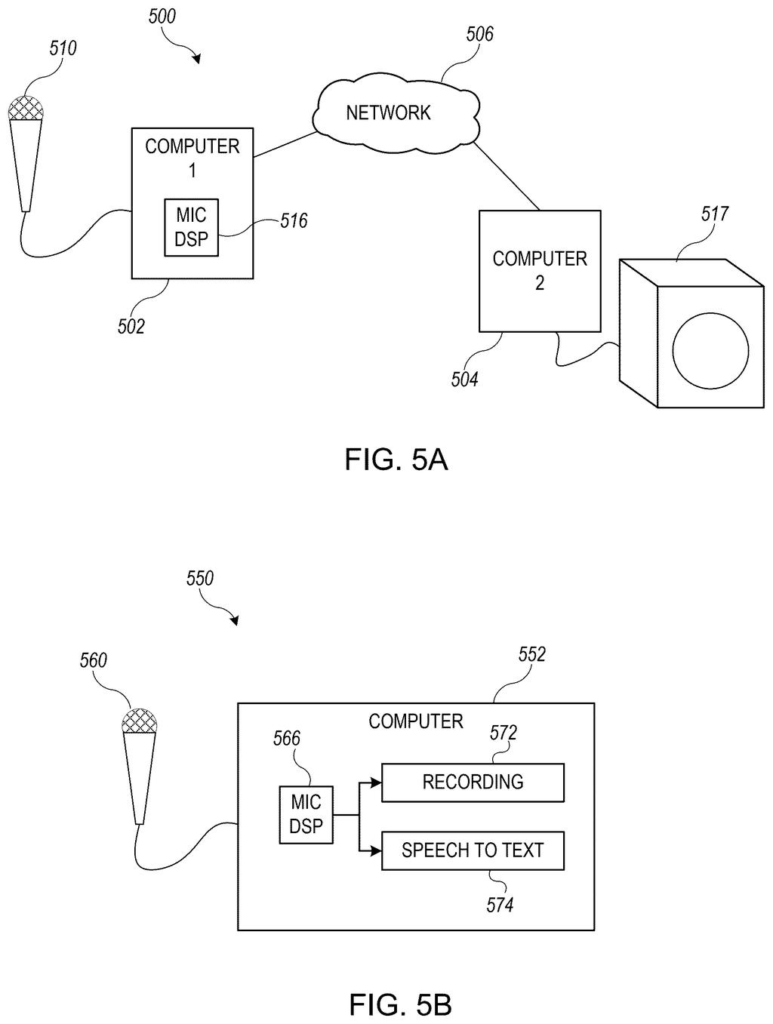
How Sony's language-aware mic filter actually works
Imagine you're in a gaming headset voice chat, speaking Japanese with one friend and then switching to English with another. The background hiss, the way vowels ring, the rhythm of consonants, all of it sounds different depending on the language, and a one-size-fits-all noise filter doesn't account for any of that.
Sony's patent describes a system that watches what language you're speaking into the mic, either by detecting it automatically or letting you pick it manually, and then applies a noise filter built specifically for that language on top of a standard baseline filter. The two filters run together to clean up your audio in a way that's tuned to the sounds your voice actually makes.
This is aimed squarely at the kind of voice communication Sony's PlayStation ecosystem depends on: online gaming, party chat, and headset use across a global player base that speaks dozens of languages.
… selecting a first language-specific filter from a filter set based at least in part on the current language context, wherein the filter set includes a plurality of language-specific filters corresponding to different language contexts …
Translation: The system picks a specific audio filter from a library based on the language being spoken.
How the baseline and language filters stack on the audio signal
The patent describes a two-layer filtering approach. The first layer is a baseline noise cancellation filter that runs at all times, handling general background noise the same way current systems do. The second layer is a language-specific filter chosen from a pre-built set of filters, each one tuned to the acoustic characteristics of a particular language.
The system determines a current language context, meaning it figures out which language the speaker is using, either through automatic detection (the device listens and identifies the language) or through a user-selected setting in the interface. Once the language is known, the matching filter is pulled from the set and applied alongside the baseline filter.
The key claim is that these two filters are applied together to the incoming microphone audio, producing output that's cleaner than either filter could achieve on its own. The language-specific filter can, for instance, protect phonemes (the distinct sound units) that appear in one language but not another, preventing the noise cancellation from accidentally scrubbing out parts of speech that belong there.
- Baseline filter handles universal background noise
- Language detection picks the right secondary filter
- Both filters apply simultaneously to the mic signal
- Detection can be automatic or manually set by the user
Microphone signal processing (e.g., noise cancellation) can be dynamically modified based on a current language context.
Translation: How the microphone blocks out background sound changes automatically depending on what language you use.
What this means for gamers and voice chat quality
If you play online games or use voice chat through a PlayStation headset, your mic's noise cancellation is trained primarily on the acoustic patterns of whichever language the engineers optimized for during development. If your language wasn't the priority, the filter can clip your words, muddy your voice, or let background noise through in ways other players don't experience. Sony's approach would, in theory, give every language its own optimized treatment.
For Sony's global PlayStation audience, this has a real practical upside. A Korean-speaking player in Seoul and a Portuguese-speaking player in São Paulo would each get a filter shaped for their voice, not a compromise setting. The difference would be most obvious in competitive games where clear communication directly affects whether your team wins or loses.
Sony's 20th filing in our audio patent coverage since May follows a mixing visibility tool and headphones with switchable acoustics among the applications we've tracked.
Noise cancellation has always been built around certain assumptions about how speech sounds, and if your language doesn't fit those assumptions, your voice comes through muddy or distant no matter how good your headset is. Sony's approach gives each supported language its own tuning layer, so the audio cleanup actually matches the rhythms and frequencies of what you're saying.
The automatic language detection is where your experience lives or dies. Get it right and you never touch a setting, your voice simply sounds clear. Get it wrong during a session where people are switching languages, and you get a brief window of degraded audio before the system catches up.
For anyone who has ever been told "you sound far away" despite decent hardware, this addresses that problem at its root. You would notice it working only because you stop noticing your mic at all.
There are more where this came from
We read every patent application Big Tech publishes and send you the ones worth knowing. Plain English, free, every week.
The drawings
6 drawing sheets from US 2026/0279375 A1 · click any drawing to enlarge


Want this weekly breakdown for a company we don't cover? Patentlyze Pro →
Be the first to weigh in