
Sony Patents a System That Tells Workers Where to Move Obstacles Blocking Robots
When a cart or box blocks a warehouse robot's path, someone has to decide where to put it. Sony's new patent wants to take that decision off the worker's plate entirely.
How Sony's robot-obstacle system keeps warehouses moving
Ever walked into a cluttered room and spent ten minutes figuring out where to put something so it doesn't cause more problems? Warehouse workers face a version of that constantly, except the stakes are robot delivery routes and shipping deadlines.
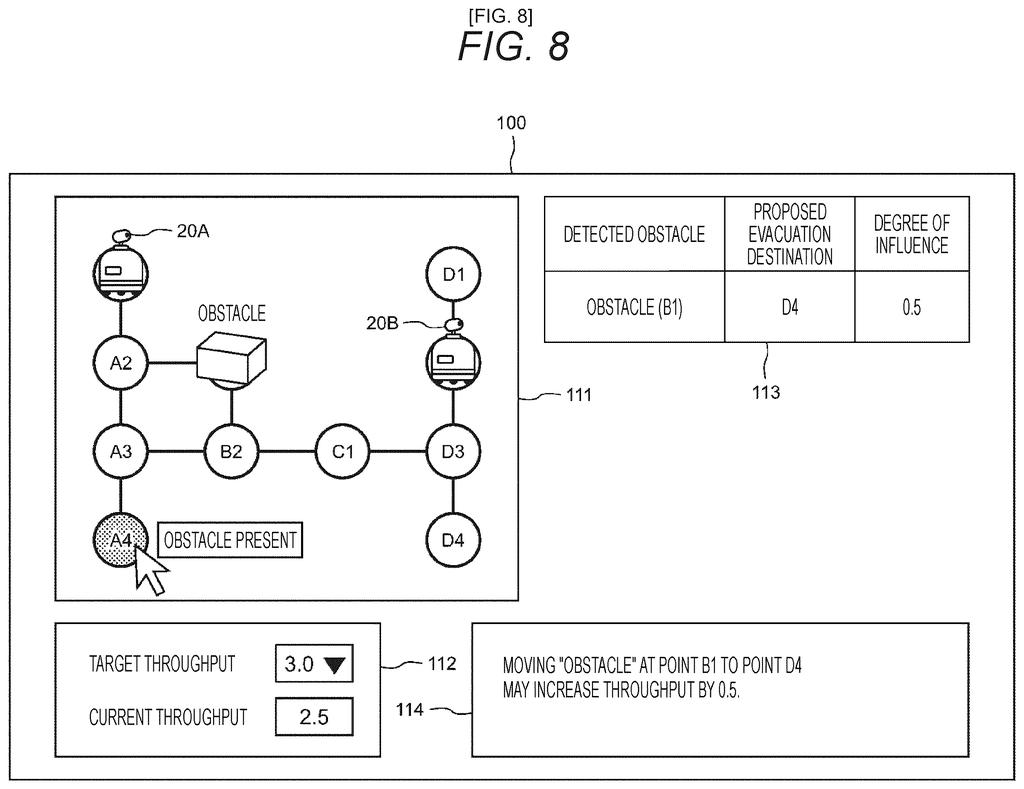
Sony's patent covers a system that watches for objects blocking a mobile robot's path, then works out where those objects should be moved to cause the least disruption to the workflow. Instead of a worker guessing or picking the nearest open spot, the system calculates which relocation option keeps productivity highest and then tells someone (or something) exactly where to take the item.
The upshot is that the robot spends less time waiting, the object ends up somewhere sensible rather than just out of the way, and the whole operation keeps moving with fewer human judgment calls in the middle of a busy shift.
… searching and determining an evacuation destination of the obstacle on a basis of productivity in a case where the obstacle is evacuated to a predetermined place; and presenting a determined evacuation destination of the obstacle.
Translation: It figures out the best place to move the blockage based on worker efficiency and tells someone where to put it.
How the system scores evacuation spots by productivity
The patent describes a three-step loop running inside an information processing apparatus connected to a mobile robot's control system.
- Detect: The system picks up obstacle information, a signal that something movable is sitting on the robot's planned route. This could come from the robot's own sensors or from a central fleet-management system.
- Evaluate: It searches a set of candidate locations and scores each one based on productivity if the obstacle were moved there. That scoring accounts for whether the new spot would itself create a bottleneck, block another robot, or slow down a different task downstream.
- Present: The winning location is surfaced to a human worker or, potentially, to another automated system that can physically move the object.
The claim is written around any "mobile body" (the patent's term for a robot or autonomous vehicle) and any "movable object" acting as an obstacle, which keeps the scope deliberately wide. The core novelty is the productivity-based search: rather than simply finding the nearest empty space, the system tries to optimize the choice against the broader workflow.
… acquires obstacle information indicating that a movable object arranged on a route of a mobile robot is detected as an obstacle, searches and determines an evacuation destination of the obstacle on the basis of productivity …
Translation: The system spots something blocking a robot's path and calculates the most productive spot to relocate it.
What this means for warehouses running mobile robots
Warehouse and factory floors running fleets of mobile robots face a constant tension: the robots are efficient until a misplaced pallet or cart stops one cold, and then a human has to intervene with whatever seems quickest. That improvised decision can ripple outward, blocking a second robot or clogging a pick station. A system that proactively calculates the best relocation spot, rather than just any open spot, could meaningfully cut those secondary delays in high-throughput environments.
Sony is better known for consumer electronics than logistics software, but the company has been building robotics and automation intellectual property for years. This filing sits alongside the latest Big Tech patents covering autonomous mobile robots in industrial settings, a space where Sony is staking out position alongside more obvious players like Amazon and Nvidia.
Claim 1 is broad in a way that matters practically: it covers any method that acquires obstacle information, scores candidate relocation spots by productivity, and presents a result, a description that fits everything from a rule-based lookup table to a full machine-learning planner. If granted and defended, it could be read against a wide swath of obstacle-routing software. The breadth may also be its weakness at the USPTO, since prior art in robot path-planning and warehouse management is deep and well-documented. Either way, the filing signals that Sony treats obstacle management as its own patentable layer in robot fleet control.
There are more where this came from
We read every patent application Big Tech publishes and send you the ones worth knowing. Plain English, free, every week.
The drawings
19 drawing sheets from US 2026/0236030 A1 · click any drawing to enlarge


Want this weekly breakdown for a company we don't cover? Patentlyze Pro →
Be the first to weigh in