
Adobe Patents a System That Spreads Your Video Edits Across Every Frame
Editing a video usually means touching every single frame — Adobe's new patent describes a way to do that work once, then let AI fill in the rest of the clip automatically.
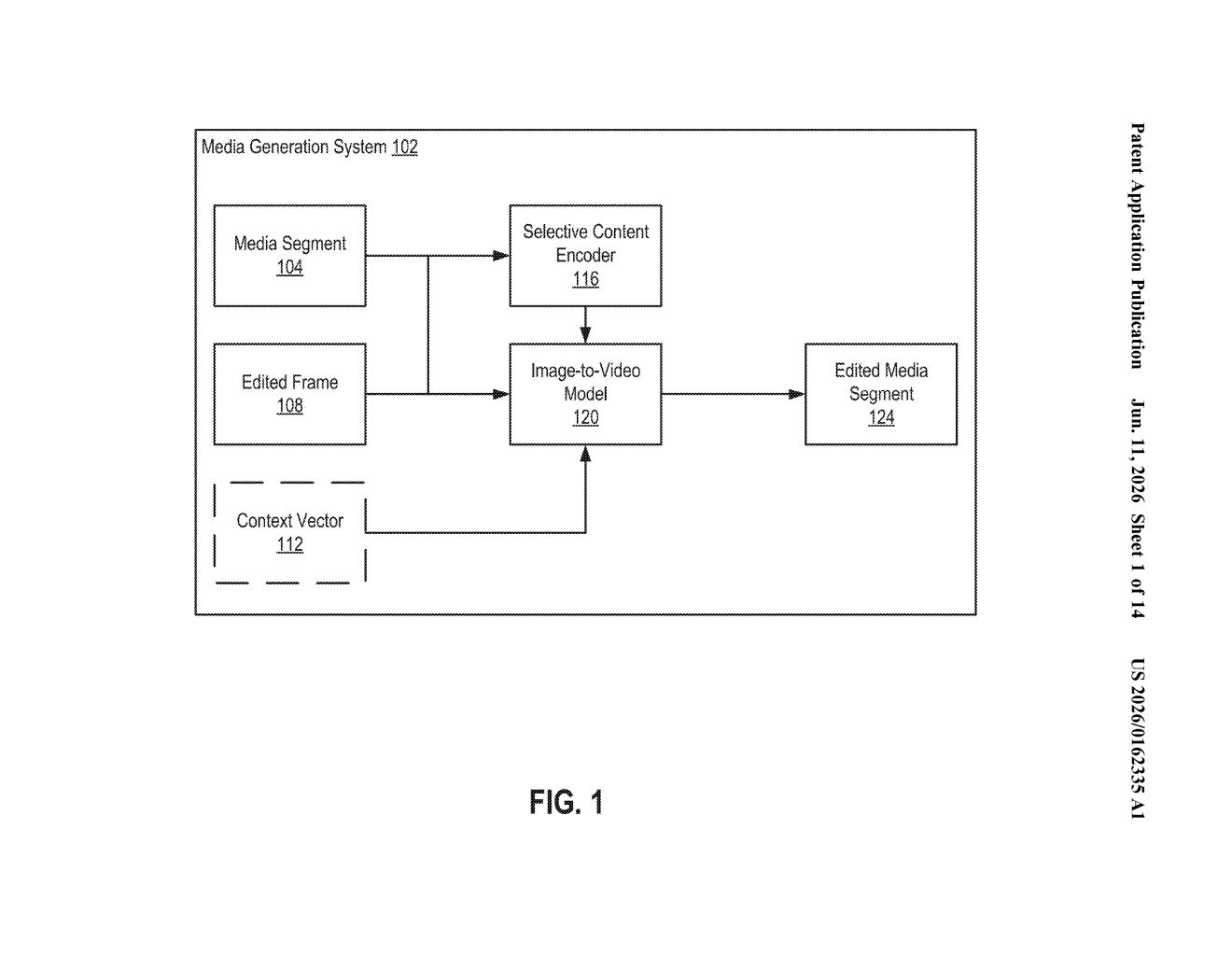
What Adobe's automatic edit-spreading actually does
Imagine you're editing a video clip and you want to change the color of someone's jacket, or swap out the background, or apply a stylized look. Right now, you'd typically have to either apply that change to every frame individually or use rough automation tools that often mess up the parts you didn't want to change.
Adobe's patent describes a system where you only edit a few frames of a video — say, the first frame and one in the middle — and then an AI model studies what you changed and spreads those edits across every other frame in the clip. Crucially, it's designed to leave untouched things you didn't edit, so your subject's face or a logo in the corner stays exactly as it was.
The system works by first identifying which parts of your edited frames were actually changed versus which parts stayed the same. It uses that information as a guide when rewriting the rest of the video. Think of it like giving a very attentive assistant your red-marked pages and letting them revise the entire manuscript without accidentally rewriting your footnotes.
How the selective encoder separates edits from original content
The patent describes a pipeline with two main components working together.
First, a selective content encoder analyzes the frames you've already edited. Its job is to figure out which parts of those frames were not touched by your edits — things like the background texture, a person's face, or static objects. These untouched regions are extracted as reference features, essentially a fingerprint of the original content you want to preserve.
Second, an image-to-video model — a type of AI that understands how images change over time across a video sequence — takes both the original unedited clip and those reference features as input. It then generates a fully edited version of the entire video by:
- Propagating (spreading) your changes to every frame that wasn't manually edited
- Using the reference features to lock down portions of those frames that should remain unchanged
- Outputting a coherent edited clip where the applied effect flows naturally from frame to frame
The key design choice here is the separation of "what changed" from "what stayed the same" before the video model ever runs. That distinction is what lets the system apply your edit broadly without accidentally overwriting content you didn't intend to touch.
What this means for video editors using Adobe tools
For anyone who edits video — professionals using Premiere Pro or After Effects, or casual users in Express — the most tedious part of stylistic edits is making sure they're consistent across hundreds or thousands of frames. Tools like masking and tracking help but are time-consuming and error-prone. A system like this could make clip-wide edits feel closer to editing a single photo.
Adobe's broader strategy here is visible: the company has been folding generative AI into its Creative Cloud suite aggressively, and this kind of frame-propagation system is a natural fit for video workflows in Premiere or After Effects. If it works as described, it could turn what's currently an hour-long task into a matter of seconds — and keep editors focused on creative decisions rather than repetitive frame-by-frame grunt work.
This is a genuinely useful filing that targets one of the most friction-heavy parts of video editing. The idea of separating 'what was edited' from 'what wasn't' before running the video model is the kind of thoughtful engineering detail that often determines whether these AI tools produce polished results or a glitchy mess. If Adobe ships this in a form close to the patent description, it could meaningfully change how editors approach stylistic video work.
There are more where this came from
We read every patent application Big Tech publishes and send you the ones worth knowing. Plain English, free, every week.
Want this weekly breakdown for a company we don't cover? Patentlyze Pro →