
New IBM Patent Trains AI to Pinpoint Data Reformatting Needs
Before IBM's system asks an AI to reformat data, it does detective work first, building a map of precisely which characters are wrong and which are already correct. That targeted approach is the whole bet here.
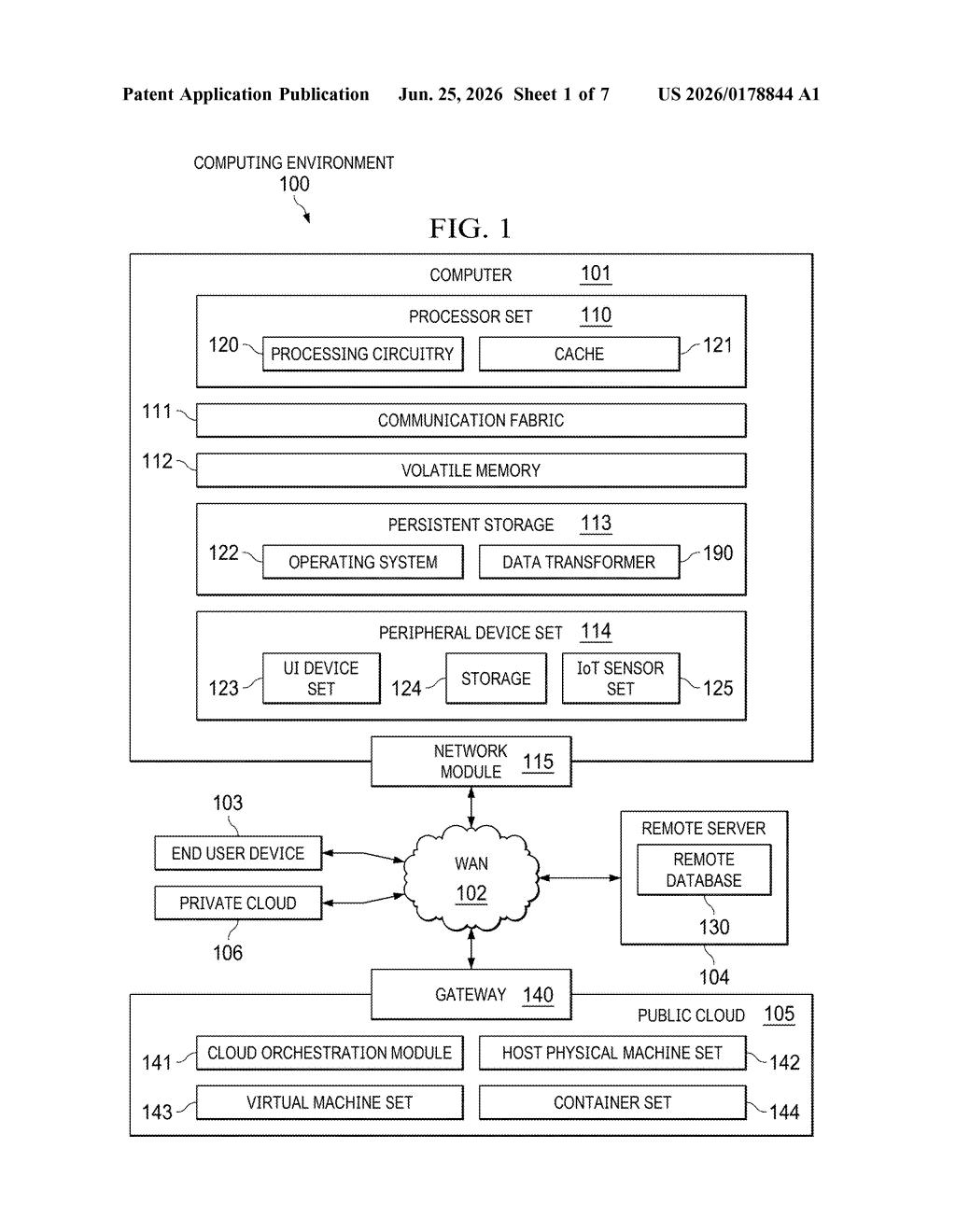
What IBM's data-transformation system actually does
Imagine you have a spreadsheet full of addresses written in one format, say '123 Main St, Springfield IL 62701,' and you need every row converted to a different format for a new system. You could paste everything into an AI and hope it figures it out. But AI models sometimes get it slightly wrong, especially at scale, because they're guessing at the pattern rather than being told exactly what needs to change.
IBM's patent describes a smarter setup. Before the AI even gets involved, a program analyzes your before-and-after examples and builds a map showing exactly where each input differs from its target output. It highlights only the characters that are mismatched, ignoring the parts that are already correct.
That map gets bundled into the prompt sent to the AI, so the model isn't working from vague instructions. It gets a precise picture of the problem. The idea is that more specific instructions produce more reliable reformatting, which matters a lot when you're processing millions of records.
How the program graph maps mismatched characters
The system starts by taking a set of data pairs, each consisting of an input string and its correct output equivalent (for example, a date written as '12/24/2024' paired with 'December 24, 2024'). From these pairs, it builds a program graph for each one, a structure where every node represents a specific character position in the data.
The system then traces paths through these graphs, where each path represents a sequence of characters. It looks for common paths, meaning sequences that appear in both the input and the output unchanged. These are the parts the AI doesn't need to worry about.
Once the shared parts are identified, the leftover nodes (the ones not on any common path) represent the exact positions where the input and output diverge. These mismatched positions are the crux of the problem.
Finally, the system takes those mismatch nodes plus the original data pairs and builds a prompt for a large language model. Instead of giving the AI a general instruction like 'reformat this data,' it gives the AI a precise map: here are the examples, and here is exactly where the changes need to happen. The result is a more targeted prompt intended to produce more consistent transformations.
What this means for enterprise data pipelines
Enterprise companies spend enormous time and money cleaning and reformatting data as it moves between systems, databases, and applications. AI models are increasingly being used to automate that work, but reliability is a real problem when the AI has to infer the transformation rule from scratch every time.
IBM's approach is essentially about reducing the ambiguity in the instructions given to an AI. By pre-computing exactly where two data formats differ, the system can send the AI a focused, information-rich prompt rather than a vague one. For any organization running large-scale data migrations or ETL (extract-transform-load) pipelines, more reliable AI-driven reformatting means fewer manual corrections and less downstream data corruption.
This is a practical, unglamorous piece of infrastructure work aimed squarely at the enterprise market IBM knows best. It won't make headlines outside of data-engineering circles, but the problem it addresses, making AI-driven data transformation more reliable, is a genuine pain point at large companies. It reads like something IBM could fold into its existing data and AI integration tooling fairly quickly.
There are more where this came from
We read every patent application Big Tech publishes and send you the ones worth knowing. Plain English, free, every week.
Want this weekly breakdown for a company we don't cover? Patentlyze Pro →