
Samsung Patents a Temperature-Aware Storage System Built for Self-Driving Cars
Flash memory behaves differently when it's hot or cold — and in a car, that variance can be extreme. Samsung's new patent tackles that problem head-on by building temperature awareness directly into the storage controller.
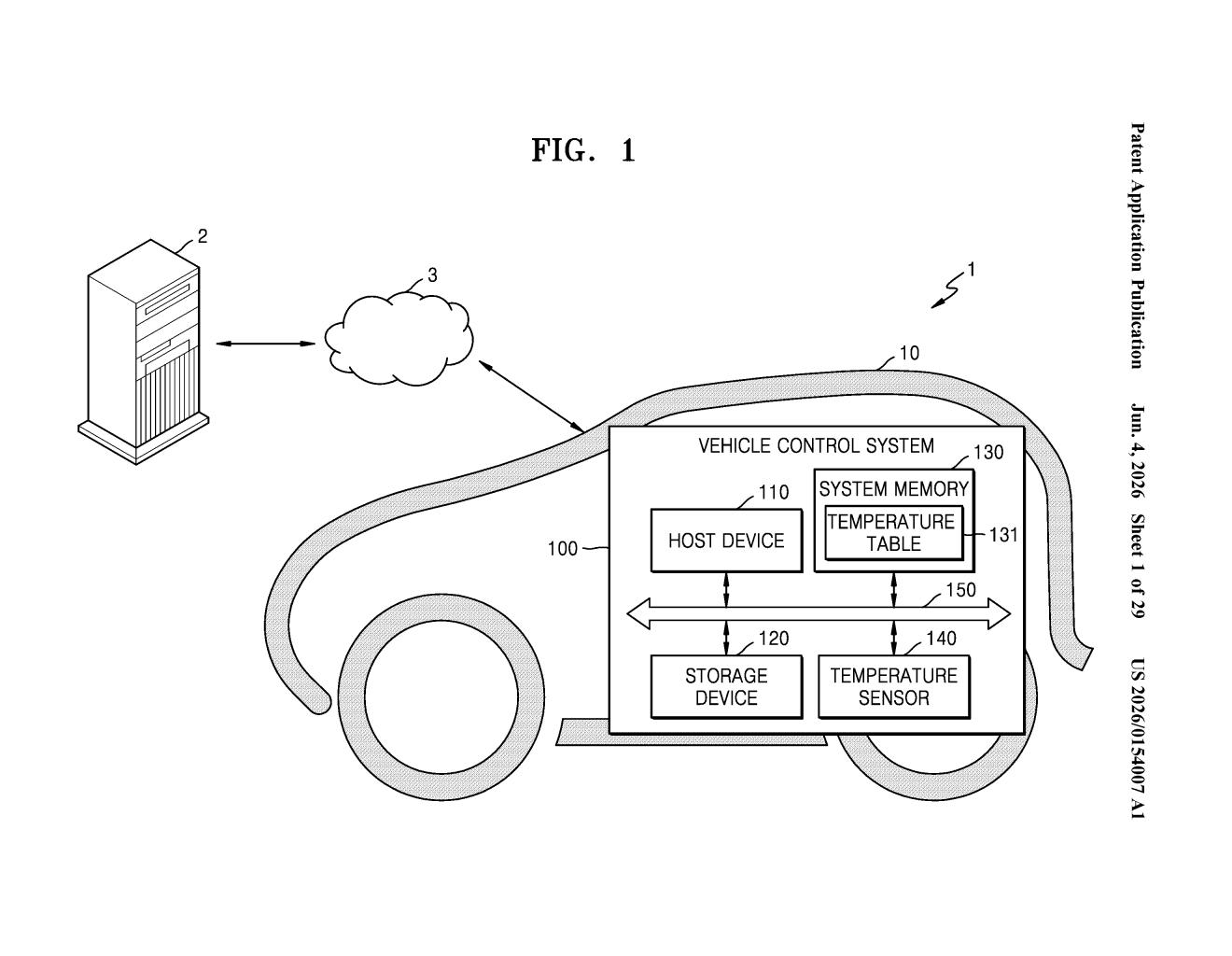
What Samsung's temperature-tuned car storage actually does
Imagine your car's onboard computer trying to recall a critical piece of driving data — a map segment, a sensor calibration value — but the storage chip has been baking under a summer dashboard for hours. Flash memory reads can go wrong when temperatures swing, and in a vehicle that swing can be dramatic.
Samsung's patent describes a storage device that knows how temperature affects the reliability of its own data. When a request comes in tagged as temperature-sensitive, the controller looks up a table of pre-calculated offsets and adjusts the voltage it uses to read that data — compensating for whatever thermal conditions the chip is currently experiencing.
The result is that driving-critical data gets a smarter, more reliable retrieval process than generic storage would provide. It's a targeted fix for one of the less-obvious failure modes in automotive electronics.
How the memory controller picks the right read voltage
The patent describes a memory controller that handles read operations differently depending on whether the host device (the car's main computer) has flagged the data as temperature-managed.
When a read command arrives with a special tag identifying it as temperature-sensitive, the controller:
- Looks up first temperature information associated with that specific data block — essentially metadata about what thermal conditions were present when the data was last written or accessed
- Queries a read offset table — a pre-built lookup that maps temperature conditions to voltage correction values
- Adjusts the baseline read voltage by the retrieved offset before actually reading the NAND flash cells
This matters because NAND flash memory has a known physical quirk: the threshold voltage of its cells drifts depending on temperature. A read voltage that works perfectly at 25°C may produce errors at 80°C or -20°C. By dynamically correcting for that drift on a per-read basis, the controller improves data integrity without requiring a full error-correction cycle.
The tagging system is notable — it means only flagged, high-priority data gets this treatment, keeping the overhead manageable.
What this means for reliability in automotive storage
Automotive storage is a different beast from the SSD in your laptop. Vehicles experience temperature extremes — cold starts in winter, prolonged heat soak in summer — and the storage holding ADAS (Advanced Driver Assistance System) data, maps, and sensor logs needs to be consistently reliable across all of them. A read error that causes a minor hiccup on your PC could be a much bigger problem at highway speed.
Samsung is one of the largest suppliers of automotive-grade NAND and SSD modules, so a filing like this reflects real engineering pressure from automakers. If this approach ships in production hardware, it could give Samsung's automotive storage a measurable reliability edge — particularly as vehicles store more safety-critical data locally rather than relying on the cloud.
This is unglamorous but genuinely important work. Temperature-induced read errors are a real failure mode in automotive flash storage, and building the compensation logic directly into the controller — rather than piling on software error correction after the fact — is the right architectural instinct. It won't make headlines at a car show, but engineers specifying storage for the next generation of ADAS platforms will care.
There are more where this came from
We read every patent application Big Tech publishes and send you the ones worth knowing. Plain English, free, every week.
Want this weekly breakdown for a company we don't cover? Patentlyze Pro →