
Tesla Patent: Low-Cost Sensors Replicate Premium Ones Through Machine Learning Software
High-resolution sensors are one of the biggest cost drivers in self-driving vehicles. Tesla is patenting a way to fake their output using several cheaper sensors working together.
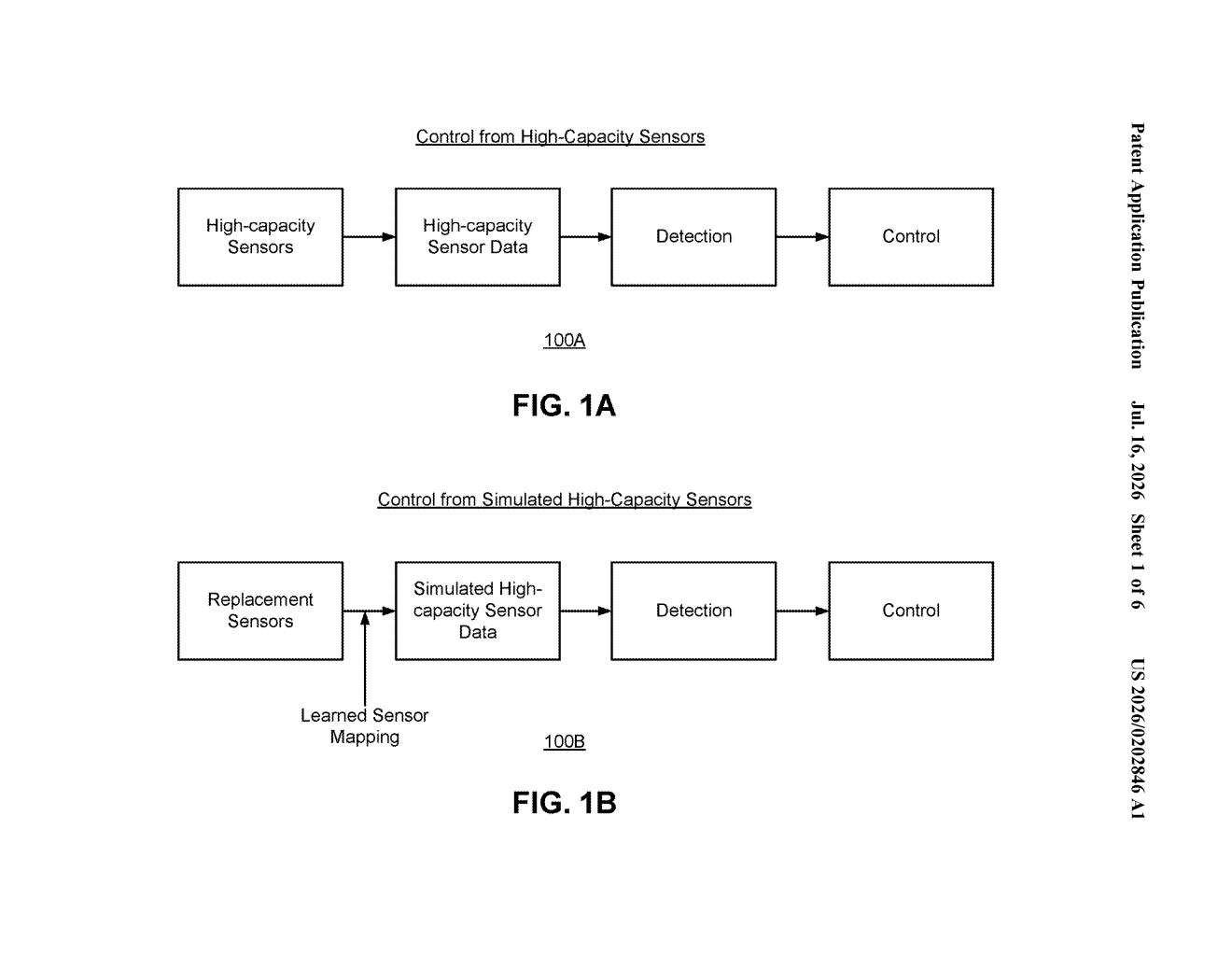
How Tesla's sensor-fusion trick works in plain English
Imagine you can't afford a professional camera, so you take three photos from different cheap cameras and stitch them together to get the same quality shot. That's essentially what this Tesla patent describes, but for the sensors that help a self-driving car understand the road around it.
Right now, autonomous vehicles often rely on expensive, high-capacity sensors (think precision cameras or lidar units) to build a clear picture of their surroundings. Tesla's idea is to replace one expensive sensor with several lower-cost ones, then use AI to combine their feeds into something that looks like it came from the pricier hardware.
The car's self-driving software never even has to know the difference. It receives what appears to be high-quality sensor data and uses that to make driving decisions, just as it normally would. If it works, this could let Tesla cut hardware costs without sacrificing the quality of information the car relies on.
How neural networks stitch together low-grade sensor feeds
The patent describes an autonomous control system that takes data from multiple lower-capacity sensors, runs it through one or more neural network models (AI systems trained to recognize patterns), and outputs a synthetic data stream that mimics what a single, more powerful sensor would produce.
The sensor data in question covers the kinds of inputs self-driving cars depend on:
- Camera images of the surrounding environment
- GPS and geo-location data
- Other physical environment readings
The neural networks act as a translator. They learn the relationship between what several cheap sensors collectively see and what an expensive reference sensor would report, then reproduce that output on the fly. Tesla calls this simulating high-capacity sensor data from replacement sensors that each have lower individual capacity.
Once that simulated data is generated, the vehicle's existing detection and navigation algorithms run on top of it as normal, with no changes needed to the core self-driving logic. The substitution happens upstream, before decisions are made.
What this means for the cost of self-driving hardware
Sensor cost is a genuine barrier to making self-driving cars affordable. High-resolution cameras, lidar units, and radar arrays add thousands of dollars to a vehicle's bill of materials. If Tesla can train AI to synthesize the equivalent output from cheaper hardware, the same driving performance could come at a lower price point, which matters a lot if you're trying to put autonomy in mass-market vehicles rather than robotaxis.
There's also a reliability angle. If one physical sensor fails, a system built around fusing many inputs may be more resilient than one depending on a single high-end unit. For you as a future buyer or passenger, this could translate to self-driving features trickling into less expensive cars sooner than expected.
This is a pragmatic, cost-reduction patent rather than a flashy capability leap. Tesla has long bet on cameras over lidar, and this filing extends that philosophy further: get more out of cheaper hardware through software. Whether the AI-synthesized output is good enough to fully replace premium sensors in real-world edge cases is the hard question this patent doesn't answer.
There are more where this came from
We read every patent application Big Tech publishes and send you the ones worth knowing. Plain English, free, every week.
Want this weekly breakdown for a company we don't cover? Patentlyze Pro →