Latest cybersecurity patents, Page 29
Fraud detection, encryption, sign-in and privacy controls from Microsoft, Google, IBM, Apple and others. The cybersecurity and privacy patent applications we have broken down from the companies we track, newest first.
- in the Nov 12 release
- 8
- in November so far
- 27
- filings tracked
- 341
- last 90 days
- 143
Recent filings
Newest first · 341 total-
Google · Published Apr 30
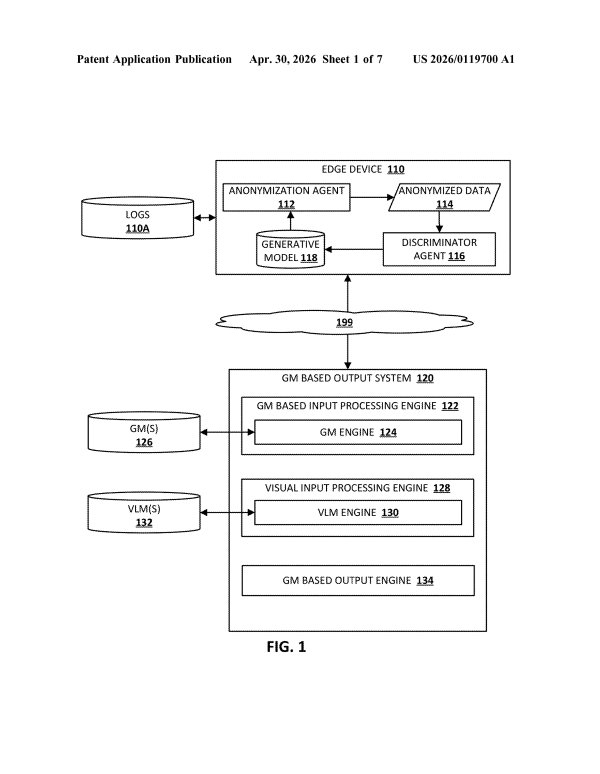
Google Patents On-Device AI That Strips Personal Data Before Cloud Upload
Google is patenting a system where your device — not Google's servers — is responsible for scrubbing your personal information out of AI prompts before anything leaves your phone or laptop. It's a privacy-first architecture that flips the usual cloud-AI data flow on its head.
-
Microsoft · Published Apr 30
Microsoft Patents an AI Security Agent That Investigates Cyber Threats on Its Own
Microsoft has patented a security agent that doesn't wait for a human analyst to decide what to investigate next — it asks an AI, gets a plan, executes it, and keeps looping until it understands the threat.
-
Amazon · Published Apr 30
Amazon Patents an LLM-Powered System That Reads Emails to Catch Cyberattacks
Amazon is patenting a security system that doesn't just look at network logs — it reads emails and conversation transcripts to figure out whether a detected anomaly is an actual attack. That's a meaningful shift in how automated threat detection could work.
-
Microsoft · Published Apr 30
Microsoft Patents a System That Blocks Dangerous Cloud Config Changes Before They Ship
Every major cloud breach has a root cause, and a surprising number of them start with a misconfigured deployment — a firewall rule left open, a storage bucket made public. Microsoft's new patent describes a system designed to catch exactly those mistakes before they ever touch production.
-
Microsoft · Published Apr 30
Microsoft Patents Plain-English AI Search Across Security Log Files
Writing SQL-style queries to hunt through security logs is a skill most analysts have — but it slows everyone down. Microsoft's new patent describes an AI system that lets you just ask a question in plain English and get back a meaningful answer about potential cyber threats.