
Nvidia Patents a System to Automatically Calibrate Hundreds of Cameras at Once
Getting dozens — or hundreds — of cameras to agree on where they are in the world is one of the most tedious jobs in robotics and surveillance. Nvidia is filing a patent to automate the whole process.
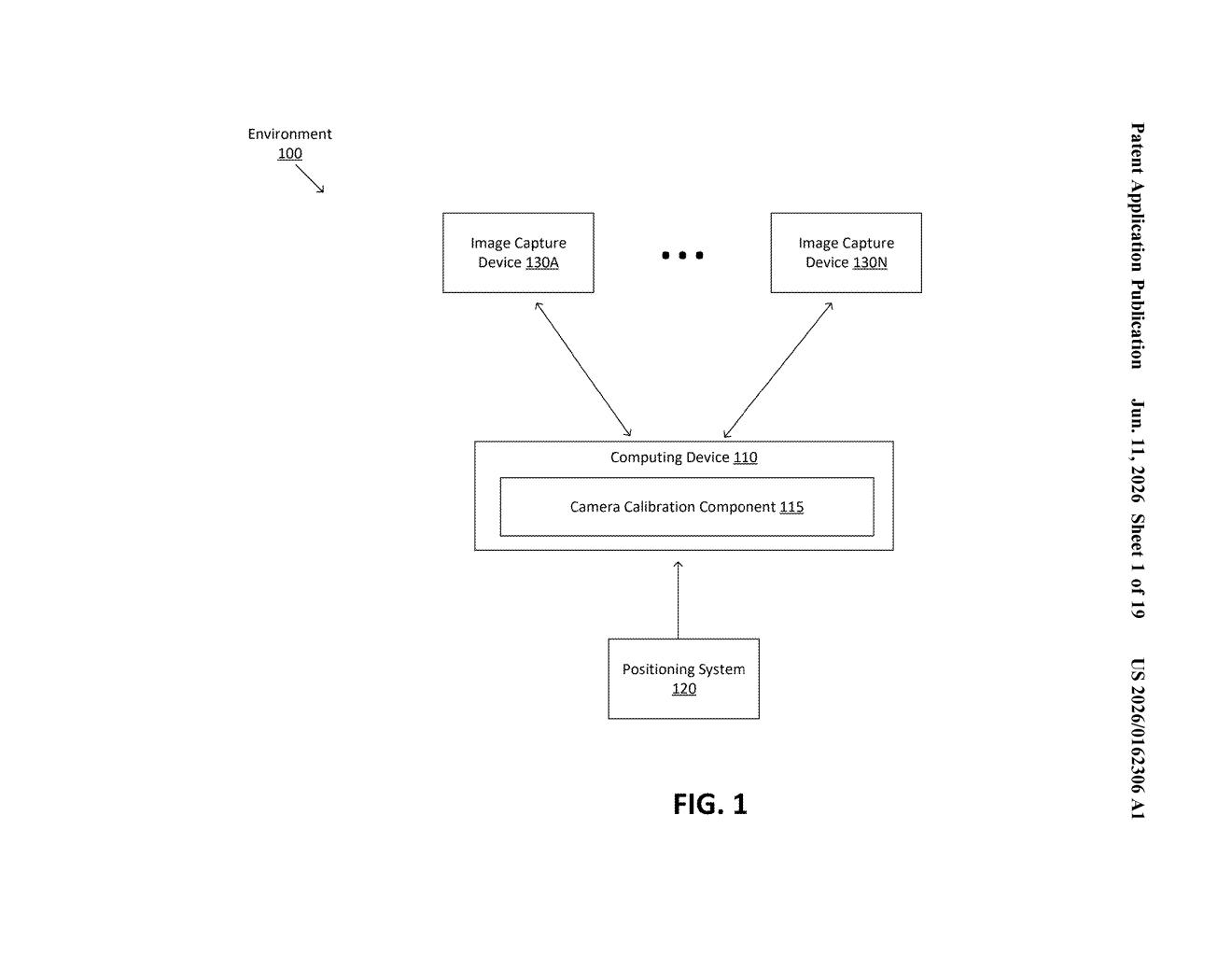
What Nvidia's automatic camera calibration actually does
Imagine setting up security cameras in a massive warehouse. Every single camera needs to be told exactly where it's pointing and how it's oriented, otherwise a robot or a tracking system can't correctly link what Camera 12 sees with what Camera 47 sees. Today, that calibration process is largely done by hand — a technician waves a checkerboard target around and an engineer crunches numbers. It's slow, error-prone, and expensive to redo.
Nvidia's patent describes a way to automate that whole process. A calibration target (think: a special marker or board) is moved through the space. A local positioning system — like an indoor GPS — tracks exactly where that target is at every moment. Each camera records images of the target, and the system automatically cross-references what the camera saw with where the target actually was, building a precise, automatic calibration for every camera in the environment.
You end up with a fully mapped, calibrated camera network without a technician having to touch each camera individually. The bigger the space — and the more cameras — the more time this saves.
How the pose-matching system aligns cameras to a shared map
The patent describes a method for calibrating large numbers of image capture devices (cameras) simultaneously, without manual per-camera configuration.
Here's the core loop:
- A calibration target — a physical marker — is moved through the environment.
- A local positioning system (an indoor localization system, like an ultrawideband or motion-capture rig) tracks the target's exact pose — meaning both its position (where it is in 3D space) and its orientation (which way it's facing) — at each moment.
- Each camera records one or more images of the target as it moves past.
- The system computes the relationship between where the target appears in the camera's image and where the positioning system says the target actually was in the real world.
That relationship is used to calibrate the camera — essentially teaching it its own place and pointing direction within the environment's shared coordinate system.
The key word in the claim is "large-scale": the method is designed to work across a plurality of image capture devices (many cameras at once), making it practical for environments like smart factories, autonomous vehicle test tracks, or large retail or logistics spaces where dozens to hundreds of cameras need to be synchronized.
What this means for warehouses, factories, and robot fleets
Camera calibration is a genuine bottleneck in deploying large-scale autonomous systems. A warehouse robot, a multi-camera sports broadcast, or an autonomous vehicle testing facility all depend on every camera sharing a consistent understanding of 3D space. When that calibration drifts or was never done precisely, tracking breaks down and AI models produce errors that are hard to debug.
For Nvidia, whose Isaac robotics platform and Omniverse simulation tools are aimed squarely at industrial automation customers, a streamlined calibration method is practical infrastructure — the kind of unglamorous plumbing that makes everything else work. If your company is deploying a robot fleet and dreads the quarterly recalibration process, this is exactly the kind of patent worth watching.
This is infrastructure work — not flashy, but genuinely useful. Camera calibration at scale is a real, unsolved operational pain point for anyone deploying multi-camera AI environments, and automating it with a positioning system is an elegant approach. The patent is narrow and methodical, which actually increases the chance it reflects something Nvidia is actively building into its robotics toolchain rather than defensive filing.
There are more where this came from
We read every patent application Big Tech publishes and send you the ones worth knowing. Plain English, free, every week.
Want this weekly breakdown for a company we don't cover? Patentlyze Pro →