
Tesla Patents a Dashboard Panel That Hides Its Graphics Until You Need Them
Tesla is patenting a way to make dashboard panels look like blank, unmarked surfaces — until a backlight switches on and reveals the icons or labels hiding underneath.
What Tesla's disappearing dashboard icons actually do
Picture a car dashboard button that looks like a smooth, featureless panel when the car is off. No labels, no icons, no visual clutter — just a clean surface. Then you start the car, a light flicks on behind the panel, and suddenly you can see exactly what each control does. That's the core idea here.
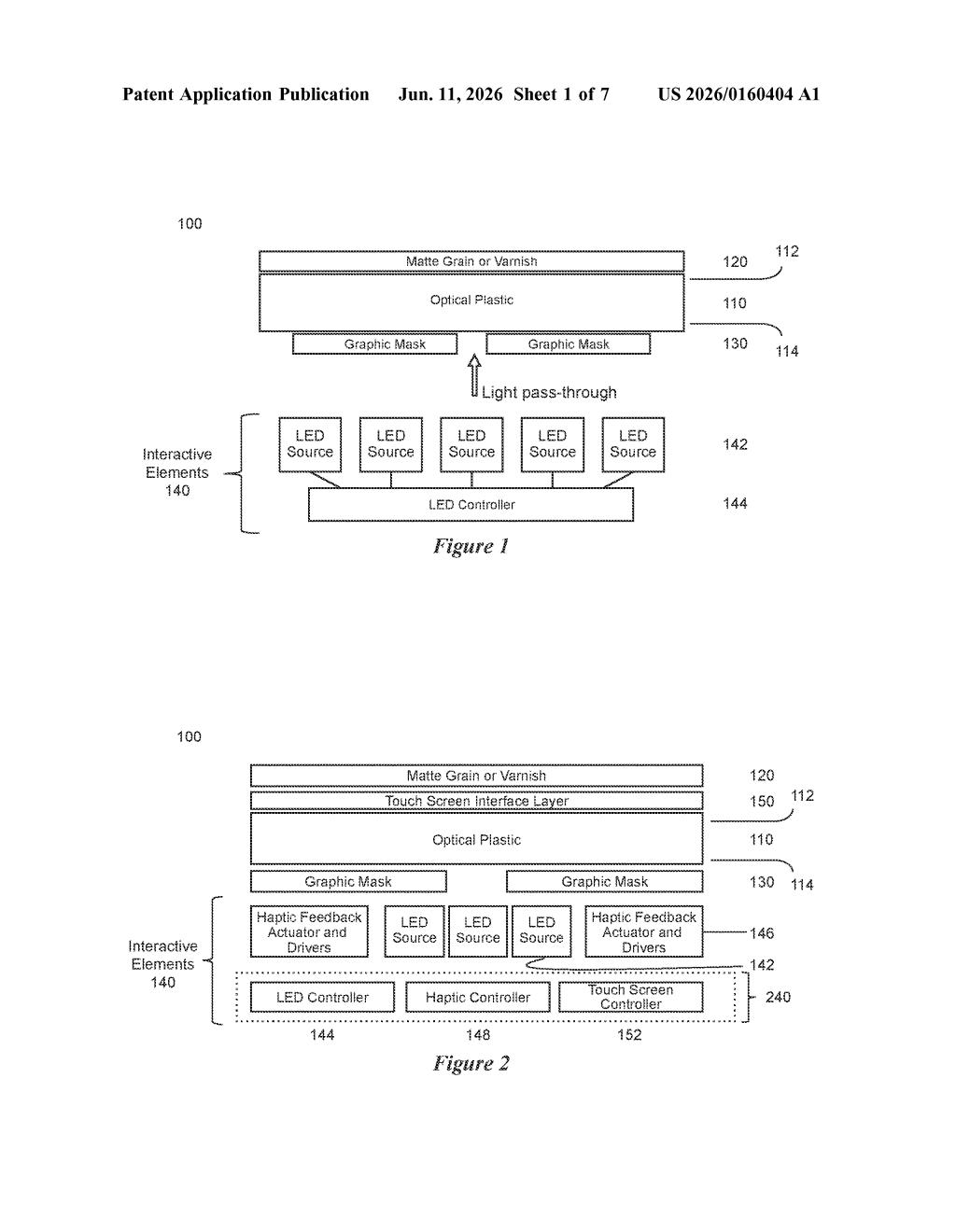
Tesla's patent describes a physical panel made of multiple stacked layers. The outermost layer has a matte, slightly rough texture that scatters light and makes the surface look uniform. Hidden beneath it is a graphical mask — essentially a stencil of whatever symbol or label Tesla wants to reveal. When a light source behind the panel turns on, it shines through the stencil but gets blocked everywhere else, making the graphic appear.
This isn't purely digital like a touchscreen. It's a physical surface that uses clever layering to control what you see depending on whether a light is on or off — a bit like a blackout window shade that reveals a printed design when you hold it up to sunlight.
How the matte layer masks graphics until backlit
The panel is built from three distinct layers sandwiched together, plus a light source.
- Layer one is a sheet of optical-grade plastic — clear and designed to transmit light cleanly.
- Layer two is a matte grain or varnish coating applied to the front (visible) surface of that plastic. This texture diffuses incoming light so the surface looks flat and opaque under normal conditions, hiding anything behind it.
- Layer three is a graphical mask — essentially an image or cutout — applied to the back surface of the same optical plastic sheet, on the opposite side from the matte coat.
When no light is active, the matte surface on the front absorbs and scatters ambient light, so the graphic on the back is invisible. When the integrated light source fires up behind the stack, light passes through the mask's cutout pattern, travels through the optical plastic, and exits through the matte layer — but only in the shape of the graphic. The matte texture is fine enough to let the backlit image bleed through while still obscuring the graphic when unlit.
The claim also references at least one interactive component tied to the light source, meaning the reveal could be triggered by a touch, proximity sensor, or a vehicle system event — not just a simple on/off switch.
What this means for Tesla's interior design direction
For Tesla, which has staked a lot of its interior identity on minimalism, this is a way to push that aesthetic further without sacrificing usability. A completely blank panel that only shows labels when you actually need them keeps the cabin looking clean while still giving you the information when it counts — during driving or interaction.
Beyond aesthetics, hiding controls when they're inactive could reduce driver distraction. It also opens the door to panels that change their displayed function depending on context — showing climate controls in one mode, audio controls in another — all using the same physical surface. Whether Tesla applies this to buttons, trim panels, or something else entirely isn't specified, but the concept fits neatly into a broader push toward interiors that don't look like they came from a traditional car company.
This is a genuinely elegant bit of physical design thinking — not software, not a screen, just smart material layering. It fits Tesla's obsession with clean interiors and solves a real tension between minimalism and usability. Whether it makes it into a production vehicle is another question, but this one is worth watching.
There are more where this came from
We read every patent application Big Tech publishes and send you the ones worth knowing. Plain English, free, every week.
Want this weekly breakdown for a company we don't cover? Patentlyze Pro →