
Sony Files Patent for a Display System That Controls How Often LEDs Switch Off
Sony is patenting a way to precisely manage how frequently the LEDs in a display array blink off, a subtle but important lever for reducing screen flicker that many people never know is bothering their eyes.
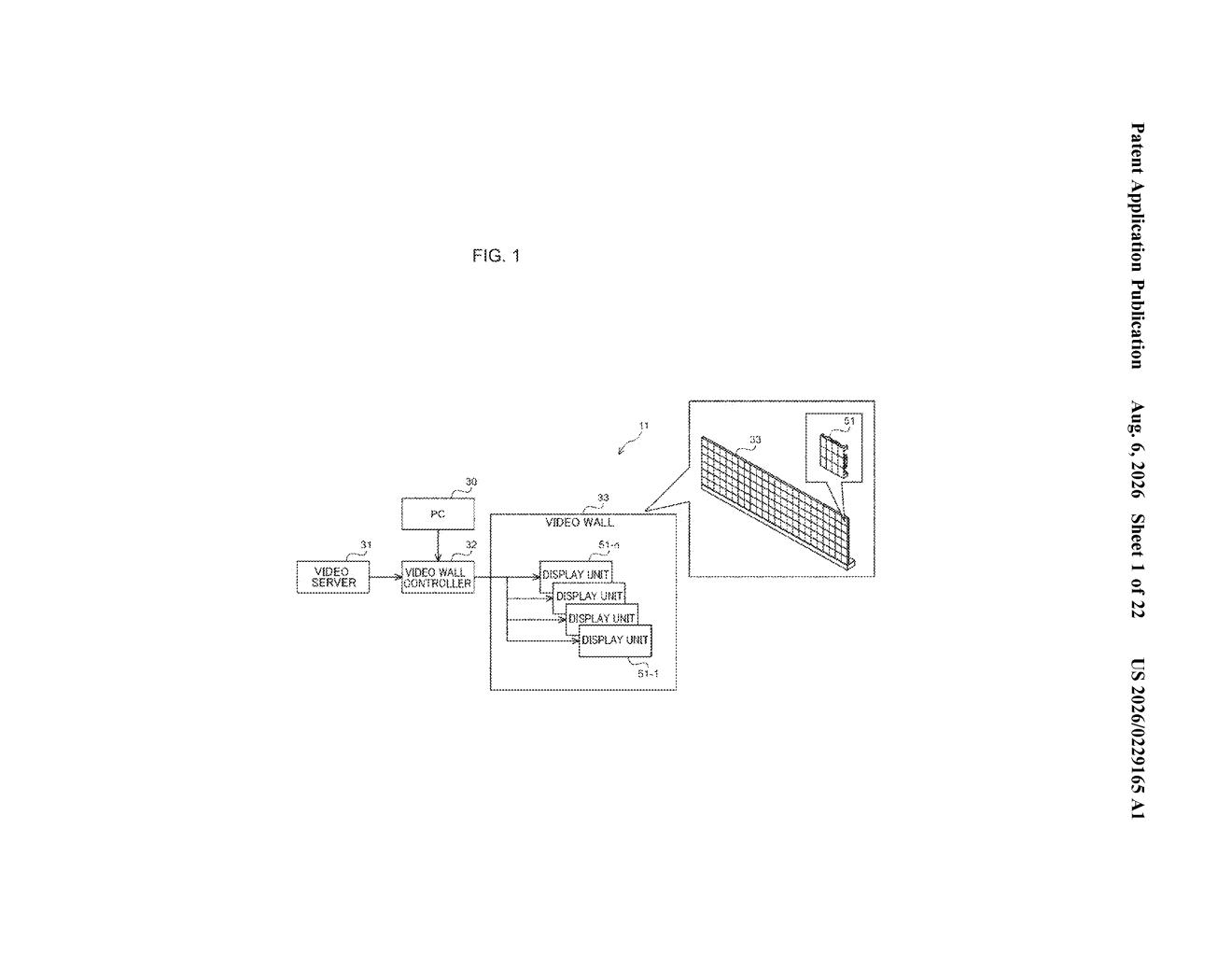
What Sony's LED off-period control actually does
Most modern screens, from your phone to your TV, are backlit by tiny LEDs. Those LEDs don't actually stay on continuously. They flicker on and off incredibly fast, far faster than your eye can consciously track. But at certain flicker rates, your eyes and brain can still detect the pulsing, even if you can't see it as obvious blinking. The result can be eye strain, headaches, or visual fatigue after long viewing sessions.
Sony's patent describes a control system that manages how often those LEDs switch off, specifically by raising the frequency of the off-periods. By tuning that rhythm, the system can push flicker into a range where it causes less discomfort, or manage how a display behaves under different brightness and content conditions.
This kind of low-level display control is often invisible to you as a viewer, but it directly affects how comfortable a screen feels during extended use.
How the drive controller raises the LED off-frequency
The patent centers on a drive control device, essentially a chip or processor embedded in a display system, that governs an LED array (a grid of individual light-emitting diodes that form a screen's backlight or pixel layer).
The core function is a light emission control unit that specifically manages the frequency at which LEDs are turned off. In display engineering, LEDs are commonly driven using pulse-width modulation (PWM), a technique where the LED rapidly switches on and off; the ratio of on-time to off-time controls perceived brightness. The patent's claim focuses on the off-period frequency as a distinct control variable.
By raising how often the off-periods occur, the system can:
- Move flicker frequencies away from ranges known to cause visual discomfort
- Allow finer brightness control without introducing perceptible blink artifacts
- Adapt LED driving behavior dynamically based on display conditions
The filing is brief and structured around a broad foundational claim, suggesting Sony is staking out control over this general approach rather than a narrow implementation.
What this means for screen flicker and eye comfort
Screen flicker is a real but underappreciated issue. Low-frequency PWM dimming on budget monitors and phones is a known cause of eye strain, and display reviewers regularly flag it as a quality concern. A system that actively manages the off-period frequency gives display makers a tool to push uncomfortable flicker rates out of the problem zone, which could matter for Sony's own OLED TV lines, camera viewfinders, or professional monitor products.
That said, the patent's claim is very broad and very short, covering a concept rather than a specific circuit or algorithm. That makes it either a strong foundational filing or one that faces prior-art challenges during examination. The practical impact depends heavily on what Sony builds around it.
This is a thin filing in its current form. One sentence of claims covering a broad concept is either a smart early stake in display flicker control or a filing that won't survive close examination. Without more detail on how Sony's approach differs from existing PWM dimming techniques, it's hard to call this a major move. Watch for continuation patents with actual implementation specifics.
There are more where this came from
We read every patent application Big Tech publishes and send you the ones worth knowing. Plain English, free, every week.
The drawings
22 drawing sheets from US 2026/0229165 A1 · click any drawing to enlarge


Want this weekly breakdown for a company we don't cover? Patentlyze Pro →
Be the first to weigh in