
Samsung Patents an Adaptive Cache Indexing System to Cut Memory Bottlenecks
Every time your processor needs data, it first checks a small, fast pool called a cache — and if that cache is badly organized, your chip wastes time hunting for things it should already have. Samsung is filing a patent for a smarter way to decide where data lands in that pool.
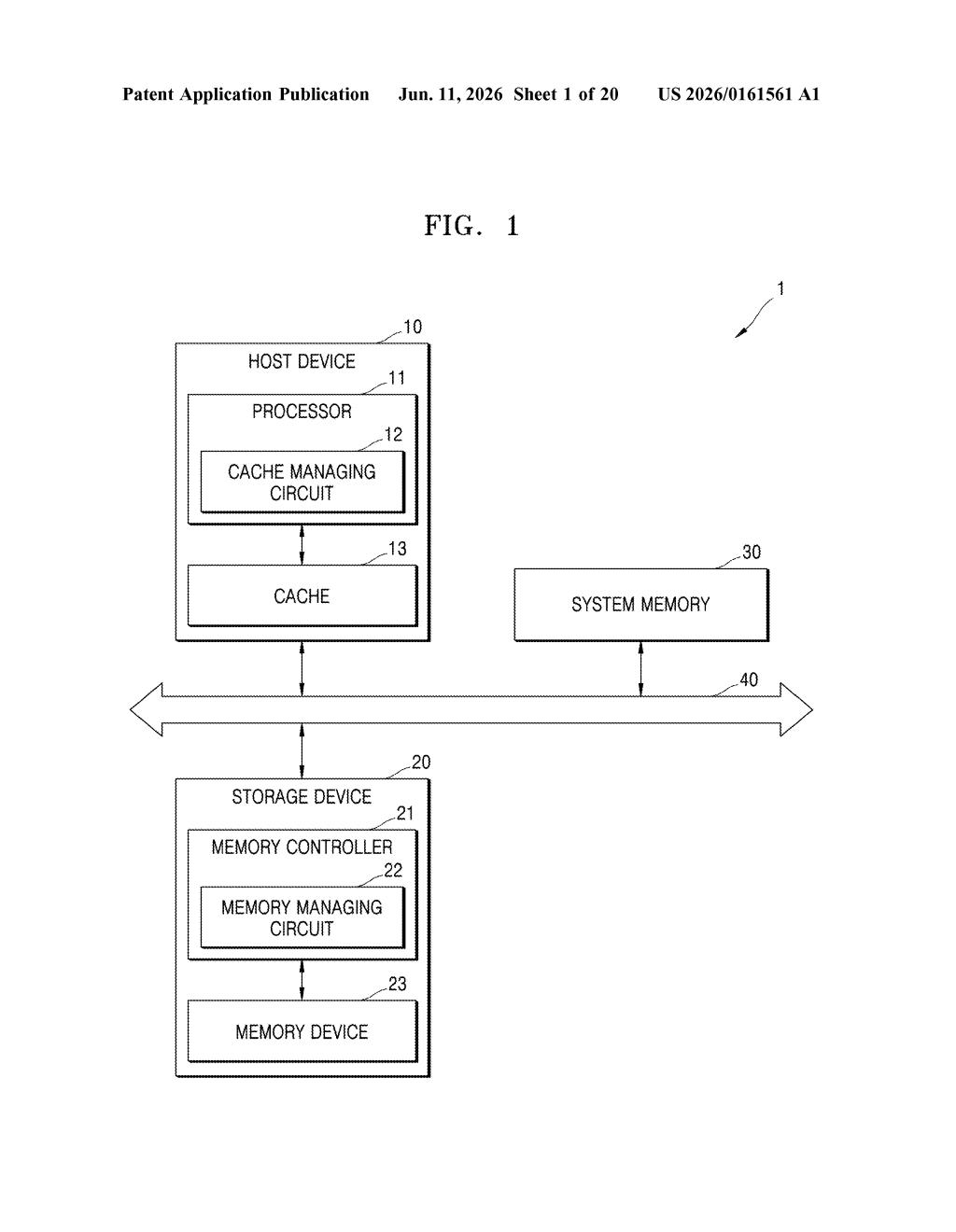
What Samsung's adaptive cache indexing actually does
Imagine a library where books get shelved randomly instead of by subject — you'd waste time searching even for books you use every day. A processor's cache works similarly: it's a small, fast memory that holds frequently used data close to the chip. But if data gets stored in the wrong slot, the processor has to go fetch it from much slower main memory instead.
Samsung's patent describes a new method for deciding exactly which slot in the cache a piece of data should occupy. Instead of using a fixed formula, the system generates a custom index — essentially a storage address — by combining two pieces of information from the data's memory location: the upper part of the address and the lower part. Those two pieces feed into a small math operation that produces a tailored slot assignment for that specific data.
The goal is to reduce cache conflicts — situations where two frequently used pieces of data keep bumping each other out of the same slot. By making the indexing adaptive to the actual memory addresses in play, Samsung hopes to keep more useful data in the fast cache at any given moment.
How the adaptive matrix picks a cache storage slot
Cache memory is organized into rows (called indices) and columns (called ways). When the processor wants to store a piece of data in the cache, it calculates an index to determine which row that data goes into. Traditional designs use a fixed hash function — a simple, unchanging formula — to compute that index. The problem is that fixed formulas can produce collisions: many frequently used pieces of data all mapping to the same row, kicking each other out repeatedly.
Samsung's patent introduces an adaptive matrix approach. When data arrives with a memory address, the system splits that address into two parts:
- Upper bits (the higher-order portion of the address) — used to construct a matrix (a grid of numbers used in the calculation)
- Lower bits (the lower-order portion) — turned into a vector (a list of numbers)
The matrix and vector are multiplied together (a standard linear-algebra operation) to produce the first index — the row in the cache where this particular data will be stored. Because the matrix itself is derived from the memory address, the indexing formula effectively adapts to the data being handled rather than applying one rigid rule to everything.
The cache managing circuit inside the processor then places the data into an empty slot within the row identified by that index. If multiple ways (columns) are available at that row, it picks a free one, avoiding unnecessary evictions of data that's still needed.
What this means for processor and storage performance
Cache conflicts are a real and well-documented performance drag in modern processors — they're one reason why raw chip speed doesn't always translate into real-world application speed. A method that reduces conflicts without requiring bigger (and more expensive, more power-hungry) caches would be genuinely useful across everything from server chips to mobile processors.
For Samsung, which makes both memory chips and the Exynos processors found in its own Galaxy devices, a patent like this sits squarely at the intersection of its two biggest businesses. If this technique works in silicon, it could offer a quiet but meaningful performance-per-watt improvement — the kind of gain that shows up in benchmark scores and battery life rather than in a splashy product announcement.
This is deep plumbing work — the kind of low-level optimization that never gets a press release but can quietly improve every piece of software running on a chip. The adaptive matrix idea is a legitimate engineering approach to a real problem, and Samsung's dual role as a memory maker and chip designer gives it good reason to care about cache efficiency more than most. Worth paying attention to if you follow semiconductor performance trends.
There are more where this came from
We read every patent application Big Tech publishes and send you the ones worth knowing. Plain English, free, every week.
Want this weekly breakdown for a company we don't cover? Patentlyze Pro →