
Samsung Patents a Way to Run AI Queries Without the Server Ever Seeing Your Data
What if you could ask an AI a question and the server answering it never actually saw what you asked? That's the core idea behind Samsung's latest patent — and it's a surprisingly elegant solution to one of AI's most persistent privacy problems.
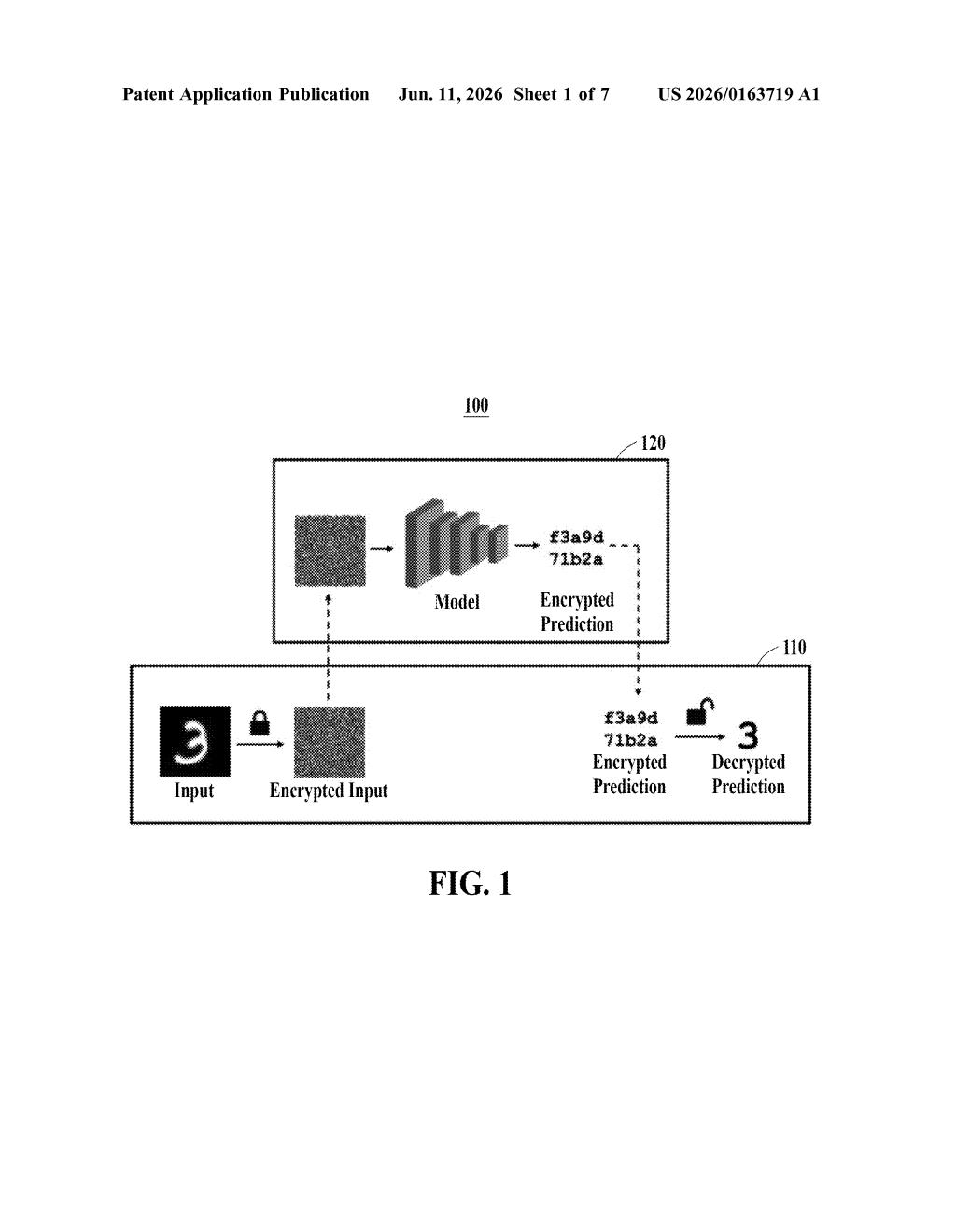
How Samsung keeps your AI questions private end-to-end
Imagine asking your phone's AI assistant something deeply personal — a health question, a financial query — and you're worried the company running the AI can read it. Today, most AI assistants send your question in plain text to a remote server, process it there, and send back an answer. The server sees everything.
Samsung's patent describes a system where your device locks your question with encryption before it ever leaves your phone. The server works on the locked version, sends back a partial result — still encrypted — and your device briefly unlocks it, then deliberately scrambles it with extra noise before sending it back for the final step. At no point does the server hold a clean, readable copy of your data.
The clever twist is that "noise" step in the middle. It prevents the server from piecing together what your original question was, even from the intermediate results it sees. The final answer lands on your device, where only you can decode it.
Inside Samsung's encrypt-decrypt-renoise processing loop
The patent describes a two-device protocol built around homomorphic encryption (HE) — a form of encryption that lets a remote computer perform math on data it can't actually read. Think of it like a locked box with a slot: the server can put numbers in and shake the box to get a result out, but never opens the lid.
The flow works in several distinct steps:
- Your device (the first device) encrypts your query and sends the ciphertext to the server.
- The server does its linear computation — the heavy matrix math inside an AI model — entirely on the encrypted data and returns an encrypted intermediate result.
- Your device decrypts that intermediate result locally, then deliberately injects calibrated differential privacy noise (random statistical fuzz that masks the original values) before re-transmitting it.
- The server runs nonlinear processing — operations like activation functions that are hard to do directly on encrypted data — on the noise-added version and returns a final result.
- Your device decodes the final result into a usable answer.
The noise injection step is the key innovation. Pure homomorphic encryption is extremely slow for nonlinear operations, so the system offloads those to the server — but only after the data has been re-masked, so the server can't reconstruct the original query from what it receives.
What this means for private AI on Samsung devices
AI assistants are increasingly handling sensitive tasks — medical triage, legal questions, financial planning — and the standard model of "send your words to our server" is a genuine privacy liability. This approach would let Samsung run powerful AI features through cloud infrastructure without the cloud ever holding readable user data, which is a meaningful shift from how virtually every current AI assistant works.
For Samsung specifically, this fits a broader push to differentiate Galaxy devices on privacy. If this technique becomes practical at scale, it could also matter for regulated industries — healthcare apps, banking tools — where sending raw queries to a third-party server creates legal exposure. The hard part is performance: homomorphic encryption is computationally expensive, and the back-and-forth round trips add latency. Whether Samsung can make this fast enough for real-time use is the open question.
This is a genuinely interesting approach to a real problem — the tension between cloud AI power and user data privacy. The noise-injection trick to get around homomorphic encryption's nonlinear bottleneck is clever engineering, not just a repackaging of existing ideas. Whether it can be made fast enough for consumer devices is a legitimate concern, but the architecture itself is worth watching.
There are more where this came from
We read every patent application Big Tech publishes and send you the ones worth knowing. Plain English, free, every week.
Want this weekly breakdown for a company we don't cover? Patentlyze Pro →