
Samsung Patents an AI Image Processor That Dials Down Power on Demand
Samsung is patenting a way for an AI image processor to instantly shed power consumption by switching to a leaner version of itself — without re-training anything from scratch.
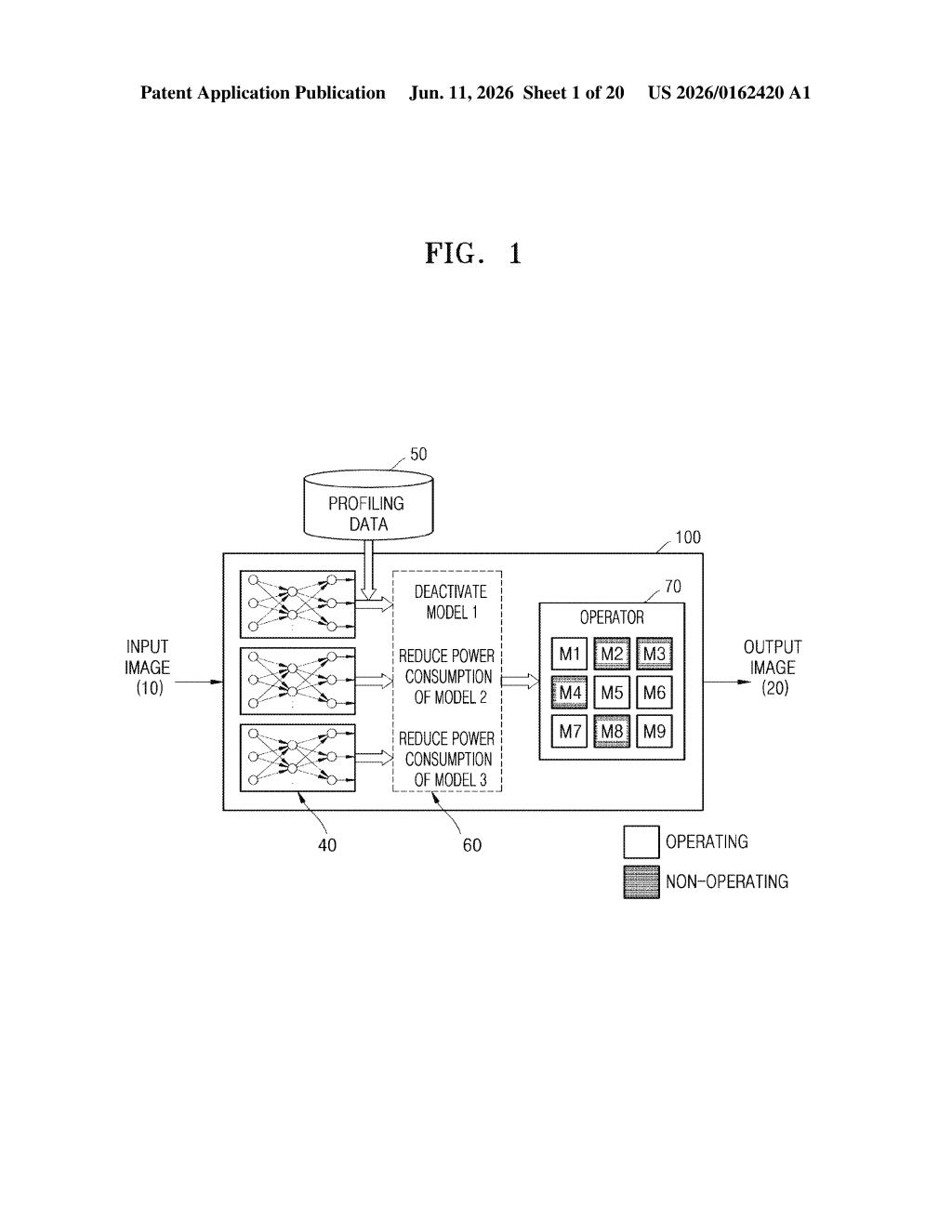
How Samsung's on-demand AI power cut actually works
Imagine your phone's camera AI is like a full restaurant kitchen running every burner at once. When the battery gets low, you'd want the kitchen to shut off the burners it doesn't really need — fast, and without closing down entirely. That's essentially what this Samsung patent describes.
When a device receives a signal to cut power use, the image-processing AI doesn't restart or reload. Instead, it references a pre-built lookup table that tells it exactly which parts of its calculations can safely be set to zero — essentially switching off the lowest-impact components of the model on the fly.
The result is a second, lighter version of the AI that processes your photos using less energy. Samsung has already pre-calculated how much quality you'd lose and how much power you'd save, so the device can make that trade-off instantly rather than figuring it out in the moment.
Inside the threshold-based neural network pruning system
The patent describes a two-model architecture built around a technique called neural network pruning — trimming an AI model by forcing certain internal values (called parameters or weights) to zero, which reduces the mathematical work the chip has to do.
The key innovation is that Samsung does the heavy analysis ahead of time. Before the device is ever used, engineers run a profiling process that:
- Determines a threshold value — a cutoff below which parameters are considered unimportant enough to zero out
- Generates a second, pruned neural network from the first by applying that threshold
- Records both the image quality impact and the estimated power savings of the pruned model
All of this is stored as profiling data on the device. When a power-reduction request comes in — say, from a battery manager or a thermal sensor — the device doesn't need to do any new analysis. It simply pulls the pre-stored threshold and switches to the leaner model immediately.
The pruned model (called the "second neural network model" in the patent) then handles image processing from that point forward, using fewer active computations and therefore less electricity.
What this means for battery life in Samsung camera devices
Battery life is a constant tension point in any device that runs AI image processing — think smartphones, tablets, or dedicated camera hardware. Currently, power-saving modes often just lower resolution or disable features entirely. This approach is more surgical: the AI itself gets lighter, not the output pipeline around it.
For Samsung, which builds both the Exynos chips and the image signal processors inside its Galaxy devices, a patent like this fits neatly into its on-device AI roadmap. If the approach scales, it could let future Galaxy cameras maintain more of their AI-enhanced photography capabilities even when the battery is critically low — a meaningful quality-of-life improvement for users who shoot a lot of photos on a long day out.
This is a solid, practical patent rather than a flashy one. Pre-computing the cost-benefit analysis of a pruned AI model so the device can switch instantly is genuinely useful engineering — it solves a real problem that affects every phone with a neural image processor. Don't expect a press release about it, but do expect something like it to quietly show up in a future Galaxy firmware update.
There are more where this came from
We read every patent application Big Tech publishes and send you the ones worth knowing. Plain English, free, every week.
Want this weekly breakdown for a company we don't cover? Patentlyze Pro →