
Samsung Patents an AI System That Predicts 5G Signal Conditions Before They Degrade
What if your phone's cell tower could predict a bad signal before you experienced it — and adjust in advance? That's essentially what Samsung is patenting here.
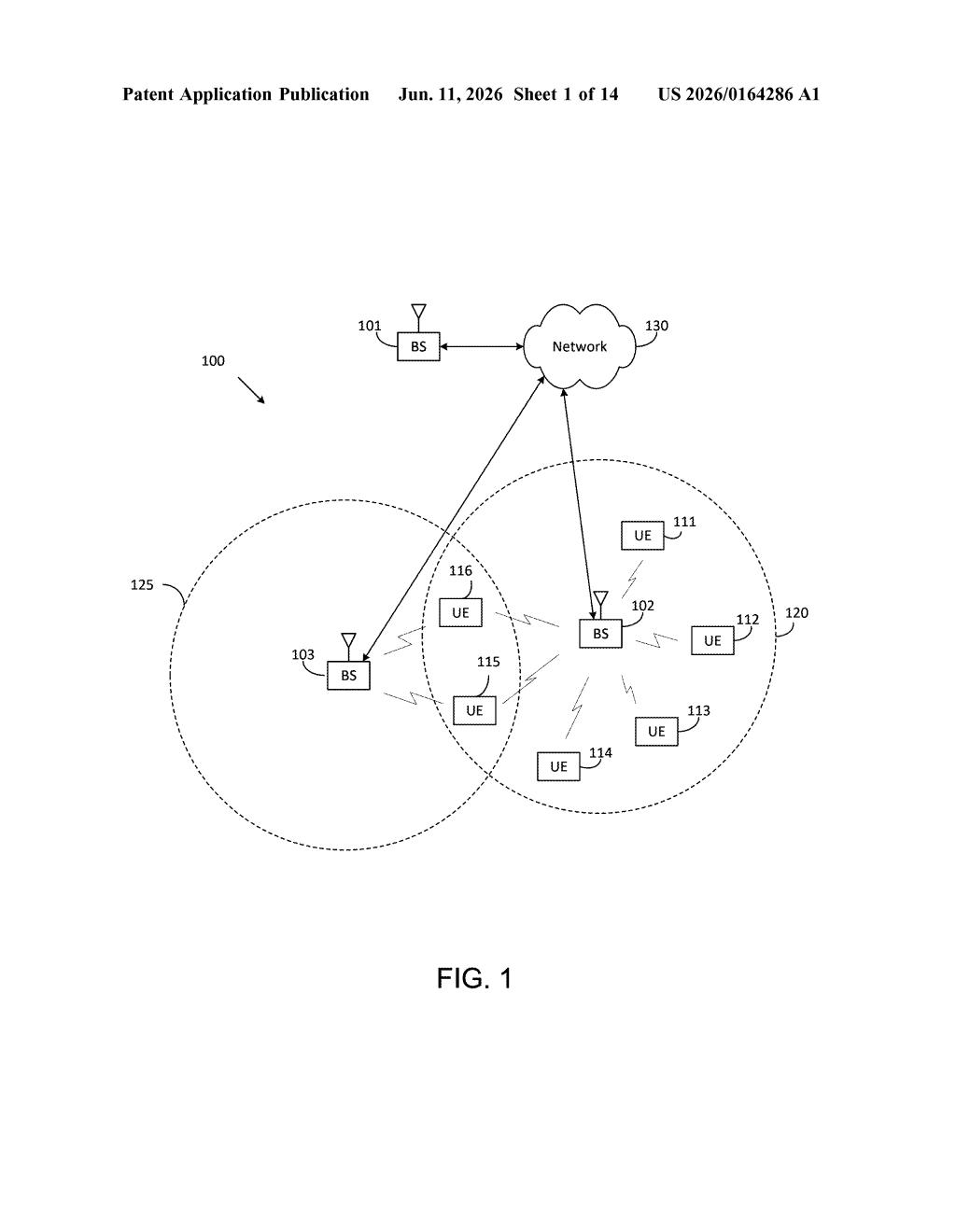
What Samsung's AI signal-prediction system actually does
Imagine you're on a video call and the signal drops mid-sentence. By the time your phone tells the network "the connection is bad," it's already too late. The damage is done. Samsung's patent describes a system designed to get ahead of that problem.
The idea is that a cell tower — called a base station — uses an AI model to look at recent snapshots of your connection and predict what it will look like in the very next moment. Instead of reacting to a bad signal, the network could prepare for it before it happens.
To make those predictions accurate, the system first cleans up the raw signal data it receives from your phone, correcting for timing and frequency quirks that would otherwise throw the AI off. Think of it like noise-canceling, but for the numbers the network uses to make decisions — not the sound you hear.
How the base station cleans and transforms signal data for AI
Channel state information (CSI) is the data a phone continuously sends back to a cell tower describing how the wireless signal is traveling between them — things like how strong it is, which directions the signal is bouncing, and how quickly conditions are changing. Towers use this to decide how to beam and encode data efficiently.
The Samsung patent describes a base station processor that takes CSI data and runs it through several preparation steps before feeding it into an AI model:
- TTI-wise normalization — Each "TTI" (Transmission Time Interval) is a tiny slice of time, roughly a millisecond. The system normalizes, or rescales, the signal snapshot from each slice independently. This corrects for timing and frequency offset impairments — small mismatches between the phone's internal clock/frequency and the tower's, which would otherwise introduce systematic errors into the AI's input.
- Delay-angle domain transform — The cleaned data is then mathematically converted into a different representation that maps the signal by the delay of reflections and the angle of arrival. This format is more compact and physically meaningful, making patterns easier for an AI to learn from.
- Next time-step CSI prediction — The AI model then outputs a prediction of what the channel will look like at the very next moment, before the phone even sends its next update.
The key engineering insight is that fixing impairments before the AI sees the data — rather than training the AI to work around dirty data — produces more reliable predictions.
What predictive signal quality means for 5G network performance
In 5G networks, especially those using massive MIMO antenna arrays (towers with dozens or hundreds of antennas that steer beams precisely toward each user), accurate CSI predictions let the tower make smarter beamforming decisions without waiting for the phone to report back. That feedback loop has real latency, and in a fast-moving environment — a passenger on a train, say — the channel can change faster than the reporting cycle.
For you as a user, predictive CSI could mean fewer dropped packets, more stable video calls, and better throughput in crowded or fast-changing environments. For Samsung, which makes both network infrastructure and consumer phones, owning IP in AI-driven signal management is strategically valuable as carriers push deeper into AI-assisted 5G and 6G planning.
This is a solid, narrowly scoped engineering patent aimed squarely at the 5G infrastructure market — not a consumer-facing feature you'll ever see named on a spec sheet. The impairment-correction preprocessing step is the real technical contribution here; it's a practical solution to a known problem that limits how well AI models perform on real-world, slightly messy signal data. Infrastructure-watchers and telecom engineers will find this more interesting than the average reader, but it's a legitimate piece of IP in a competitive space.
There are more where this came from
We read every patent application Big Tech publishes and send you the ones worth knowing. Plain English, free, every week.
Want this weekly breakdown for a company we don't cover? Patentlyze Pro →