
Adobe Patents a Fix for When Camera Lens Filters Slip Out of Place
Physical camera filters — think polarizers or neutral-density glass — can shift slightly between shots, and that tiny movement quietly ruins an otherwise perfect image. Adobe's new patent describes a system that catches that drift automatically and corrects for it before you ever notice.
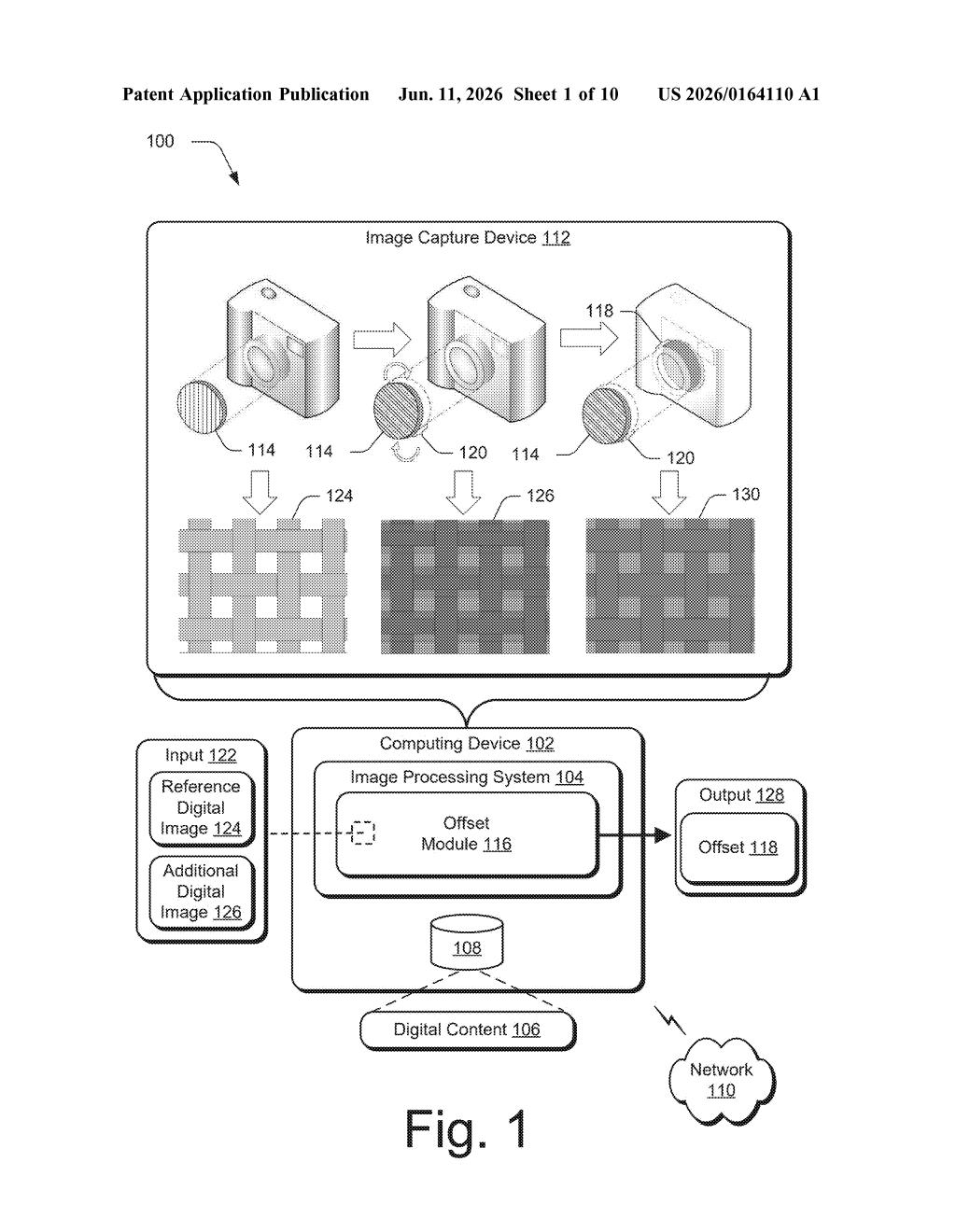
What Adobe's filter-drift fix actually does to your photos
Imagine you're a landscape photographer using a physical filter screwed onto your camera lens — the kind that cuts glare or darkens a bright sky. Between one shot and the next, that filter rotates or shifts ever so slightly. The resulting photos look almost identical to the naked eye, but pixel-for-pixel they're slightly misaligned in a way that can ruin long-exposure composites or HDR stacks.
Adobe's patented system compares two photos taken with the filter in slightly different positions, then uses a machine-learning model to figure out exactly how far the filter has drifted. Once it knows the offset, it can shift the pixels of the affected image to bring everything back into alignment.
The correction happens at the software level, so no special hardware is required — your existing camera and filter setup would work. The idea is that the system runs quietly in the background, keeping your multi-shot sequences clean without you having to babysit the filter between exposures.
How the ML model detects and corrects filter misalignment
The system works in two stages: detection and correction.
Detection: Two images are captured — one before the filter moves, one after. A machine learning model (a neural network trained to spot subtle geometric differences between photos) compares them and outputs translation coordinates, essentially a pair of X/Y numbers describing how far the filter has shifted relative to the lens.
Correction: Those coordinates are handed off to a pixel-adjustment routine that shifts the second image by the exact amount needed to undo the misalignment. The corrected image is then output — ready to be composited, stacked, or processed like any normal shot.
Key technical details worth noting:
- The model produces translation coordinates, not a full homography (meaning it handles sliding/rotation drift, not lens distortion).
- The correction targets the image sensor offset — the patent specifically mentions controlling "a portion of the image capture device," which hints the correction could also be applied in-camera, not just in post.
- The pipeline is designed to be real-time or near-real-time, making it practical for burst shooting or automated studio workflows.
What this means for photographers using physical filters
For professionals who shoot multi-exposure sequences — think HDR photography, focus stacking, or long-exposure composites — even a fraction-of-a-millimeter filter drift between shots creates alignment errors that are tedious to fix by hand. Adobe's system automates that fix entirely, which matters most in controlled studio environments where physical filter wheels or matte boxes are common and tiny mechanical shifts are unavoidable.
It also signals Adobe's broader push to bring hardware-aware intelligence into its imaging software stack. If this ends up in Lightroom or Camera Raw, it could silently improve the quality of a class of shots that most photographers don't even realize is being degraded.
This is a genuinely useful, specific solution to a real problem that professional photographers deal with constantly — and it's narrow enough that it might actually ship. The machine-learning angle isn't a buzzword here; comparing two near-identical images to extract a sub-pixel shift is exactly the kind of task a trained model handles better than rules-based code. Worth watching as a potential Lightroom or Camera Raw feature.
There are more where this came from
We read every patent application Big Tech publishes and send you the ones worth knowing. Plain English, free, every week.
Want this weekly breakdown for a company we don't cover? Patentlyze Pro →