
Sony Patents a Device That Makes Your Body Feel Motion That Isn't There
Imagine holding a game controller that makes you feel like you're accelerating, turning, or falling — without any of those things actually happening. That's the core idea behind Sony's latest patent filing.
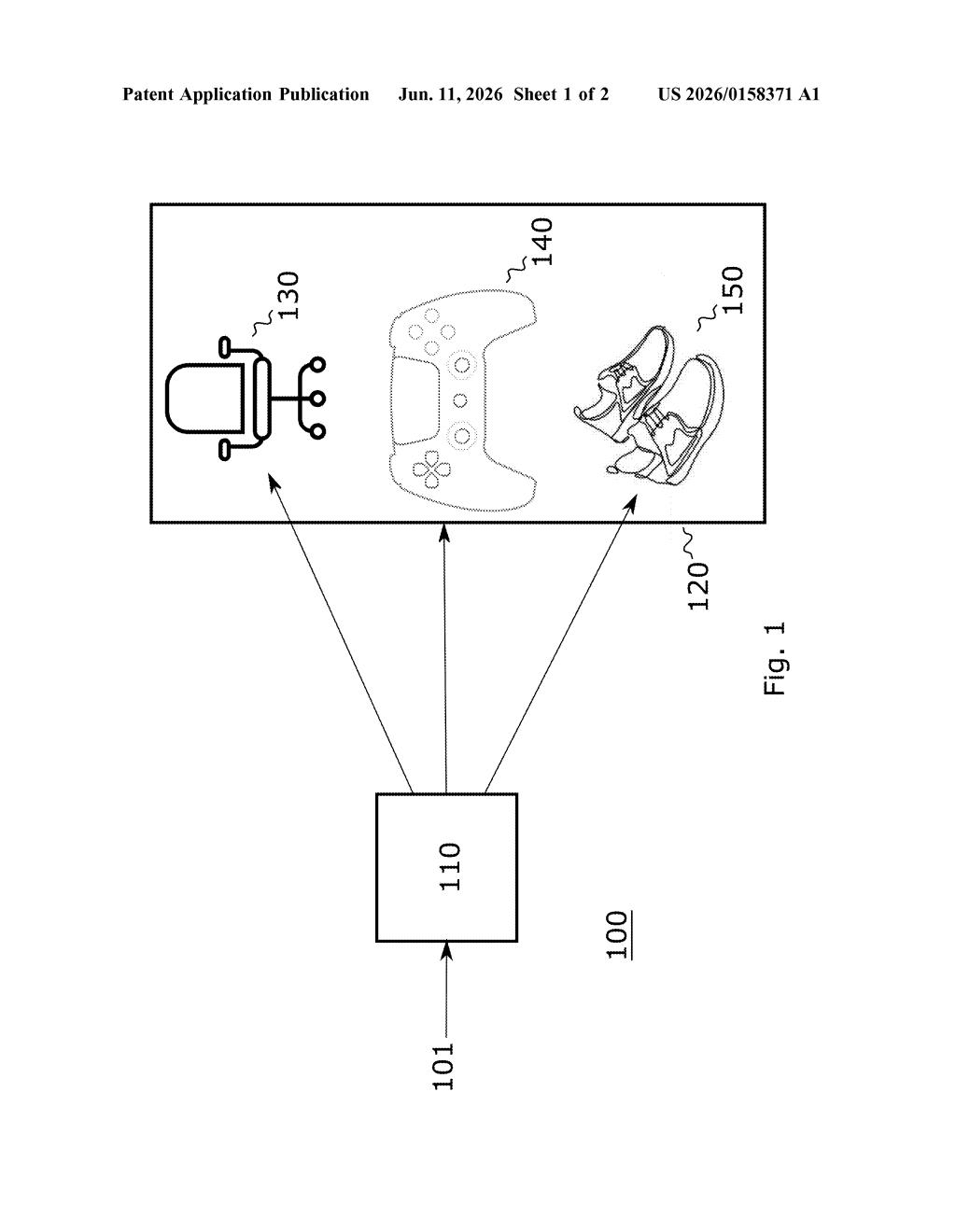
How Sony's motion-perception trick actually works
Your brain figures out that you're moving by combining signals from your eyes, your inner ear, and the pressure you feel against your skin. Sony's patent is built around a clever shortcut: if you can fool one of those signals, you can sometimes fool the whole system.
The idea is an object — think a controller, a wearable, or some kind of handheld device — that physically changes some property of itself (its weight distribution, shape, vibration pattern, or stiffness) in response to instructions from a computer. That change is tuned to match a target motion, meaning the sensation you're supposed to feel, not the one your body is actually experiencing.
You're sitting still in your chair, but the object in your hands subtly shifts in a way that convinces part of your nervous system you just banked left in a fighter jet. It's a form of haptic illusion — the same category of trick that makes a vibrating phone feel like a buzz from your pocket even when it's on a table.
How the object changes its physical properties on command
At its core, the patent describes a system with two parts: something that tells the device what motion the user should perceive, and the device itself, which physically changes in response.
The key phrase in the patent is "change a physical property." This is deliberately broad — Sony isn't locking in a single mechanism. A physical property could be:
- The distribution of mass inside the object (shifting an internal weight to simulate g-force)
- Surface texture or shape (deforming to simulate contact or pressure)
- Vibration frequency and amplitude (the classic rumble-pack approach, but more precisely targeted)
- Stiffness or resistance (pushing back against your hand to simulate inertia)
The processing circuitry receives a target motion descriptor — basically a data signal saying "the user should feel like they're decelerating" — and translates that into a specific physical change in the object.
The object is described as being "arranged for interaction with the user," which means it has to be something you're actively holding, wearing, or touching. The illusion only works when the object is in contact with your body, giving your nervous system a signal it can misinterpret as motion.
What this means for VR gaming and haptic feedback
Sony makes the PlayStation platform, including the DualSense controller — which already uses sophisticated haptic motors and adaptive triggers to simulate texture and resistance. This patent points toward a more systematic, software-driven approach to motion illusion, where the sensation isn't just a canned vibration but a precisely calculated physical response to whatever is happening in a game or virtual environment.
For VR in particular, this addresses one of the hardest problems in the space: your eyes see motion, but your body doesn't feel it, and that disconnect causes discomfort for many users. A device that can partially close that gap — by feeding your hands and skin a believable motion signal — could make virtual worlds feel significantly more convincing without needing a motion platform the size of a room.
The patent is written at a very high level of abstraction, which suggests Sony is staking out broad territory rather than describing a finished product. The DualSense connection is hard to ignore — Sony already has the hardware foundation and the developer ecosystem to build on this. The interesting question is whether they're thinking about a next-generation controller or something closer to a full haptic peripheral for PSVR.
There are more where this came from
We read every patent application Big Tech publishes and send you the ones worth knowing. Plain English, free, every week.
Want this weekly breakdown for a company we don't cover? Patentlyze Pro →