
AMD Patents Technology That Shows Your PC's Startup Image Before Memory Loads
Every time your PC boots, there's an awkward blank-screen phase while your RAM 'trains' itself. AMD wants to fill that dead air by borrowing the GPU's own memory cache as a temporary display buffer.
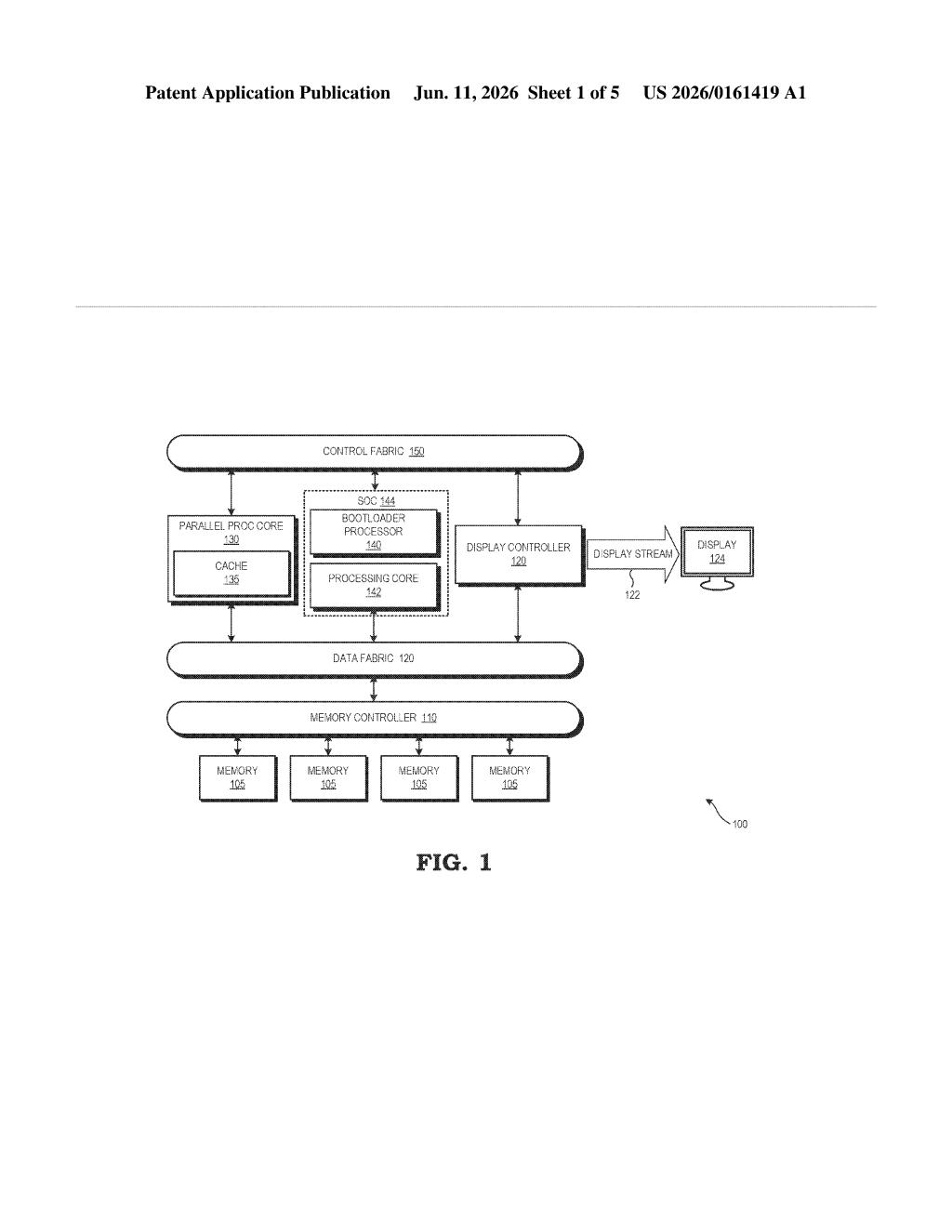
What AMD's GPU-cache boot trick actually does
Imagine turning on your PC and staring at a black screen for several seconds before anything appears. That gap exists because your computer's main RAM needs to go through a calibration routine — called memory training — before it's usable. Until that's done, there's nowhere to store a boot image, so your display just sits dark.
AMD's patent tackles this by using the GPU's built-in memory cache as a stand-in. Instead of waiting for system RAM to be ready, the computer stashes the boot image — a logo, a progress indicator, whatever — inside the graphics chip's own fast memory and puts it on screen immediately.
The result is that you see something the moment your PC powers on, even though the heavy memory setup work is still happening in the background. AMD also proposes saving the memory-training results so future boots can skip the calibration entirely and start even faster.
How the GPU cache stands in for unready system RAM
During a standard PC boot, the CPU and GPU both need system RAM (DRAM) to be fully initialized before they can do much of anything useful. That initialization — called memory training — involves the memory controller sending test signals to figure out the exact timing parameters for each RAM module. It takes time, often several seconds, and the display stays blank throughout.
This patent describes a method where the GPU's on-chip memory cache (fast, small memory built directly into the graphics chip itself) is used as a temporary framebuffer. A framebuffer is just the block of memory that holds the pixels being sent to your monitor. Normally that lives in system RAM or dedicated GPU VRAM, but neither is available this early in boot.
The key steps the patent outlines are:
- Start the memory training process as normal
- In parallel, load display data (a boot logo or status screen) into the GPU's cache
- Begin driving the display from that cache immediately, so the screen is live
- Once system RAM is ready, hand off normally
As a bonus, the patent describes saving the memory training results to storage so that subsequent boots can skip the calibration step, making every restart after the first one noticeably faster — similar to how some systems already use "memory context restore" features.
What this means for PC and workstation boot times
For everyday PC users, a blank boot screen is a minor annoyance. For embedded systems, kiosks, medical displays, or industrial machines that need to show a status readout the instant they power on, it's a real problem. AMD's approach offers a clean solution that doesn't require custom firmware hacks or dedicated boot-display hardware.
On the consumer side, this could tighten up the boot experience on AMD-powered desktops and laptops — particularly as AMD integrates its CPU and GPU more tightly in its APU (combined chip) designs, where sharing cache resources between the two processors is already a design priority. It's also a good signal that AMD is thinking about the full boot pipeline, not just peak performance benchmarks.
This is a focused, practical engineering patent — not glamorous, but exactly the kind of low-level polish that separates a premium experience from a frustrating one. The memory-training-save feature is the more valuable half: a display that lights up two seconds sooner is nice, but a boot that skips calibration entirely on repeat startups is genuinely useful. Worth watching for in future AMD APU and embedded platform firmware.
There are more where this came from
We read every patent application Big Tech publishes and send you the ones worth knowing. Plain English, free, every week.
Want this weekly breakdown for a company we don't cover? Patentlyze Pro →