
Apple Patents a System That Sizes Virtual Windows to Your Room
Ever wished your virtual monitor would just figure out how far away it should sit based on the size of your room? Apple has filed a patent for exactly that — a system that reads your physical environment and automatically positions virtual content at a comfortable viewing distance.
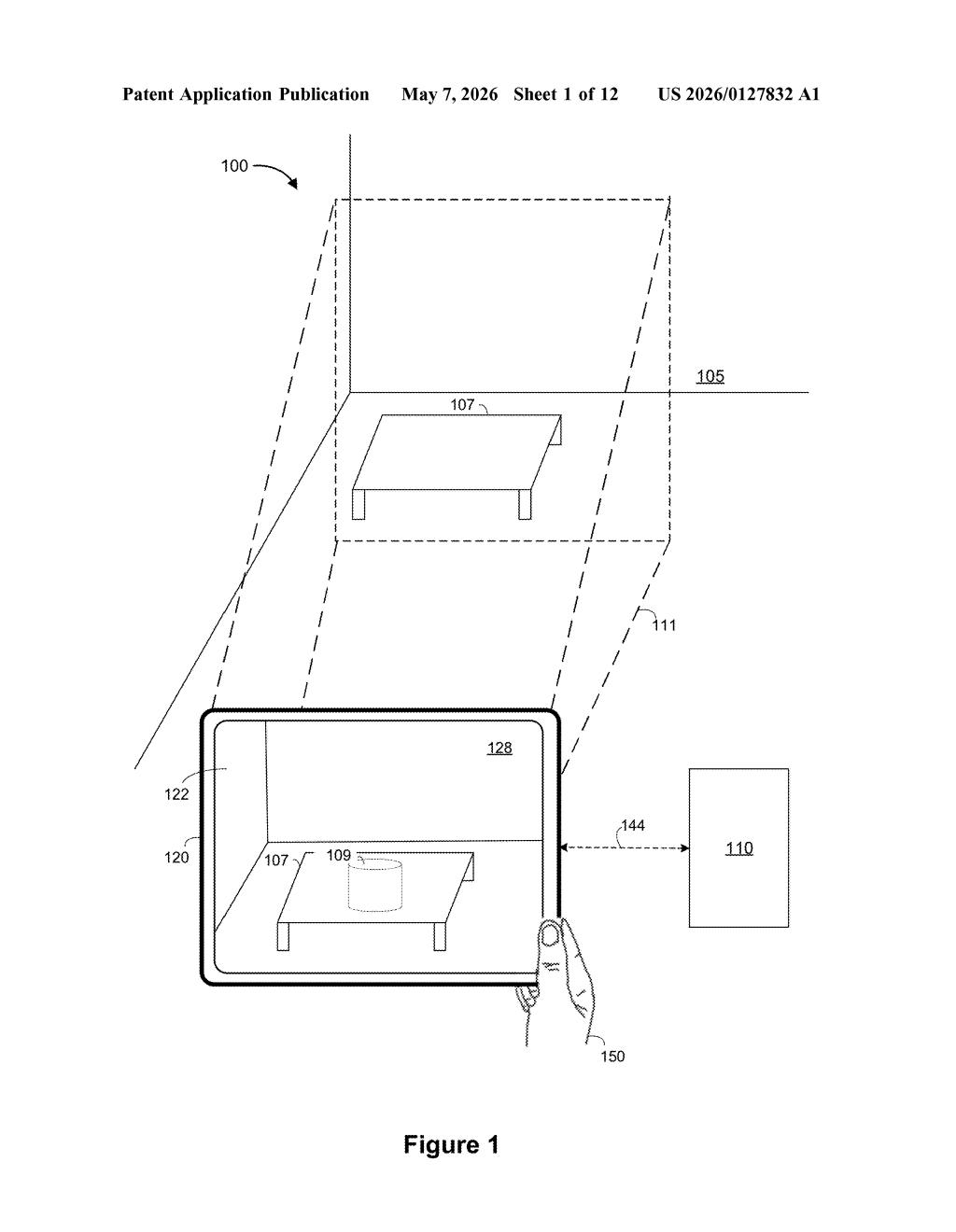
How Apple's room-aware virtual display placement works
Imagine you open a virtual browser window in Apple Vision Pro while sitting in a cramped studio apartment, and then do the same thing in a large living room. Right now, apps don't automatically account for how much physical space you actually have — the window just appears wherever it appears. Apple's patent describes a smarter way to handle this.
The idea is that before placing any virtual content on your screen, the system first measures a key dimension of your physical environment — like how far away a wall is — and then checks the size of the content you want to display. From those two inputs, it calculates an ideal view distance and generates a presentation region sized and positioned to match.
Think of it like an interior designer who scales the furniture to the room rather than just dumping everything in at full size. You'd get virtual windows that feel appropriately scaled whether you're in a tiny office or a wide-open space — without having to manually drag and resize anything.
How room dimensions drive Apple's view distance calculation
The patent describes a computing system — connected to a display device and input devices — that dynamically calculates where and how large to render virtual content based on two measured dimensions.
First dimension: a measurement from the physical environment (think the detected distance to the nearest wall, or the estimated room depth). Second dimension: a property of the virtual content itself (its native size, aspect ratio, or intended display footprint).
From those two values, the system computes a view distance — essentially, how far away the virtual object should appear to feel natural and comfortable. It then uses that view distance to generate a presentation region, which is the bounded area in which the virtual content actually renders.
The patent is framed broadly enough to cover both the placement logic and any transitional regions (intermediate zones the virtual content passes through as it animates in or repositions). The claim language covers the full pipeline:
- Sense the physical environment
- Detect a request to show virtual content
- Measure the content's own dimensions
- Compute an appropriate view distance
- Render inside a generated presentation region
What this means for Vision Pro comfort and usability
For spatial computing headsets like Vision Pro, comfort and spatial coherence are the whole product. A virtual window that floats uncomfortably close in a small room, or looks tiny and distant in a large one, breaks immersion and causes real eye strain. This patent addresses that friction point at the system level rather than leaving it to individual app developers to figure out.
If Apple ships something like this, it could mean virtual content that just feels right regardless of where you're using your headset — your home office, a hotel room, or an airplane seat. That kind of automatic environmental adaptation is a meaningful quality-of-life improvement for everyday spatial computing use, and it would reduce the amount of manual repositioning users currently have to do.
This is quiet but practical work — the kind of UX detail that makes or breaks whether people actually enjoy using a spatial computing device day-to-day. It's not glamorous, but automatic room-aware content placement is exactly the kind of friction Apple needs to eliminate if Vision Pro is going to feel like a natural computer and not a gadget you constantly fiddle with.
There are more where this came from
We read every patent application Big Tech publishes and send you the ones worth knowing. Plain English, free, every week.
Want this weekly breakdown for a company we don't cover? Patentlyze Pro →