
Apple Patents a Camera Sensor That Captures More Light Without Washing Out the Image
Apple is patenting a way to squeeze more light information out of a single camera pixel — without the sensor ever getting overwhelmed — by repeatedly sipping electrical charge from each pixel instead of draining it all at once.
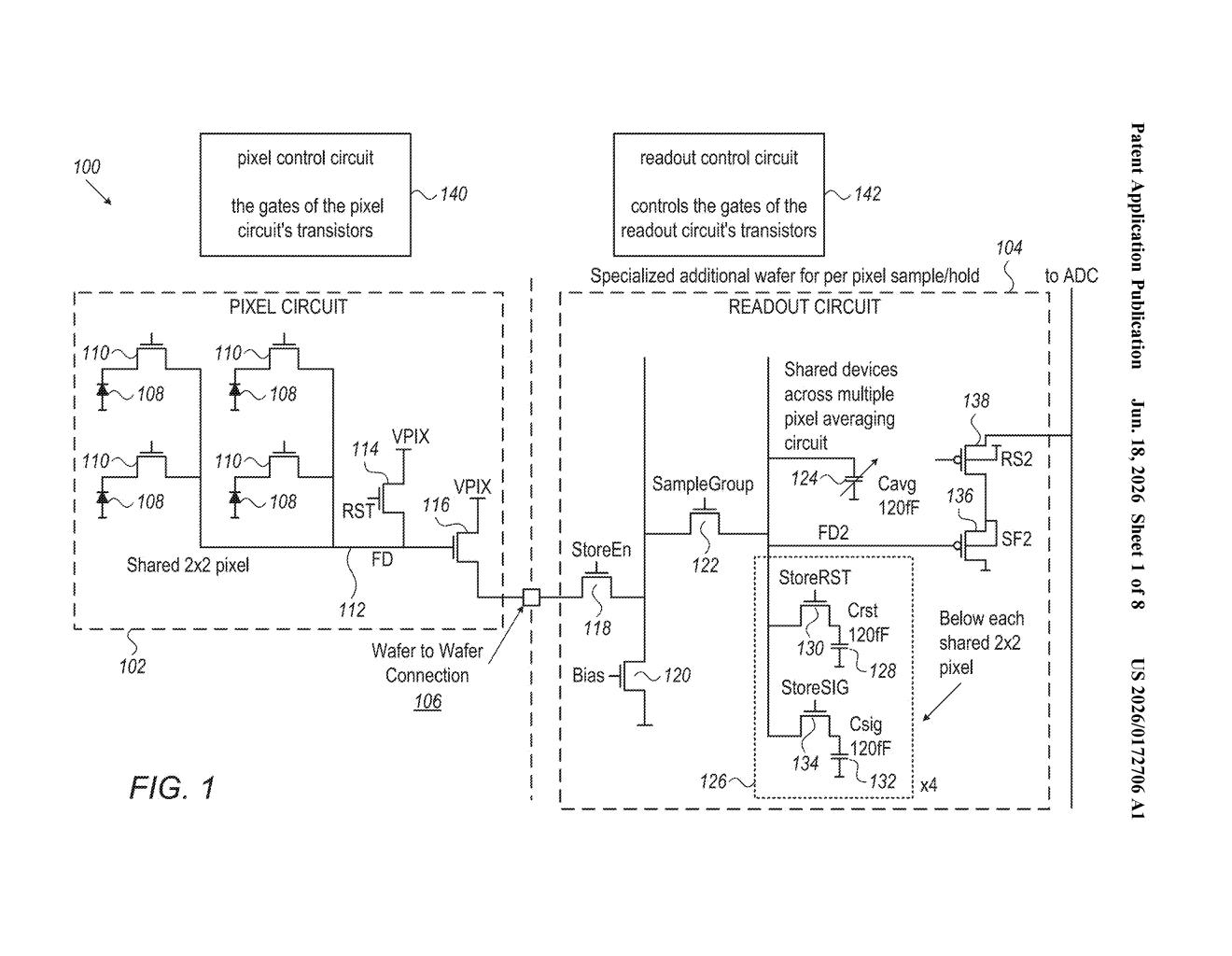
What Apple's partial pixel oversampling actually does
Imagine trying to measure rainfall during a storm with a small cup. If the cup fills up and overflows, you lose data about how much rain actually fell. That's essentially the problem camera sensors face in bright scenes — pixels get 'full' too quickly, and detail in the highlights is lost forever.
Apple's patent describes a smarter way of reading each pixel: instead of waiting for a pixel to fill up completely and then reading it once, the sensor reads it in multiple rounds, taking only a portion of the accumulated charge each time and storing a running total. By the final round, it collects whatever charge is left and combines everything into one accurate measurement.
The result is a pixel that can effectively 'hold' far more light information than its physical size would normally allow — a big deal for high dynamic range (HDR) photography, where the goal is to capture both the bright sky and the shadowed faces in the same shot without sacrificing either.
How the sensor drains charge in rounds to avoid overflow
The patent describes an imaging device built around two main components: a pixel circuit (which contains a photodetector — the tiny light-sensitive element) and a readout circuit that manages how charge is collected and stored.
Instead of a single read at the end of an exposure, the readout circuit runs a series of iterations. In each iteration, the photodetector accumulates charge from incoming light, then transfers only a portion of that charge — not all of it — to a structure called a floating diffusion (a small node that converts charge to a measurable voltage). That voltage is then copied to a storage capacitor, which acts like a running tally.
This process repeats. In the final iteration, the remaining charge left in the photodetector is transferred and read out directly. The readout circuit then combines:
- The accumulated voltages stored across all the earlier iterations
- The final remaining charge reading
…into a single output digital value representing the total light energy that hit that pixel across the entire exposure.
The patent also notes that multiple storage capacitors can be used to compensate for camera movement during capture — suggesting the system is designed with handheld, real-world shooting in mind.
What this could mean for iPhone HDR photos and video
For photographers and everyday iPhone users, the practical payoff is photos that hold onto detail across a wider range of light conditions — brighter highlights that don't turn into white blobs, deeper shadows that still show texture. HDR imaging has always been a balancing act between what the sensor can physically hold and what the scene actually contains, and this technique pushes that ceiling higher at the hardware level.
For Apple specifically, this is the kind of low-level sensor engineering that supports claims about camera quality that can't easily be replicated in software alone. If this technique makes it into a future iPhone or iPad camera sensor, it would represent an under-the-hood improvement that most users would feel in their photos long before they understood what caused it.
This is genuinely interesting sensor-design work, not a software shortcut dressed up as hardware innovation. The partial-charge readout approach is a real architectural choice that trades circuit complexity for a much wider effective dynamic range — and the motion-compensation detail in the final claim suggests Apple is building this for real-world, moving-hand conditions, not just a lab demo.
There are more where this came from
We read every patent application Big Tech publishes and send you the ones worth knowing. Plain English, free, every week.
Want this weekly breakdown for a company we don't cover? Patentlyze Pro →