
Samsung Patents a Display That Corrects Its Own Brightness the Instant It Turns On
Every time you turn on a screen, there's a brief window where the display's brightness compensation is flying blind. Samsung's new patent targets exactly that moment.
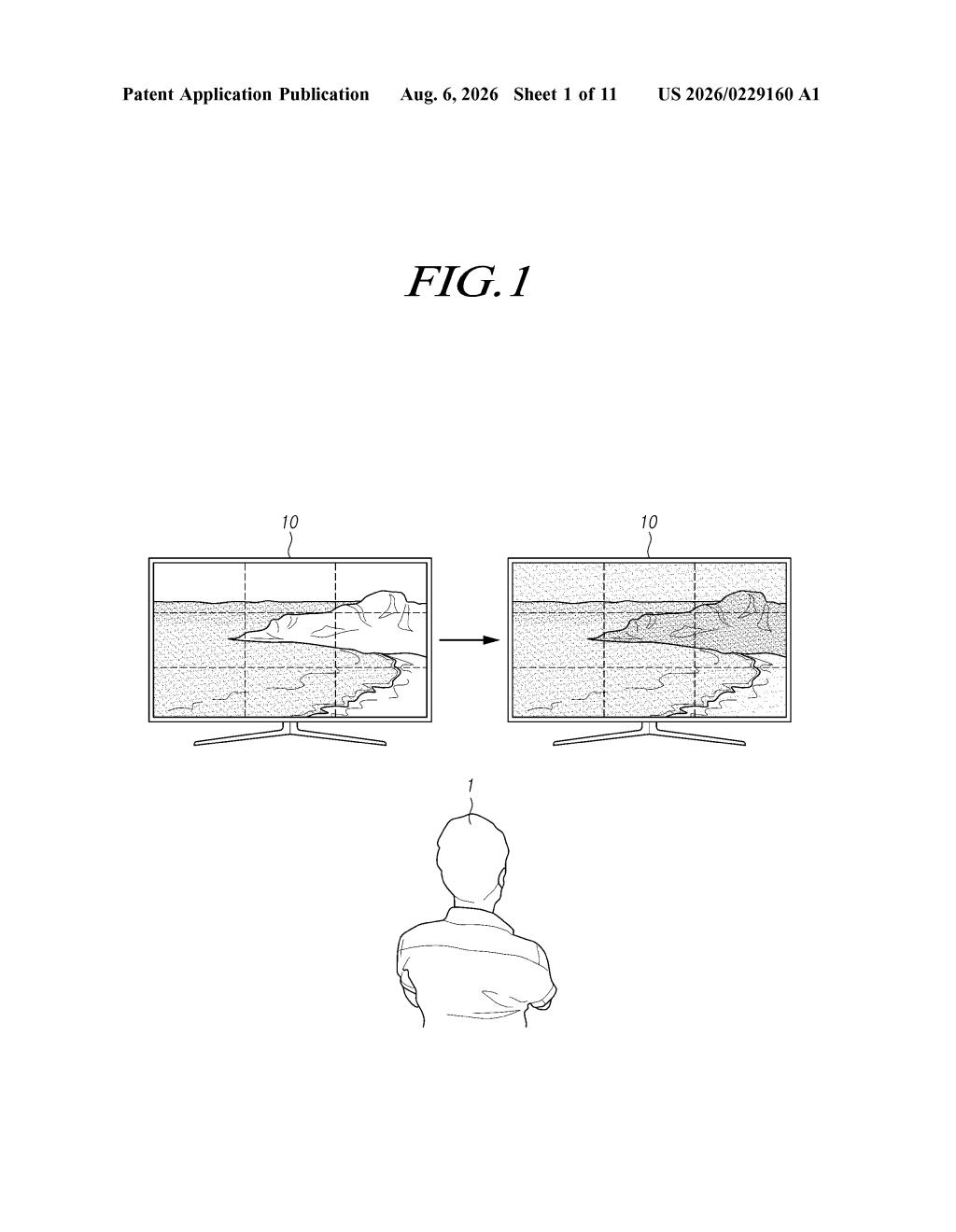
What Samsung's temperature-based brightness fix actually does
Imagine turning on your TV first thing in the morning after it's been sitting in a cold room all night. The screen's internal chip is still cool, but the display's brightness-correction software was calibrated assuming the chip would already be warm. That mismatch can cause the image to look slightly off until everything heats up and settles.
Samsung's patent describes a system that checks the chip's actual temperature the instant the screen powers on, compares it to a known "settled" temperature, and uses that gap to decide where to start the brightness-correction process. Instead of always beginning from the same default point, the display picks a smarter starting point based on how warm or cold things actually are.
The practical goal is a screen that looks consistent from the very first frame, whether you've just woken it from sleep or switched it on after days of sitting unused in a cool room.
… the compensation unit, detects generation of a power-on signal, calculates a temperature difference between a reference saturation temperature and a current integrated circuit (IC) temperature, and controls a starting level of a compensation algorithm based on the temperature difference.
Translation: The screen checks its internal temperature the moment it turns on to decide how to adjust its brightness settings.
How the chip temperature gap drives the correction level
The patent describes a compensation unit built into a display device that runs a quick calculation at power-on. Here's the sequence:
- The system detects that a power-on signal has been generated (the screen is waking up).
- It reads the current temperature of the internal integrated circuit (IC), the chip that manages the display's signal processing.
- It compares that reading to a stored reference saturation temperature, which is the stable operating temperature the chip reaches after running for a while.
- The difference between those two values determines the starting level of the compensation algorithm, meaning the software doesn't always begin its brightness correction from the same fixed baseline.
The compensation algorithm here refers to the ongoing process display controllers use to counteract luminance degradation (the gradual dimming and color shift that OLED and similar panels experience as they age and heat up). Normally that algorithm assumes a warm, steady-state chip. This patent adds a temperature-aware entry point so the correction is accurate even when the hardware is still cold.
A display device may comprise: a display panel configured to display an image; a timing controller configured to control a data signal and a gate signal; and a compensation unit configured to compensate for luminance of the image displayed on the display panel.
Translation: The device uses a special controller to automatically fix the screen brightness so the image looks correct.
What this means for OLED screen consistency
OLED panels are particularly sensitive to temperature variations, and brightness uniformity at power-on is a known weak spot. If Samsung integrates this into its display driver ICs, TVs, monitors, and phone screens could show more consistent images from the first moment they light up, rather than subtly shifting as they warm up.
For everyday users, the difference may be small and rarely noticed. But in professional display contexts, like a color-critical monitor or a TV that's judged the second it turns on in a store, first-frame accuracy matters. This also fits into Samsung's broader push to extend OLED panel longevity through better compensation techniques.
This is a focused, narrow engineering fix rather than a headline feature. It solves a real problem that display engineers care about, but it's the kind of improvement you'd only notice in a side-by-side comparison under controlled conditions. Worth filing, not worth much excitement.
There are more where this came from
We read every patent application Big Tech publishes and send you the ones worth knowing. Plain English, free, every week.
The drawings
11 drawing sheets from US 2026/0229160 A1 · click any drawing to enlarge


Want this weekly breakdown for a company we don't cover? Patentlyze Pro →
Be the first to weigh in