
Meta's New Patent Moves the Heavy Graphics Work Off Your AR Glasses
Meta is patenting a way to take the hardest graphics work off an AR headset entirely — by offloading it to a separate handheld device you carry in your pocket or hand.
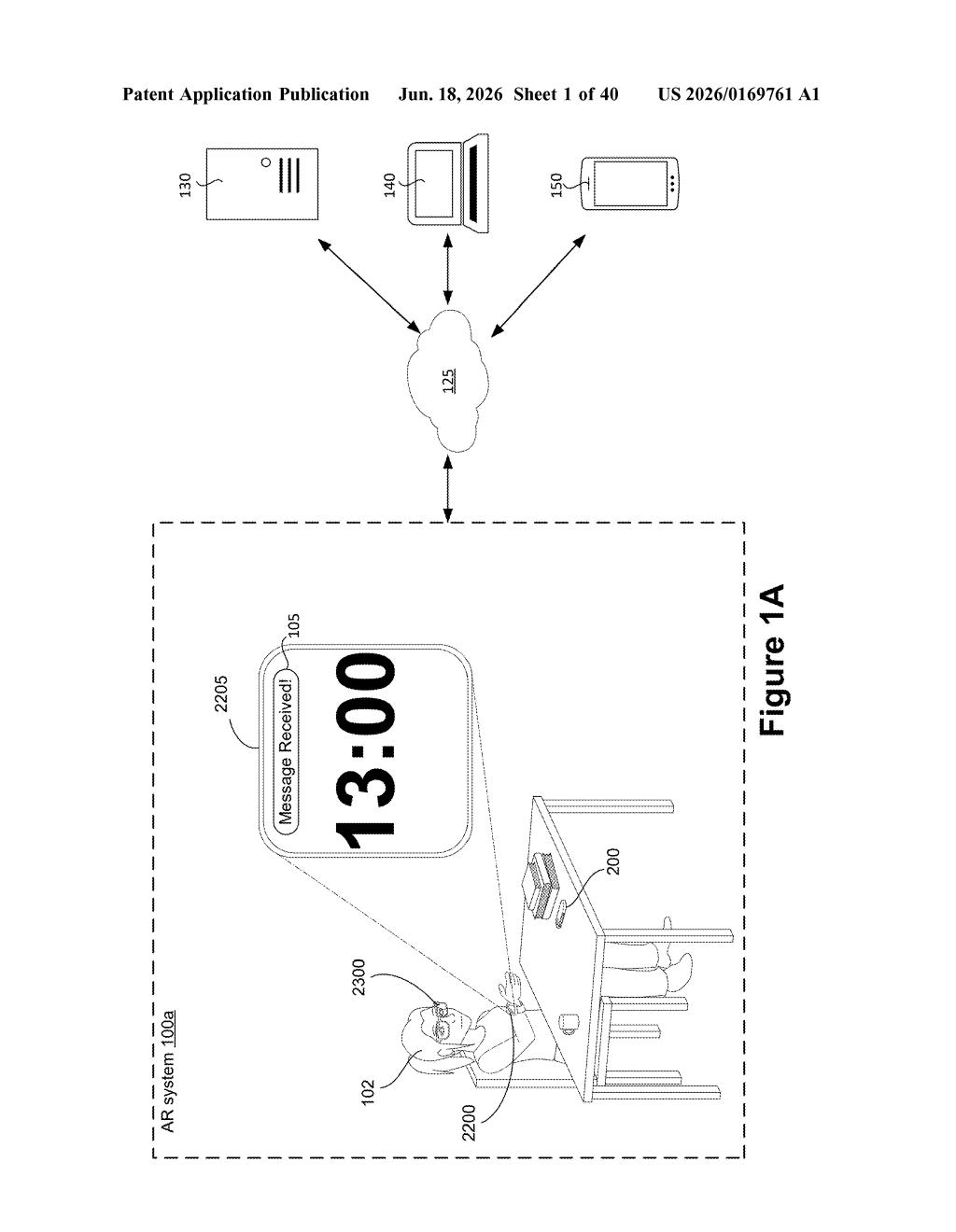
What Meta's handheld graphics helper actually does
Imagine wearing a pair of AR glasses that feel as light and cool as a regular pair of sunglasses. The catch with today's AR headsets is that squeezing powerful enough chips inside them means they run hot, drain fast, and stay bulky. Meta's patent tackles this by splitting the job in two.
The idea is a handheld device — think a small controller or phone-like gadget — that sits in your hand or pocket and does the heavy graphics lifting. The headset you're wearing gets the finished image delivered to it wirelessly, without having to crunch all the numbers itself.
You'd still look at the headset, interact through it, and see your AR content normally. The handheld just acts as the behind-the-scenes engine, quietly handling the parts that would otherwise make your headset hot, heavy, or short on battery.
How the HIPD and headset divide the rendering load
The patent describes a system built around what Meta calls a handheld intermediary processing device (HIPD) — a separate gadget that pairs with an AR or VR headset over a wireless connection.
When you're using the headset, the HIPD and the headset are constantly sharing graphical data — the raw information needed to build the images you see. The HIPD identifies which graphics tasks (rendering geometry, applying textures, calculating lighting) need doing, carries them out locally on its own processors, and then sends the finished, ready-to-display frames back to the headset.
The headset itself becomes more of a display terminal than a full computer. It receives the completed image and puts it in front of your eyes, rather than generating that image from scratch. The patent also covers input and interaction — meaning the handheld can handle controller input, gesture recognition, and other user actions, not just graphics.
The core benefit is thermal and power separation: the chip doing the hard work sits in your hand (where heat and weight matter less) rather than on your face.
What this means for the future of Meta's AR glasses
AR glasses have a fundamental design problem: the components needed for a good visual experience are too big, too hot, and too power-hungry to sit comfortably on someone's face all day. Offloading processing to a handheld companion is one of the most discussed engineering paths around this, and this patent shows Meta is actively building the architecture for it.
If this approach ships in a product, it could let Meta sell AR glasses that look far closer to normal eyewear — while the compute-heavy gadget lives in your bag or hand. That's a significant trade-off for consumers: you carry an extra device, but the thing on your face becomes genuinely wearable. Watch for this to show up in context around Meta's Ray-Ban smart glasses roadmap.
This is one of the more practically important AR patents Meta has filed recently. The thermal and weight problems with AR headsets are real and unsolved, and a two-device split is a credible answer — not a theoretical one. The fact that Meta is patenting the full system architecture, including input handling, suggests this is engineering work, not blue-sky speculation.
There are more where this came from
We read every patent application Big Tech publishes and send you the ones worth knowing. Plain English, free, every week.
Want this weekly breakdown for a company we don't cover? Patentlyze Pro →