
Nvidia's New Patent Fits Custom Outlines Around Objects That Boxes Miss
Most self-driving car cameras draw a plain rectangle around every obstacle they spot. Nvidia's new patent describes a way to fit a custom multi-sided polygon instead — one that hugs the actual shape of the object far more closely.
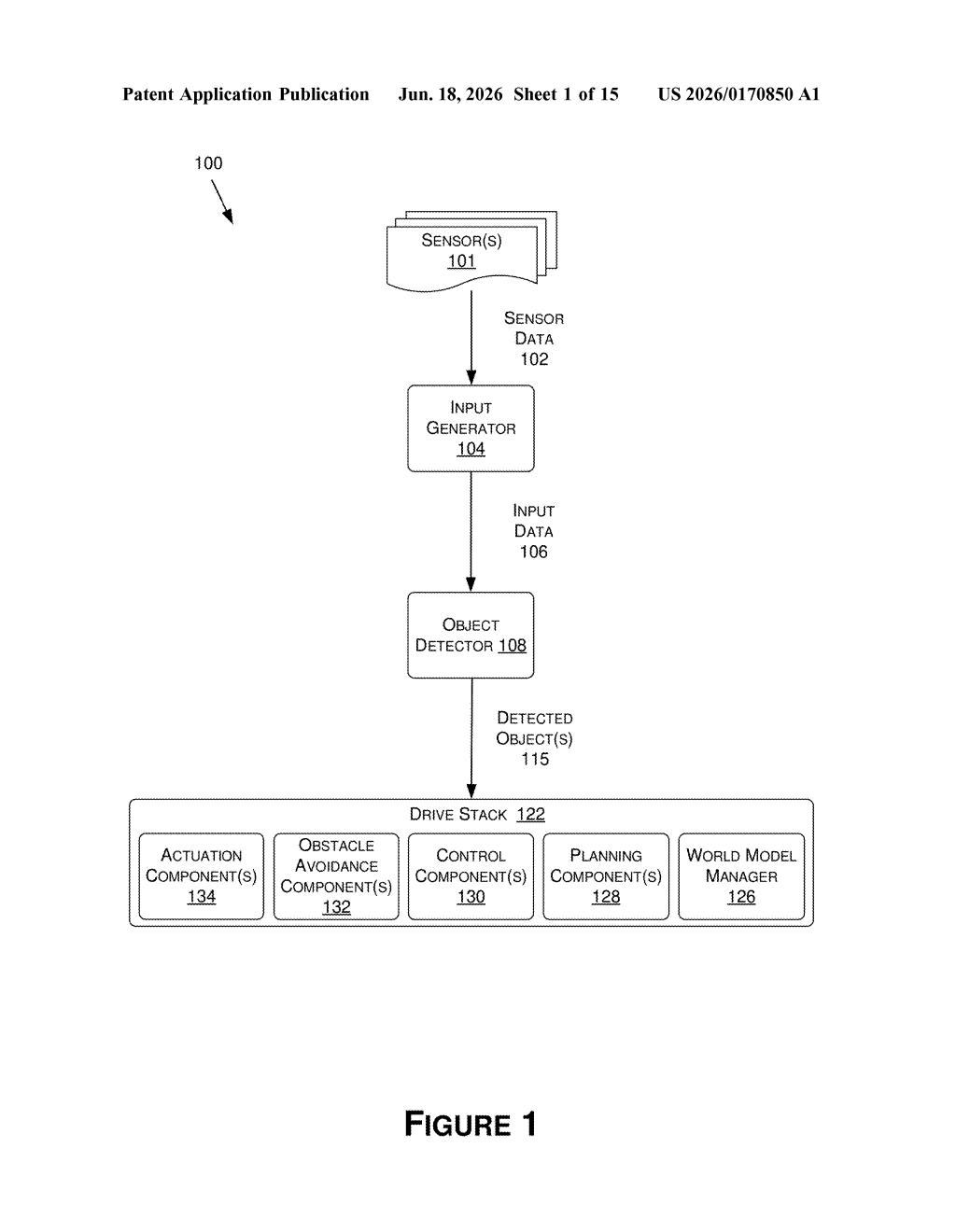
What Nvidia's polygon object detection actually does
Imagine a self-driving car's camera sees a delivery truck parked at an angle. The software needs to know exactly where that truck ends so the car doesn't clip it. Today, most systems just draw a box around the truck — simple, but sloppy. A diagonal truck inside a straight box wastes a lot of space, making the car think the obstacle is bigger and squarer than it really is.
Nvidia's patent describes a detector that draws a custom polygon — think of it like shrink-wrapping a shape around an object instead of putting it in a cardboard box. The system figures out the angles between each corner of that polygon and how far each corner sits from the center, then combines those measurements to build a snug outline.
The tighter the fit around an object, the better a self-driving car (or any robot) can judge exactly how close it can safely get. That difference can matter a lot in a tight parking lot or a crowded intersection.
How the detector regresses angles and vector lengths into shapes
The patent centers on what Nvidia calls a bounding polygon — a multi-sided shape that the detector fits around each object in a scene, rather than the traditional four-cornered bounding box.
To build that polygon, the detector calculates two types of measurements:
- Regressed angles — the angle between each pair of neighboring vertices (corners) of the polygon
- Regressed vector lengths — how far each corner sits from the polygon's estimated geometric center
"Regressed" here is a machine-learning term meaning the model predicts these numbers directly from the image, rather than measuring them with a ruler. The model is trained by starting with a rough polygon guess and then deforming (stretching and rotating) it until it matches a human-labeled "ground truth" outline of the same object.
Once the detector assembles the final polygon shape, the system passes it downstream — to path planning, collision avoidance, or object tracking — wherever precise spatial boundaries are needed. The patent notes this works in autonomous and semi-autonomous driving contexts, but the approach would apply to any machine-vision system that needs precise object outlines.
What this means for autonomous vehicle safety margins
For self-driving cars, the gap between a bounding box and a bounding polygon might sound like a minor geometric detail, but it can translate directly into how confidently and safely a vehicle navigates tight spaces. A closer-fitting shape means the car's planning software has a more accurate picture of where an obstacle actually ends, which lets it make better decisions about clearance.
Nvidia already supplies the hardware and software stacks that underpin many autonomous vehicle programs through its DRIVE platform. A more precise object-detection layer, built into that stack, could improve performance without requiring better cameras or sensors — just better math on the data those sensors already produce.
This is incremental but genuinely useful work. Better object outlines are a known weak point in camera-based perception, and moving from rectangles to flexible polygons is a logical direction. It won't make headlines the way a full self-driving demo does, but it's the kind of foundational improvement that actually gets shipped into production systems.
There are more where this came from
We read every patent application Big Tech publishes and send you the ones worth knowing. Plain English, free, every week.
Want this weekly breakdown for a company we don't cover? Patentlyze Pro →