
Nvidia Patent Teaches Robots Object Sorting From Just One Demo Video
Most robot training systems need hundreds of examples before a machine can reliably place an object in the right spot. Nvidia's new patent describes a way to do it after watching just one video.
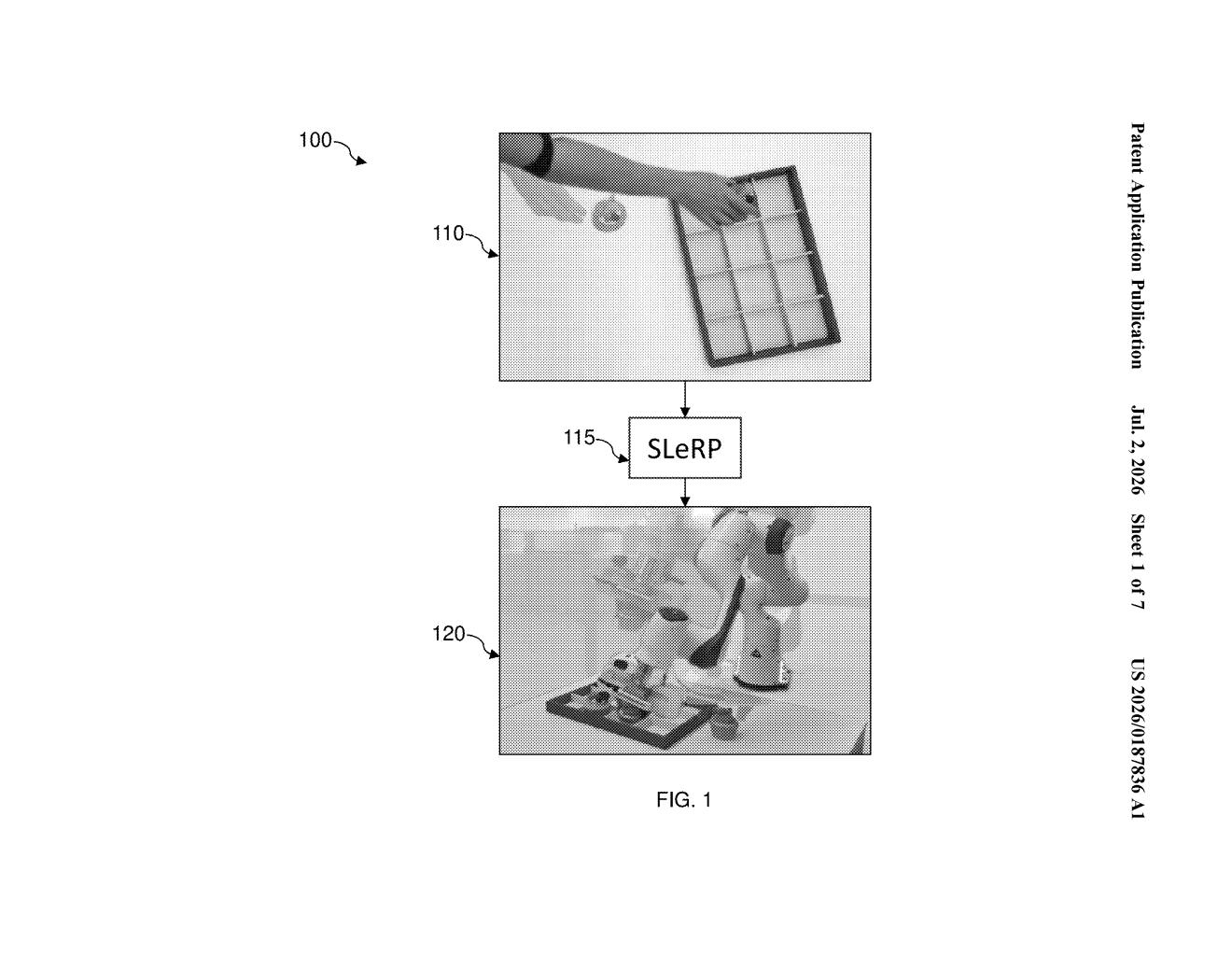
How Nvidia's one-video robot placement system works
Imagine you want to teach a robot to sort pill bottles into a tray, or pack items into a divided box. Normally you'd have to show it the same action dozens or hundreds of times. Nvidia's patent describes a system that can do the same job after watching one demonstration video of a person doing it.
The system watches that single video, figures out exactly where each slot or compartment is in the container, and then figures out how to translate what it saw into instructions for the robot's own camera angle. It generates little maps called slot masks that outline each empty or filled compartment, and uses those to guide the robot's hand to the right spot.
The result is a robot that can pick up objects and place them into specific slots without needing a mountain of training footage. That's a meaningful shift for anyone trying to deploy robots in settings where recording hundreds of examples is just not practical.
How the slot detector maps one camera view to the robot's view
The patent describes a modular pipeline with several distinct stages that together allow a robot to generalize from a single video.
- Video tracking: The system takes a demonstration video, which includes depth information (so it knows how far away things are, not just where they appear on screen), and tracks the object being moved throughout the clip.
- Slot mask generation: By comparing the first and last frames of the video, it identifies where an empty slot was before the object was placed and confirms where it ended up. These are encoded as 2D masks, basically outlined shapes drawn over the image that mark each compartment.
- Perspective translation: The demonstration might be filmed from a person's point of view. The robot sees things from a completely different angle. The system re-detects the object and the tray from the robot's camera perspective and then computes the relative pose (orientation and distance) of the object from both viewpoints combined.
- Movement planning: Using all of the above, the system calculates the exact sequence of movements the robot arm needs to execute to pick up the object and place it into the correct slot.
The key word in the patent title is "slot-level", the system works at the individual compartment level, so a robot filling a sectioned box knows which specific cell each item belongs in, not just roughly where the container is.
What this means for warehouse robots and factory automation
For warehouse and factory operators, the bottleneck in deploying robots has often been the data collection phase. Getting a robot to handle a new product or a new kind of tray used to mean recording extensive training sessions. A system that works from a single video could make it practical to reprogram robots for new tasks on the fly, without a dedicated data-collection team.
Nvidia is pushing deeper into physical AI and robotics through its Isaac platform, and this patent fits squarely into that effort. If this approach holds up in practice, it could lower the cost of deploying flexible robot arms in small-batch manufacturing or fulfillment settings where product variety is high and recording hundreds of training examples per item just isn't feasible for your average operation.
This is a genuinely interesting robotics research direction. One-shot learning for physical manipulation is one of the harder problems in the field, and a slot-specific approach is more tractable than trying to solve it for arbitrary objects in arbitrary environments. It's not a solved product yet, but it's the kind of foundational work that eventually shows up in Nvidia Isaac or a partner robot platform.
Get our take in your Top Stories
Liked this breakdown? Add Patentlyze as a preferred source on Google, and our plain-English take shows up more often in your Top Stories the next time Nvidia patent news breaks.
There are more where this came from
We read every patent application Big Tech publishes and send you the ones worth knowing. Plain English, free, every week.
Want this weekly breakdown for a company we don't cover? Patentlyze Pro →