
Nvidia Patents a Way to Blend Real Voices Into New Synthetic Ones
Nvidia has filed a patent for a text-to-speech system that doesn't just copy a single speaker's voice — it blends two or more voice 'fingerprints' together to produce an entirely new synthetic voice that belongs to no one.
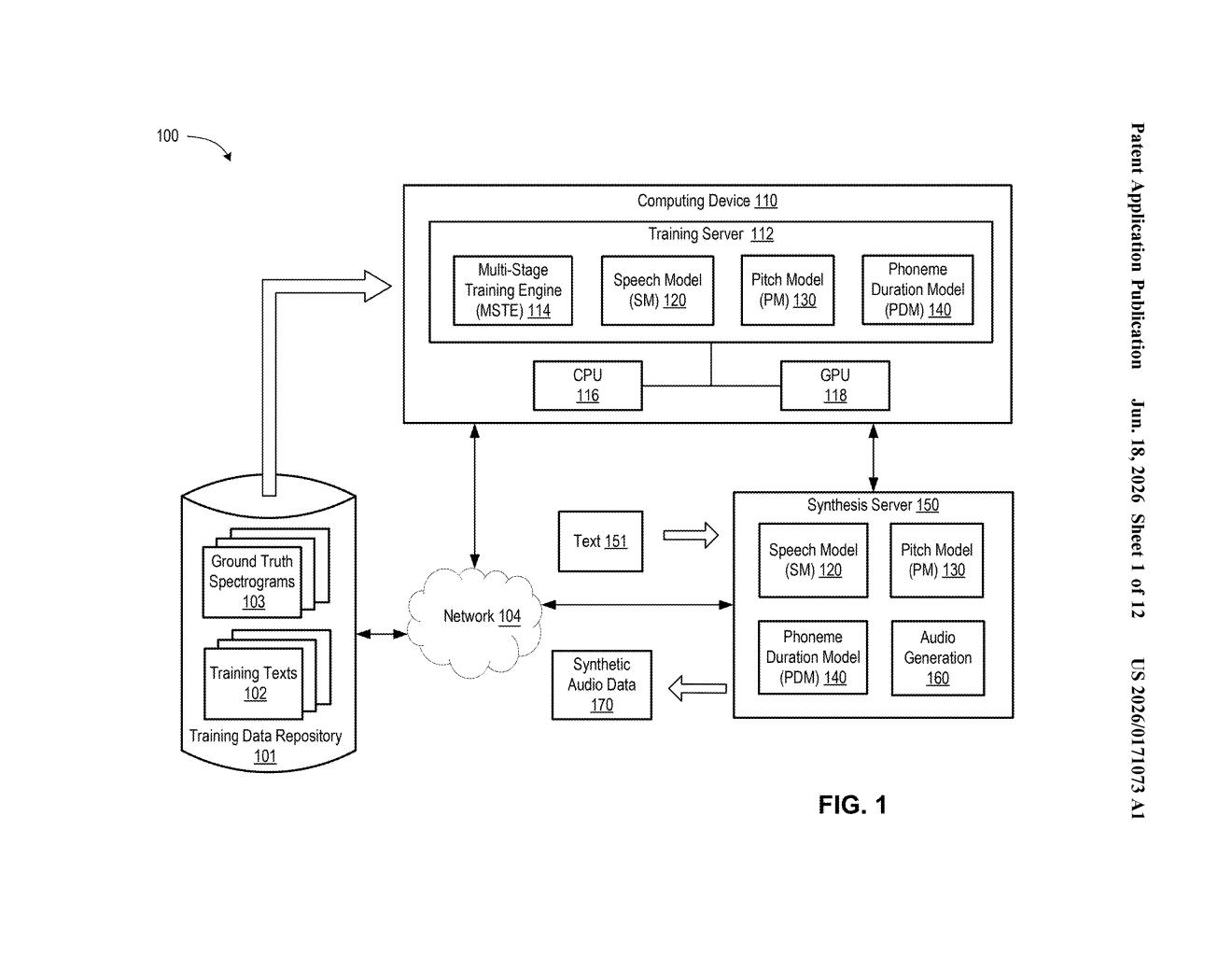
How Nvidia's voice-blending system actually works
Imagine a paint-mixing machine, but for voices. Instead of red and blue making purple, you feed it recordings of two different speakers, and it creates a new voice that sits somewhere between them — not quite either person, but a brand-new synthetic identity.
That's the core idea here. Nvidia's patent describes a system where a machine learning model learns what makes each speaker's voice distinct — call it a voice fingerprint — and then lets you dial between multiple fingerprints to generate a completely new one. The resulting voice never belonged to any real person.
The twist that makes this more than a basic mashup: Nvidia's training process starts the model on lower-quality audio recordings and gradually feeds it cleaner, higher-quality speech as training progresses. The idea is that the model builds a broad understanding of speech first, then refines it — similar to how a music student might learn rhythm before worrying about perfect pitch.
How the model trains on progressively cleaner audio
The patent centers on what are called speech embeddings — numerical representations (think of them as compact fingerprints) that capture the unique acoustic character of a speaker's voice. A machine learning model learns these embeddings from real speech recordings.
The key step is interpolation (blending): instead of using one embedding directly, the system computes a weighted average of two or more embeddings to create a synthetic embedding that corresponds to no real speaker. Feed that synthetic embedding into a text-to-speech model, and you get audio in a voice that has never existed before.
The other distinctive piece is multi-stage training. Rather than training the model on a fixed dataset from the start, Nvidia's approach begins with lower-quality audio and progressively introduces higher-quality recordings as training continues. This curriculum-style approach — common in how humans learn skills — is meant to produce better, more general voice representations.
Put together, the system can:
- Learn voice fingerprints from real speakers
- Blend those fingerprints into new, non-existent voices
- Generate spoken audio in those blended voices from text input
What this means for AI-generated voices and digital assistants
For Nvidia, which sells the hardware that powers most large AI model training, this patent plants a flag in the text-to-speech software space. Synthetic voice generation is a fast-growing area — used in everything from audiobook narration and game characters to voice assistants and accessibility tools. A system that can produce novel voices on demand, rather than cloning a specific person's voice, sidesteps some of the ethical and legal landmines around voice cloning.
For you as a user, the downstream effect could be AI assistants or apps that let you pick a voice that isn't tied to any real celebrity or actor — something original. The progressive training approach is also worth noting: it's a technique that could apply well beyond speech, making this patent relevant to how Nvidia might train audio AI models more broadly.
This is a tidy, well-scoped patent that addresses a real problem: voice cloning is legally and ethically fraught, but demand for diverse synthetic voices is real. Blending embeddings to create voices that belong to no one is a practical workaround, and the curriculum-training angle adds genuine technical substance. It's not a flashy consumer announcement, but it's the kind of infrastructure IP that could quietly underpin a lot of AI audio products.
There are more where this came from
We read every patent application Big Tech publishes and send you the ones worth knowing. Plain English, free, every week.
Want this weekly breakdown for a company we don't cover? Patentlyze Pro →