
Amazon Patents a Targeted System for Keeping AI Image Generators Clean
Most AI image safety filters work like a sledgehammer — block enough and you avoid bad outputs, but you also wreck perfectly innocent ones. Amazon's new patent tries a much more surgical approach.
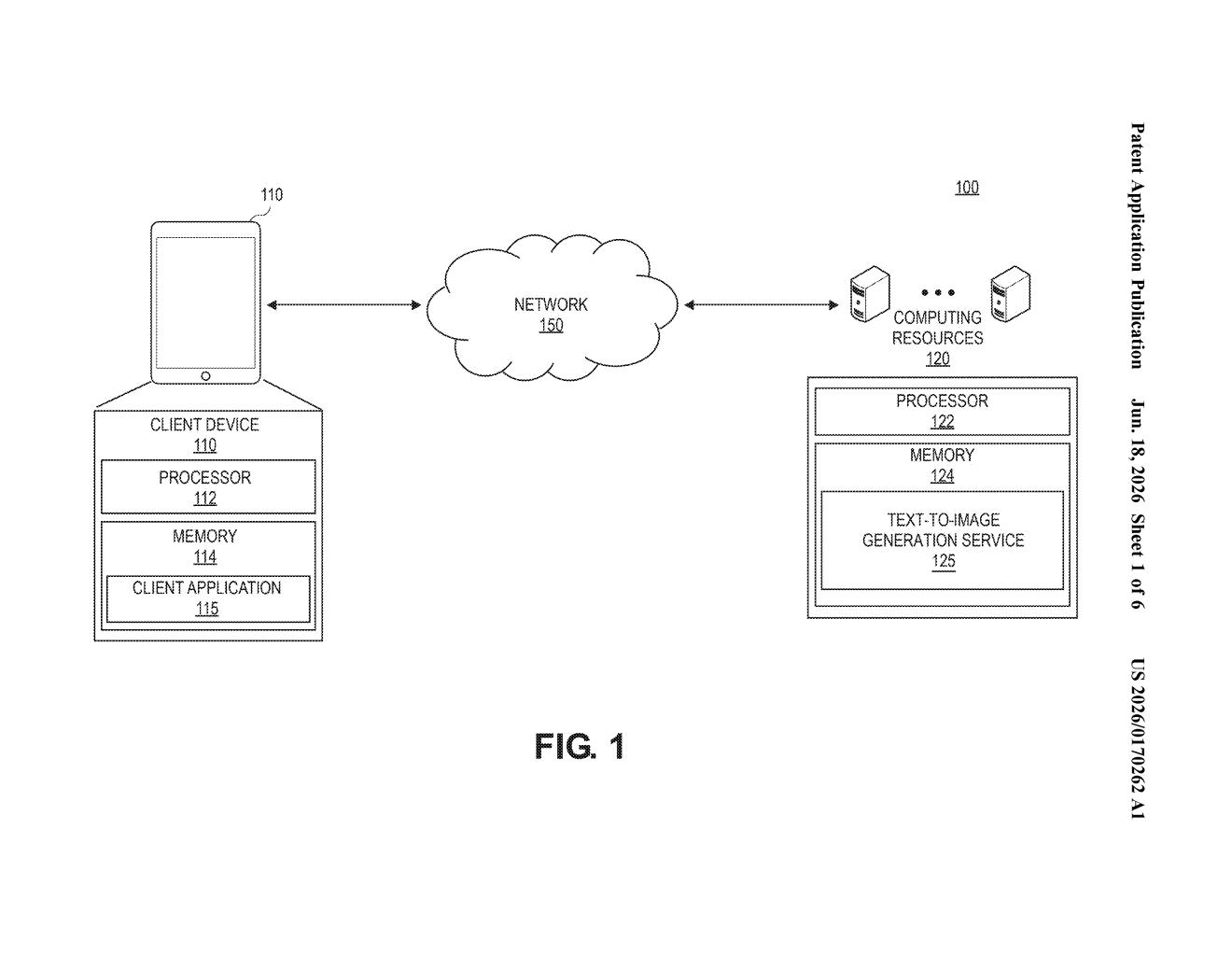
How Amazon's safety filter avoids killing your image prompt
Imagine asking an AI to draw something completely harmless, only for the result to come back blurry, off-topic, or blocked entirely — because the safety system was too aggressive. That's a real frustration with today's AI image tools, and Amazon is trying to fix it.
The patent describes a system that watches the AI's image-building process at each individual step, looking for the specific parts of the underlying math that are most likely to produce harmful content. Instead of applying a blanket block, it nudges only those specific parts away from restricted territory — leaving the rest of your prompt intact.
The result, in theory, is an AI that can reliably decline to generate harmful imagery while still producing an accurate, high-quality image of what you actually asked for. Think of it like a spell-checker that corrects only the misspelled words instead of rewriting the whole sentence.
How the system targets risky noise dimensions per time step
AI image generators work by starting with pure visual noise and gradually "denoising" it over many steps until a coherent image emerges — a process called diffusion. At each step, the model is guided by your text prompt.
Amazon's system adds a layer on top of that process. Before generation starts, it selects a set of safety guidance vectors (mathematical directions that steer the output away from restricted content) based on what your prompt is actually asking for. Not every safety rule needs to apply to every prompt.
Then, at each denoising step, the system analyzes the noise pattern and measures the variance (how spread-out or unpredictable) each dimension of that noise is. Dimensions with high variance are flagged as higher-risk — they're the parts of the image most likely to drift toward harmful content or stray from the original prompt.
The safety nudges are applied selectively to those high-risk dimensions only, leaving low-risk dimensions alone. This step-by-step targeting is the core idea: rather than bluntly overriding the whole generation process, the system applies safety pressure exactly where it's needed, preserving prompt alignment everywhere else.
What this means for Amazon's AI image tools and their users
Amazon runs Amazon Bedrock, a platform that lets businesses build AI applications using models like Titan Image Generator. Any commercial image-generation service has to walk a line between being useful and avoiding liability for harmful outputs — and right now, that line is hard to walk without making the tool frustratingly restrictive.
If this system works as described, it could let Amazon offer a more capable and less frustrating image tool to the developers and businesses using Bedrock, while still meeting content-policy requirements. For you as an end user of any app built on these tools, it means fewer false positives — fewer times a perfectly reasonable request gets blocked or mangled because a safety filter was too blunt.
This is a genuinely interesting technical approach to a problem that every major AI image platform is struggling with. The step-by-step, dimension-targeted method is more principled than the brute-force content filters most services use today. Whether it holds up in practice — especially against adversarial prompts — is the real question, but the underlying idea is sound and worth watching.
There are more where this came from
We read every patent application Big Tech publishes and send you the ones worth knowing. Plain English, free, every week.
Want this weekly breakdown for a company we don't cover? Patentlyze Pro →