
New Patent Monitors Robotaxi Suspension Health Without Extra Sensors
A flat tire is obvious. A slow leak in your car's suspension accumulator is not. Zoox is patenting a way for its robotaxis to catch that second kind of problem before it becomes a real one.
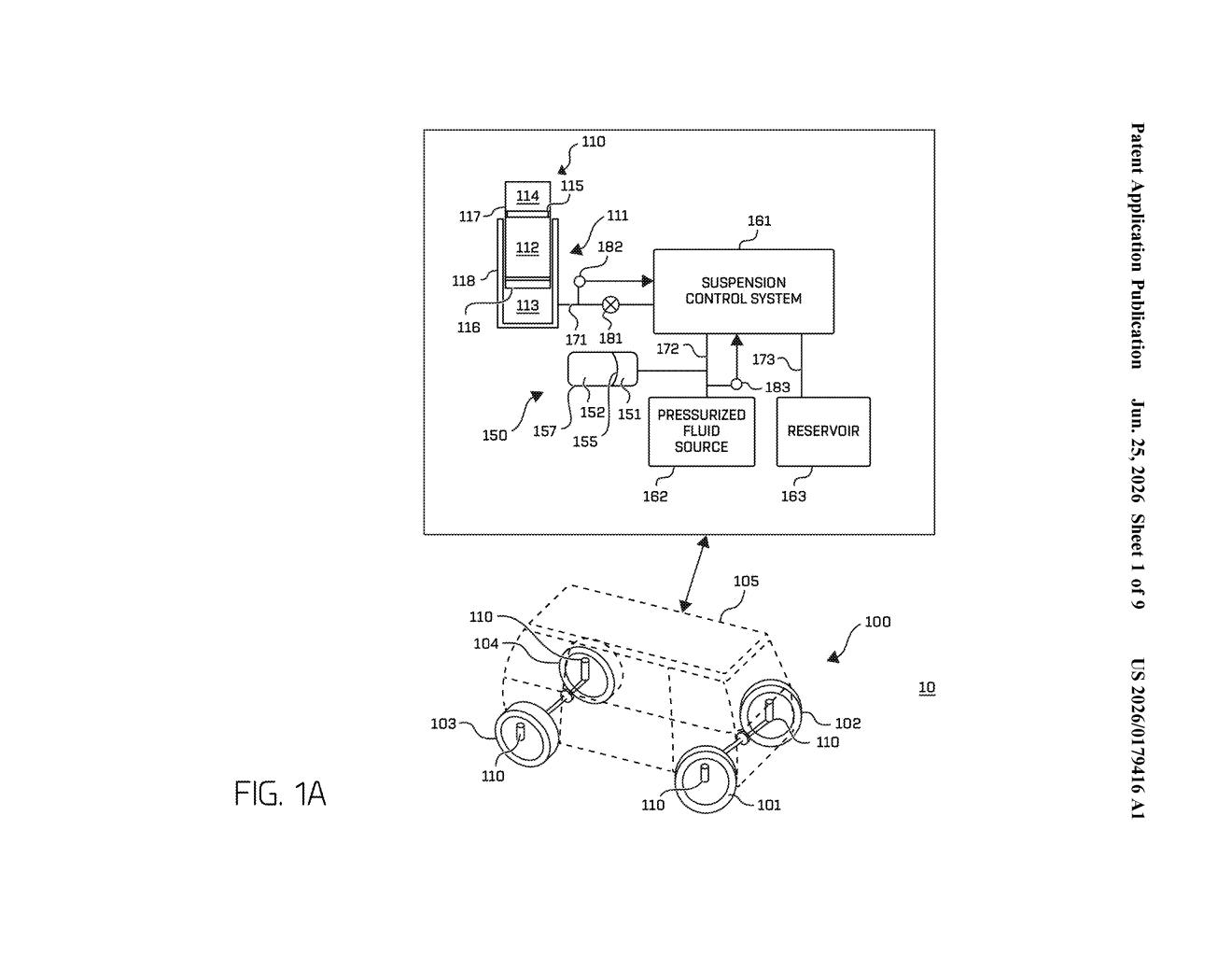
What Zoox's suspension pressure trick actually does
Imagine your car's suspension as a very sophisticated shock absorber filled with pressurized fluid. Inside that system is a sealed gas-filled chamber called an accumulator, which acts like a pressure buffer. If the gas inside starts leaking, the ride gets worse and handling suffers, but there's no easy warning light for it because measuring that gas directly would require an extra sensor buried deep in the system.
Zoox's patent describes a way to figure out the gas pressure indirectly. The vehicle already has sensors measuring the fluid pressure. Using a mathematical model that maps how fluid pressure and gas pressure relate to each other, the system can estimate what the gas is doing without needing to sense it directly. It then compares that estimate against a known healthy value.
If the numbers don't match, the vehicle's software registers the suspension as degraded and can adjust how the car drives, or flag the issue for maintenance. For a robotaxi with no human driver to notice something feels off, that kind of automated self-diagnosis is genuinely important.
How the model infers accumulator gas pressure from fluid data
The patent covers a hydropneumatic suspension system (a suspension that uses both pressurized fluid and a gas-filled accumulator to absorb bumps) paired with onboard software that continuously estimates internal system health.
The core technical steps are:
- Sensors read the working fluid pressure in real time.
- A correlation model (a pre-built mathematical relationship between fluid pressure and accumulator gas pressure) uses that reading to estimate the gas pressure, which has no direct sensor.
- The estimated gas pressure is compared against a predetermined threshold, essentially a baseline for what healthy looks like.
- Based on that comparison, the system classifies the suspension into a state (healthy, degraded, failed, etc.) and adjusts vehicle behavior accordingly.
The model is the key innovation here. Rather than requiring an additional physical pressure sensor inside the sealed accumulator (which would add cost, complexity, and a new failure point), the system treats the relationship between measurable and hidden pressures as a learnable or calibrated function. Think of it like estimating how full a sealed gas canister is by weighing it instead of opening it.
The claim is broad enough to cover a range of control responses: the vehicle might slow down, change suspension settings, or simply log the fault for a technician.
What this means for driverless vehicle maintenance and safety
For a robotaxi fleet like the ones Zoox is building, vehicles operate continuously without a human driver who can feel or report handling problems. Automated mechanical self-diagnosis closes that feedback loop. A suspension running low on accumulator pressure handles differently in a hard swerve or emergency stop, exactly the situations where you want every system working correctly.
More broadly, this kind of sensor fusion via modeling (inferring hidden states from available data rather than adding hardware) is a pattern that scales well across a fleet. Fewer physical sensors means fewer things to break or calibrate on thousands of vehicles. If Zoox can reliably monitor suspension health this way, it reduces both maintenance costs and the chance that a degraded vehicle stays in service longer than it should.
This is quiet but genuinely practical engineering for an autonomous vehicle company. Zoox can't rely on a driver to say 'the car feels mushy today,' so baking mechanical self-awareness into the software is exactly the right approach. The patent isn't flashy, but it addresses a real operational problem that most AV coverage ignores entirely.
There are more where this came from
We read every patent application Big Tech publishes and send you the ones worth knowing. Plain English, free, every week.
Want this weekly breakdown for a company we don't cover? Patentlyze Pro →