
Sony Patent Ties Generative AI Output Quality to Valid Authentication Keys
Sony is patenting a generative AI system that produces lower-quality results when you don't have a valid license, and better results when you do. Think of it as a built-in quality throttle baked directly into the AI model itself.
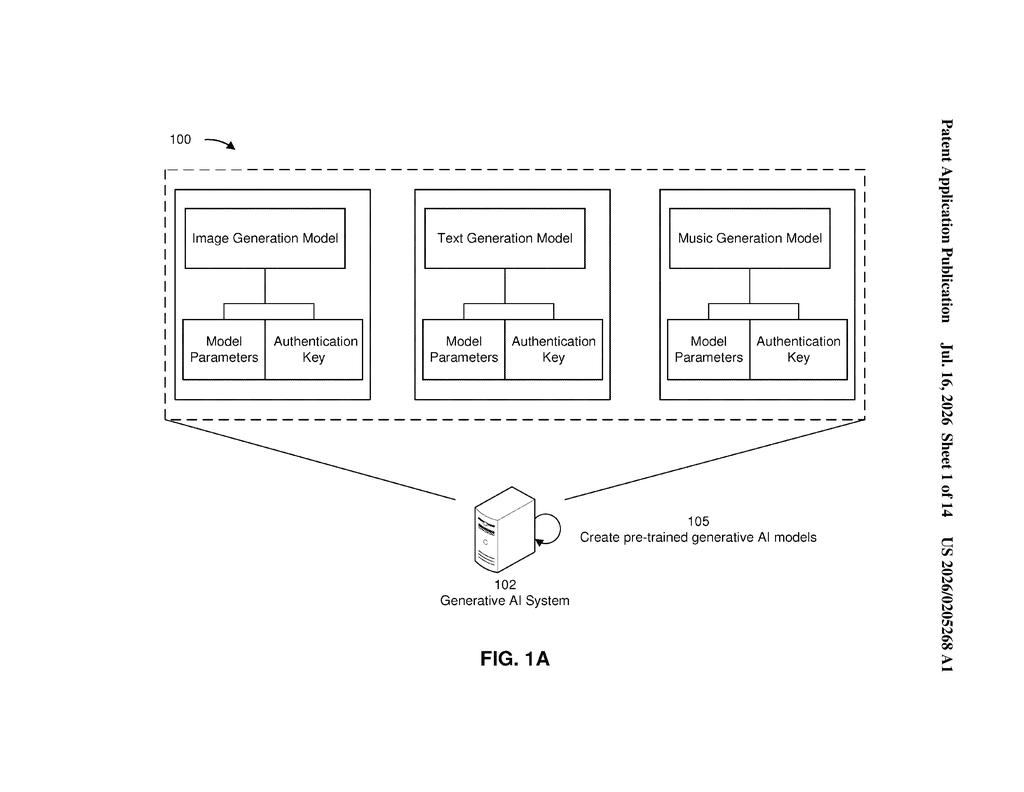
What Sony's AI quality-gating system actually does
Imagine a photo-editing app that, if you haven't paid for a subscription, still lets you use the AI features but the results come out slightly blurry or less detailed. You might not even realize the tool is holding back. That's essentially what Sony is patenting here.
The system works like this: when you send a request to a generative AI model (for music, images, text, whatever), your device also sends an authentication key, basically a digital proof-of-purchase. If the key is valid, the model produces its best work. If the key is missing or expired, the output degrades. The key is also embedded inside the output itself, which hints at a watermarking angle on top of the access control.
This is Sony's way of building copy protection and subscription enforcement directly into how the AI generates content, rather than bolting it on as a separate login wall. Whether users would even know they're getting a watered-down result is an open question.
How the authentication key embeds into AI output
The patent describes a method where a generative AI model receives two inputs at once: your creative prompt (the thing you actually want) and an authentication key (a token that proves you're a licensed user).
Critically, the key isn't just checked and discarded. It is embedded within the output itself. That means the generated content, whether it's an audio track, an image, or a piece of text, carries the key as part of its structure. This is similar in spirit to digital watermarking (hiding ownership information inside a file in a way that isn't obvious to the naked eye or ear).
The quality difference between a valid and an invalid key is described as a core feature, not a side effect:
- Valid key: the model runs at full capability and produces its intended output quality.
- Invalid or missing key: the model still generates something, but at a noticeably lower quality.
The filing doesn't detail exactly how quality degrades (resolution, coherence, detail loss, compression artifacts), which leaves room for Sony to implement this across different media types including audio, where the company has deep experience.
What this means for how AI tools get sold and used
For Sony, which sits at the intersection of consumer electronics, music production, and entertainment, this patent is about control over how professional-grade AI tools get monetized. Rather than relying on server-side enforcement (which requires a live internet connection and a backend check), this approach bakes the licensing logic into the model itself. That's harder to bypass with a simple network spoof.
For you as a user, the implications are worth paying attention to. A system like this could mean that two people using the same AI tool get meaningfully different results based purely on their subscription tier, and you might not have a clear way to tell you're being throttled. It also raises questions about transparency: should software tell you when it's deliberately limiting its output quality?
This is a genuinely interesting patent because it moves license enforcement from the login screen into the model's output layer, a place most users would never think to look. Sony is essentially describing a new form of DRM for generative AI, and given Sony's sprawling portfolio across music, film, and hardware, there's an obvious commercial reason to want this. Whether regulators or consumers push back on hidden quality throttling is the real question worth watching.
Get our take in your Top Stories
Liked this breakdown? Add Patentlyze as a preferred source on Google, and our plain-English take shows up more often in your Top Stories the next time Sony patent news breaks.
There are more where this came from
We read every patent application Big Tech publishes and send you the ones worth knowing. Plain English, free, every week.
Want this weekly breakdown for a company we don't cover? Patentlyze Pro →