
Samsung's New Patent Stops GPS from Going Haywire Inside Tunnels
GPS loses its mind the moment you enter a tunnel — and Samsung is filing patents to fix that with an AI system that detects the moment you go underground and compensates before your map goes haywire.
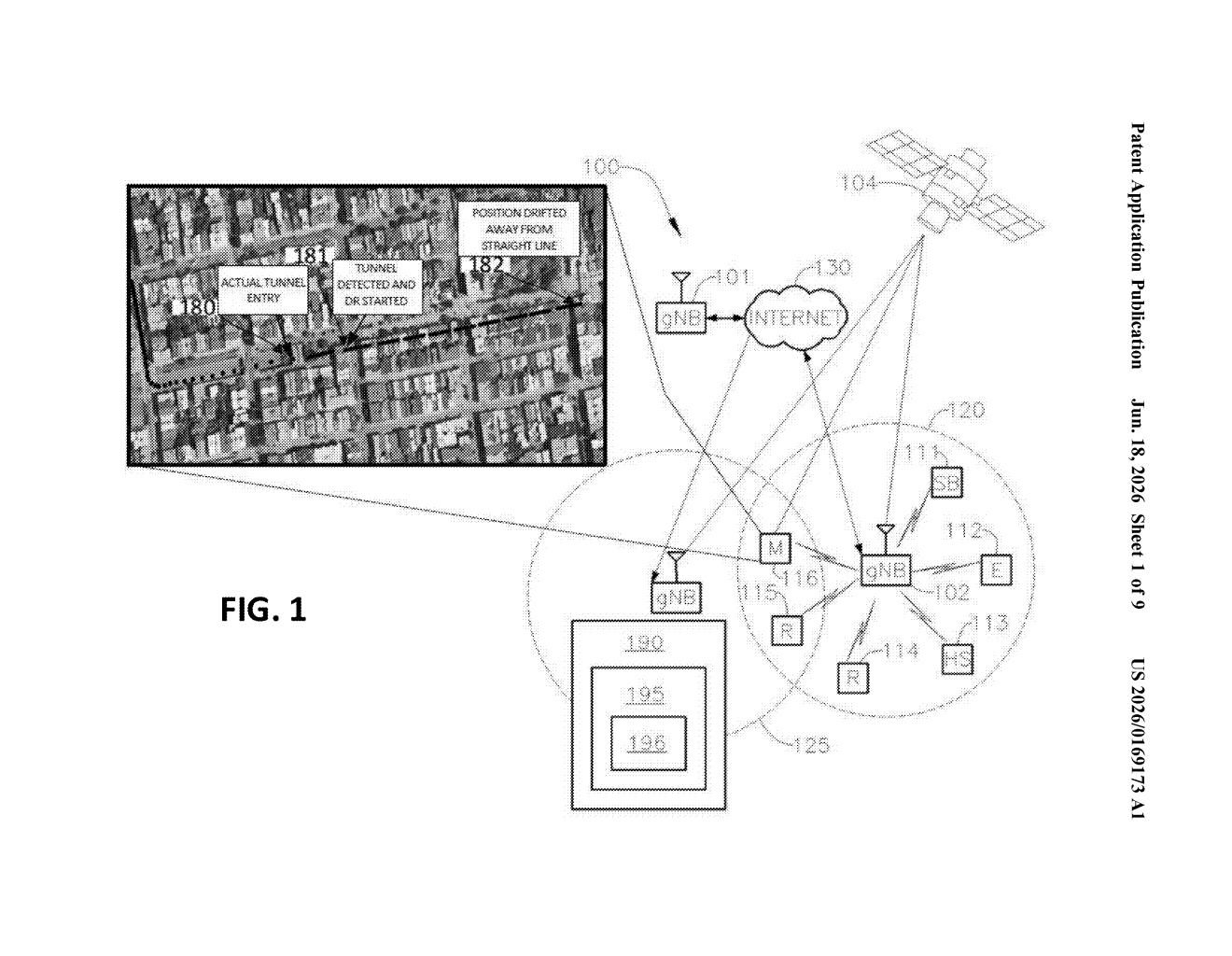
What Samsung's tunnel-detection GPS fix actually does
Imagine you're driving through a city and you enter a tunnel. Your phone's GPS signal drops out, your navigation app freezes or puts you in the wrong lane, and by the time you emerge on the other side, the map is scrambling to catch up. It's a frustratingly common problem.
Samsung's patent describes an AI system built into your phone that watches the quality of incoming GPS signals and uses that pattern to figure out — on its own — when you've entered a tunnel. Once it detects you're underground, it can switch the phone into a mode that doesn't rely on satellite signals that are no longer arriving cleanly.
The clever part is a self-checking mechanism: the AI compares its own tunnel verdict against a separate calculation from the raw signal data. If the two agree, the AI stays active. If they diverge, the system can dial the AI back down — so a one-off bad signal in an open field doesn't fool your phone into thinking you've gone underground.
How the AI model checks and adjusts its own confidence
The patent describes a method running on a phone (called a UE, or user equipment in wireless standards language) that continuously monitors incoming GNSS signals — the satellite broadcasts that GPS is built on.
When a satellite signal arrives, an AI model analyzes its characteristics to produce a tunnel detection result: essentially a judgment call about whether the phone is currently inside a tunnel. That result is then compared against a separate value calculated directly from the raw signal — acting as a sanity check on the AI's conclusion.
Based on how well those two outputs agree, the system decides whether to keep using the AI model for the next incoming signal or to disable it temporarily. This feedback loop is designed to prevent the AI from confidently reaching wrong conclusions in edge cases — like signal interference in a parking garage or a dense urban canyon.
- Receives satellite signal tied to the phone's current position
- Runs AI model to decide if a tunnel is present
- Cross-checks that AI output against a signal-based calculation
- Enables or disables the AI for the next signal cycle accordingly
- Feeds the tunnel detection result into position estimation
What this means for navigation in cities and underground
GPS dead zones in tunnels are one of the most persistent navigation headaches on Android phones, and Samsung is the world's largest Android phone maker. A system like this, baked directly into the phone's signal-processing layer, could meaningfully reduce the lag and location errors that drivers and transit riders experience every day going underground.
The self-correcting confidence check is the detail worth watching. Many tunnel-detection approaches exist, but ones that can turn themselves off when uncertain are less common — and that matters in real-world city environments where signals are messy even above ground. If this ends up in Samsung's Galaxy navigation stack, it's the kind of quiet improvement that users notice without ever knowing what fixed it.
This is a practical, well-scoped patent solving a real and annoying problem. The self-checking loop — where the AI validates its own tunnel call against raw signal math — is a genuinely thoughtful design choice that separates this from cruder approaches. It's not flashy, but it's exactly the kind of unglamorous work that makes navigation actually reliable.
There are more where this came from
We read every patent application Big Tech publishes and send you the ones worth knowing. Plain English, free, every week.
Want this weekly breakdown for a company we don't cover? Patentlyze Pro →