
Samsung Patents a Self-Learning Filter for Tracking Motion Between Video Frames
Every time you stream a video, your device reconstructs frames it never actually received by guessing how objects moved. Samsung's new patent adds a tunable filter on top of a neural network to make those guesses cleaner.
How Samsung's filtered motion-tracking improves video decoding
Imagine watching a football match over a spotty connection. Rather than sending every single frame, your device receives a compressed stream and then figures out the missing frames by tracking how players moved from one moment to the next. That movement data is called an optical flow, and getting it right is what separates crisp playback from blurry, blocky artifacts.
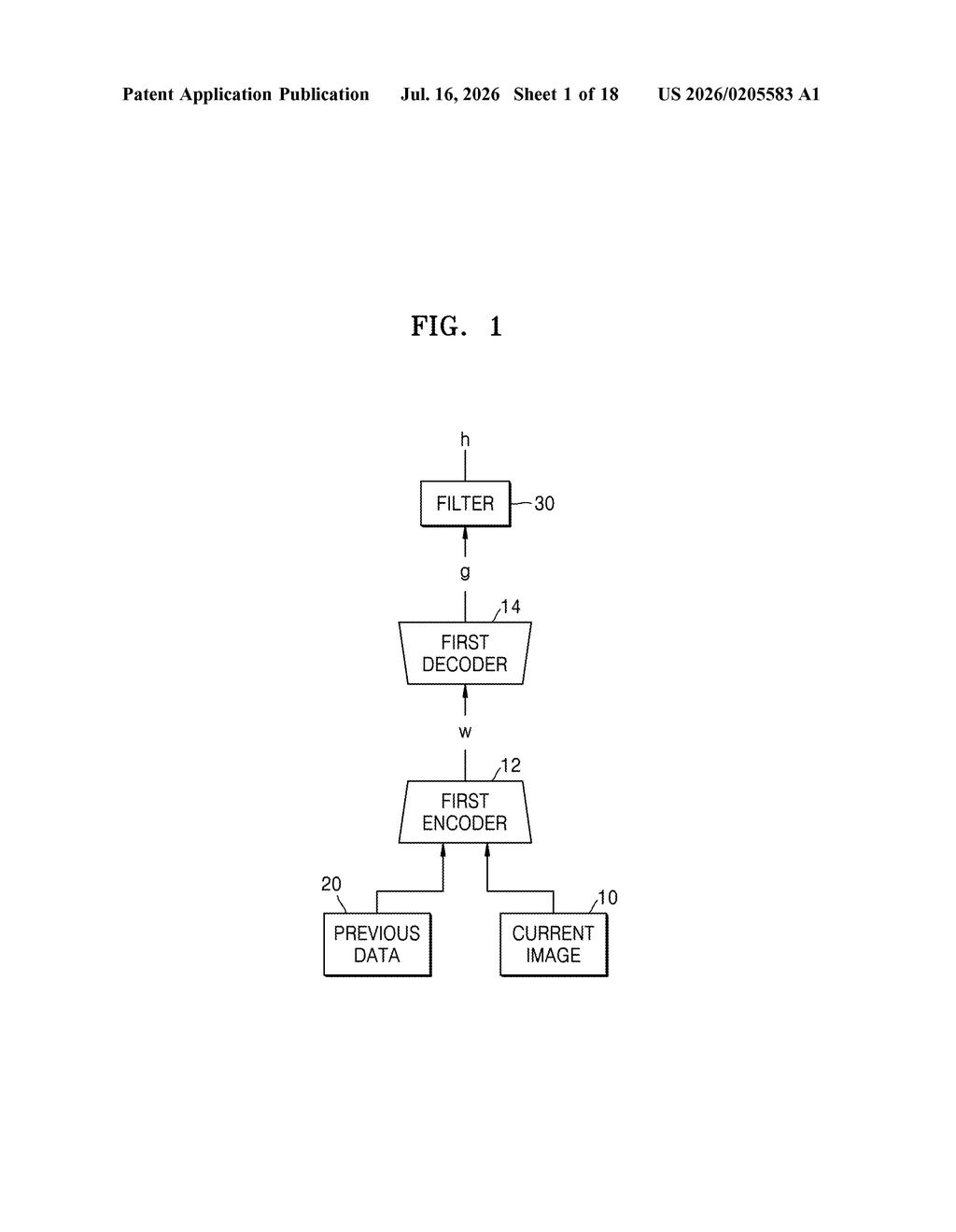
Samsung's patent describes a decoding system that runs an initial optical flow estimate through a neural network, then passes the result through a second, adjustable filter. The filter's type and settings are baked right into the compressed video file, so the decoder knows exactly how to clean up the motion data for that specific content.
The practical upside is that the final reconstructed image should look more accurate, especially during fast movement, without requiring the sender to transmit more raw data. Think of it as a final polish step that is tailored per video rather than one-size-fits-all.
How the neural decoder and filter pipeline work together
The patent describes a four-step image decoding pipeline focused on optical flow (a map of how every pixel moves between consecutive video frames).
- Step 1, Extract feature data: The decoder pulls compressed "feature data" for a preliminary optical flow out of the incoming bitstream. This is a compact, neural-network-friendly representation of motion, not a raw pixel grid.
- Step 2, Neural network decode: A neural network-based first decoder converts those features into an actual preliminary optical flow. The network does the heavy lifting of translating compressed hints into a full motion map.
- Step 3, Apply a tunable filter: The preliminary flow is then passed through a filter whose type and parameters are signaled inside the bitstream itself. This means the encoder chose the best filter for this content at compression time, and the decoder simply follows instructions.
- Step 4, Reconstruct the frame: The cleaned-up optical flow is used alongside previous frame data to synthesize the current output frame.
The key invention is the filtering information traveling inside the compressed file, making the cleanup step adaptive to content rather than fixed in the decoder hardware.
What this means for AI-compressed video quality
Neural network-based video codecs are the next frontier in streaming compression, and motion accuracy is one of their biggest weak spots. By letting the encoder pick and parameterize the right filter at compression time, Samsung's approach avoids the mismatch that occurs when a generic decoder tries to clean up motion data it knows nothing about. The result should be noticeably sharper edges and fewer artifacts during fast-moving scenes.
For consumers, a technology like this matters most in high-resolution streaming, video calls, and gaming, where motion blur or blocky artifacts are the most visible problems. Samsung makes display chipsets, TVs, and mobile SoCs, so a patented decoding method here could plausibly appear in its own hardware before being licensed to the broader industry.
This is a focused, incremental advance in a genuinely competitive space: AI-based video compression. The idea of encoding filter instructions inside the bitstream is clever because it closes the loop between the encoder's knowledge and the decoder's cleanup step. It is not a wholesale reinvention of video coding, but it is the kind of targeted fix that adds up to real quality improvements in shipping products.
There are more where this came from
We read every patent application Big Tech publishes and send you the ones worth knowing. Plain English, free, every week.
Want this weekly breakdown for a company we don't cover? Patentlyze Pro →
Be the first to weigh in